Last updated November 25, 2026
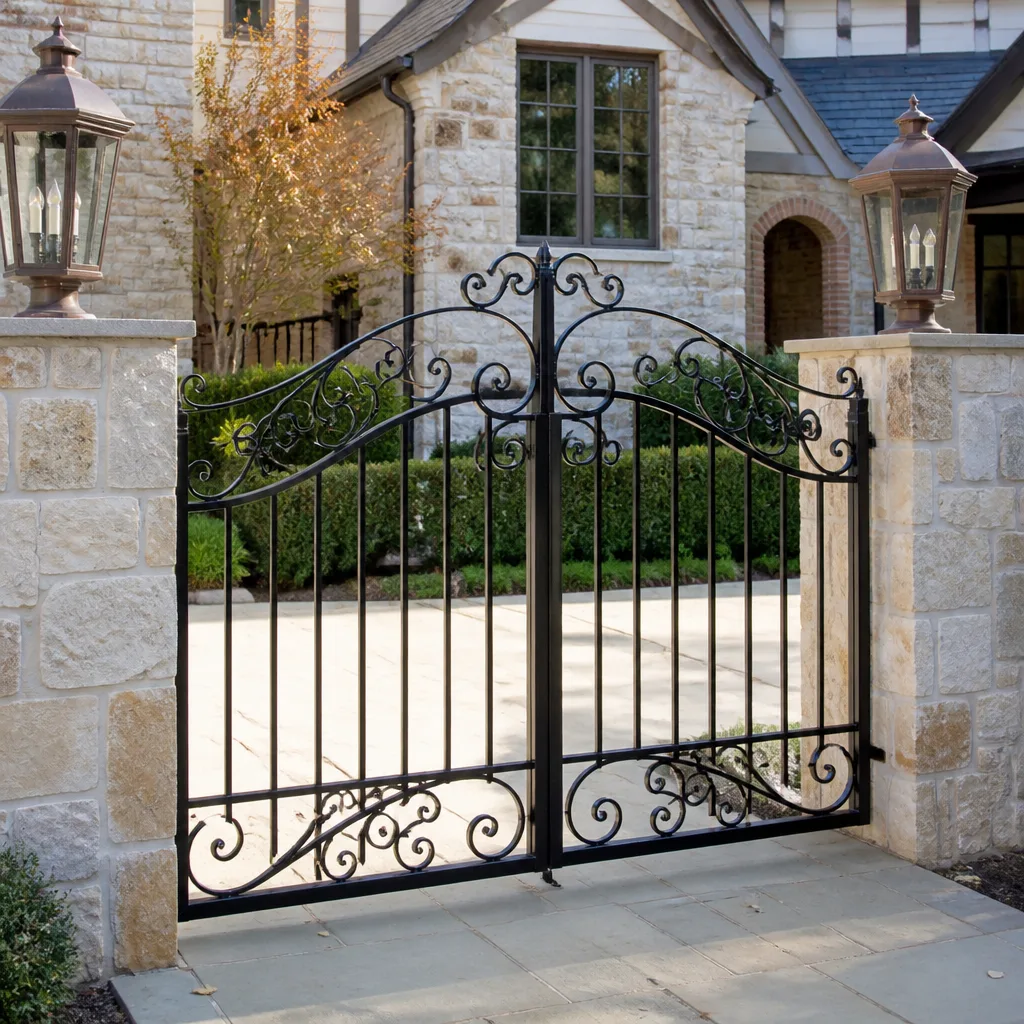 Wrought iron
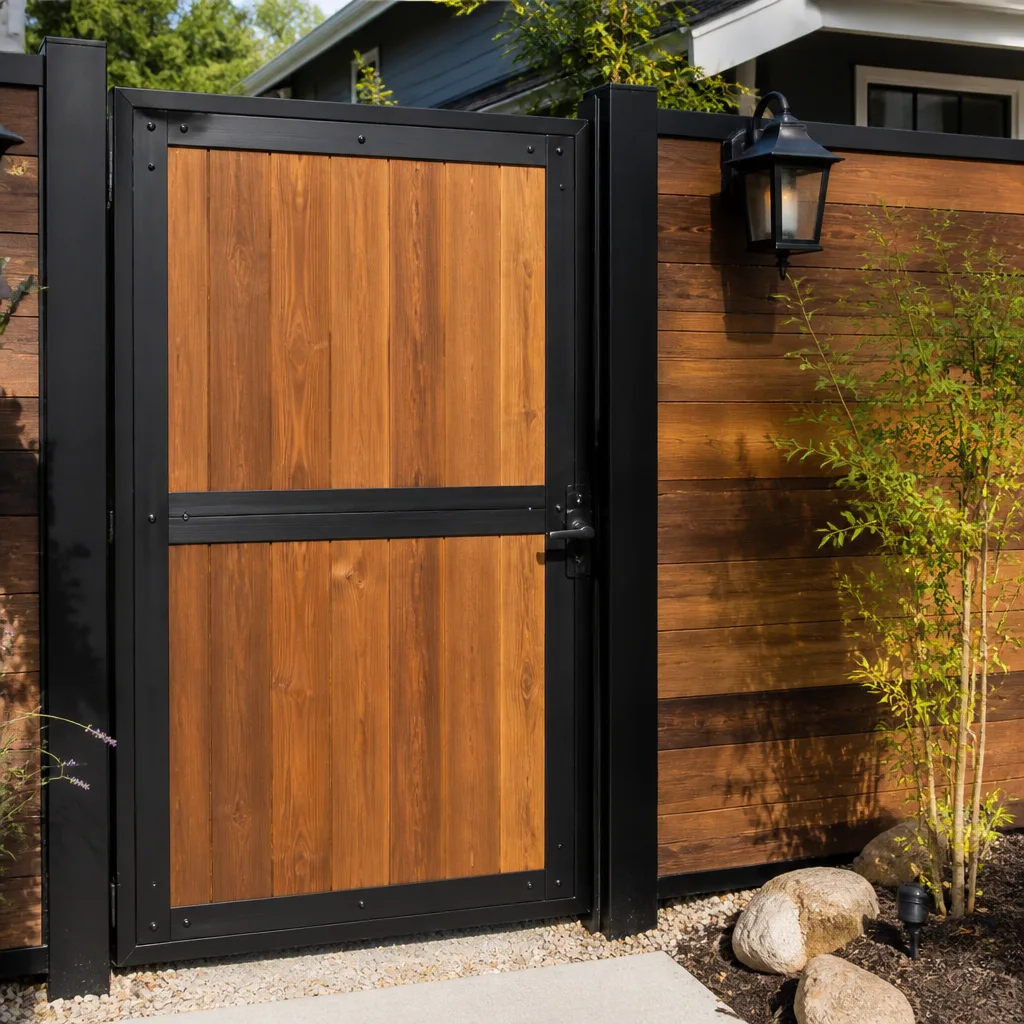 Wood & steel frame
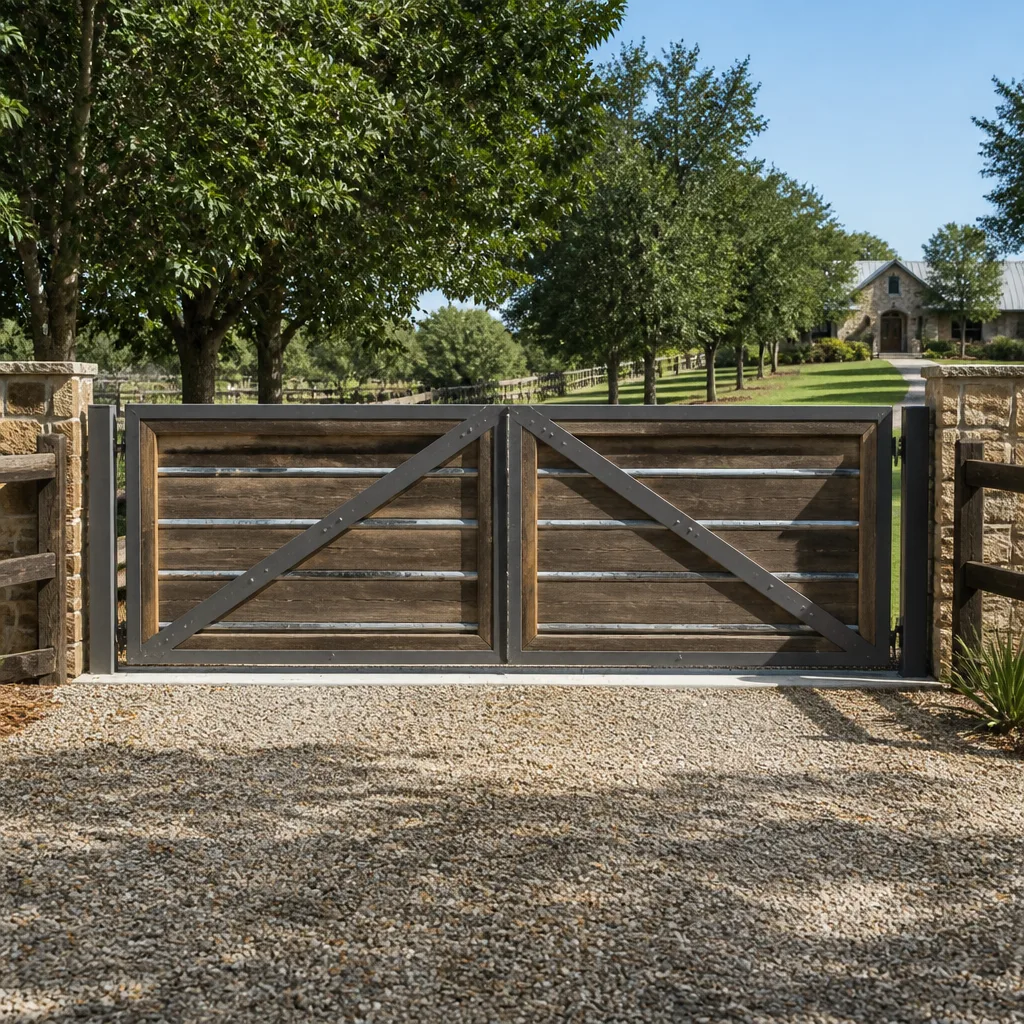 Farm & ranch
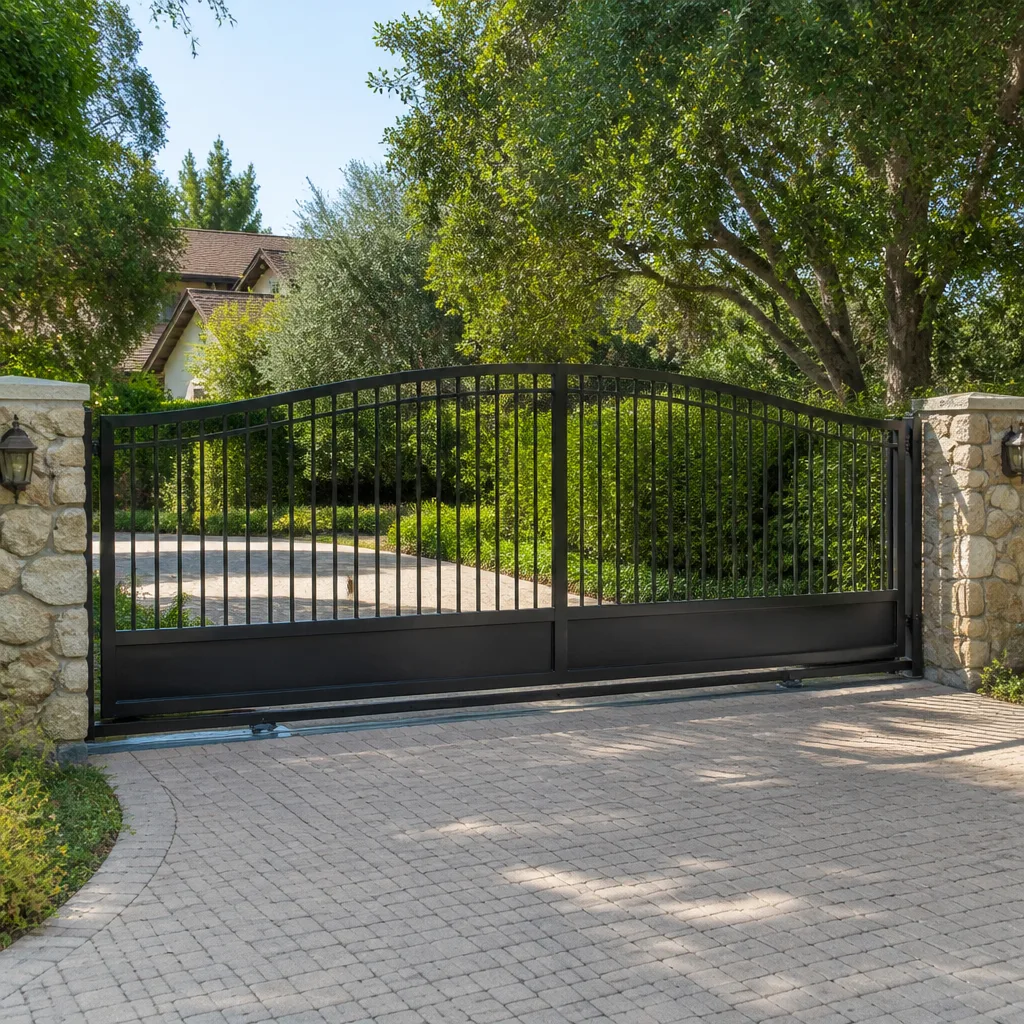 Sliding driveway gates
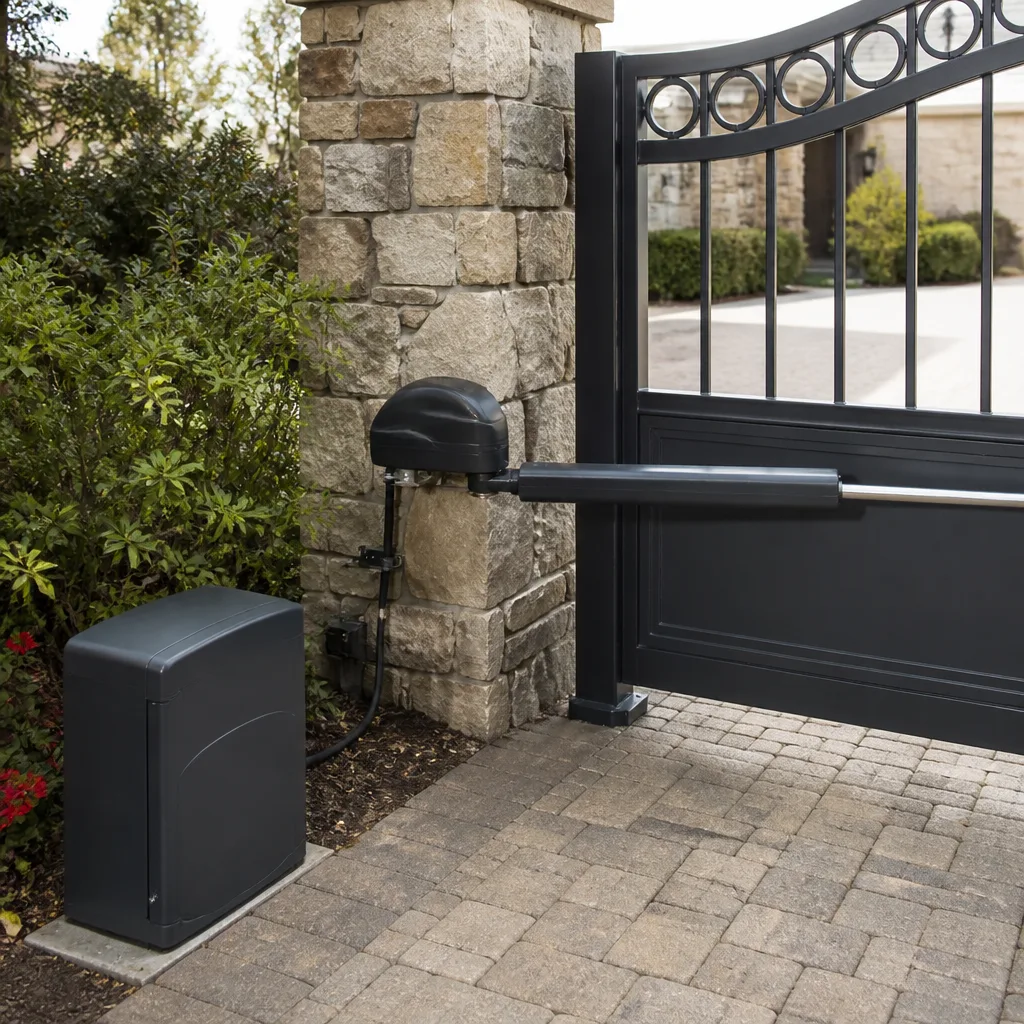 LiftMaster operators
Free on-site gate assessment - hinges, posts, and your LiftMaster or Nice gate operator checked before anything is quoted
The assessment is free and the quote is the invoice.
Get your free estimateGate Repair Maintenance Checklist for Evanston Homeowners
The part most likely to strand you isn’t the motor, it’s the battery. A gate battery backup has a 2 to 3 year service life whether the power fails once a month or never, and most homeowners find this out late at night with the car on the wrong side of a closed gate. The motor will usually give you warnings. A tired backup battery won’t. This guide organizes maintenance by component lifespan instead of the usual lubrication pep talk, because a hinge, a control board and a photo eye don’t age at anything like the same rate. You’ll get realistic intervals for each part of an automated gate in Evanston, plus the tasks you can handle yourself and the ones that belong to a technician.
Quick Answer
A gate maintenance checklist should split your system into four aging groups and service each on its own clock: gate hardware once or twice a year, the operator’s mechanical parts once a year, access-control electronics and safety devices every six months, and consumables like backup batteries on a fixed 2 to 3 year replacement cycle no matter how the gate behaves. Evanston’s freeze-thaw winters and road salt drift make hardware and footing checks more important here than in milder climates, and they don’t postpone the electronics schedule.
Styles & brands we work with
- Wrought iron
- Wood & steel frame
- Farm & ranch
- Sliding driveway gates
- LiftMaster operators
Table of Contents
- Why Gate Maintenance Should Be Organized by Lifespan, Not by Season
- Gate Hardware: Hinges, Rollers, Chains and Tracks
- Operator Internals: Motors, Gearboxes and Drive Components
- Access Control Electronics: Keypads, Intercoms and Receivers
- Safety Devices: Photo Eyes, Edges and Loop Detectors
- What You Can Check Yourself vs. What Needs a Technician
- Evanston Environmental Factors That Change the Schedule
- How to Log Maintenance So repairs Go Faster
- Red Flags That Mean Repair Is Now Unavoidable
Why Gate Maintenance Should Be Organized by Lifespan, Not by Season
Most checklists tell you to lubricate in spring and call it a year. That treats a chain and a control board as if they wear at the same speed, which they don’t. A sliding gate’s rollers may need attention every few months while its receiver board runs happily for years and then fails from a humidity spike. Grouping tasks by lifespan tells you what actually needs looking at and what you can leave alone.
We think of an automated gate as four aging groups:
- Hardware – hinges, rollers, chains, tracks, latches and the posts or footing they mount to. Exposed to weather, moves on every cycle, wears fastest.
- Operator mechanics – motor, gearbox, drive belt or arm, limit switches. Sealed or semi-sealed, wears with cycle count, ages more slowly than hardware.
- Access control electronics – keypads, intercoms, receivers, control boards, remote programming. No moving parts, but sensitive to moisture, power surges and age.
- Safety devices and consumables – photo eyes, safety edges, loop detectors and the backup battery. Safety devices fail silently; batteries fail on a timer.
Organized this way, a yearly visit isn’t one blur of greasing. It’s a hardware inspection, an operator check, an electronics review and a battery decision, each on its own interval. For an Evanston homeowner with a swing gate on a mature lot or a slide gate at the end of a long driveway, that structure is what keeps a small fix from becoming a motor replacement. When a component does fail outright, that work moves from checklist territory into gate repair, and the earlier sections of this guide are exactly how you shorten the diagnostic time.
Gate Hardware: Hinges, Rollers, Chains and Tracks
Inspect gate hardware every six months, and again after any stretch of hard freezing weather. This is the group that wears first, and in Evanston it takes a beating. Hinges on a swing gate, rollers and tracks on a slide gate, chains and their tension, latches, stops and the concrete or posts they attach to all move with every cycle and sit exposed to everything the season throws at them.
What a hardware check covers:
- Hinge play on swing gates – lift and rock each leaf to feel for looseness, which loads the operator arm unevenly.
- Roller condition on slide gates – flat spots, cracks or a roller that no longer spins freely.
- Track alignment – debris buildup, bent sections, or a track that has shifted out of line as the ground moves.
- Chain tension and lubrication – a chain that’s too tight strains the operator; too loose and it jumps the sprocket.
- Post and footing inspection – movement, cracking or a post that has lifted or tilted.
- Latch and stop hardware – anything that forces the gate to slam or bind at the end of travel.
The freeze-thaw cycle is why footing checks matter here more than in a mild climate. Concrete that heaves and settles over winter can shift a gate post just enough to throw a slide gate off its track or throw a swing gate’s geometry out. That shows up as a gate that suddenly rubs, binds or stops short. Catch it at the six-month check and it’s an adjustment. Leave it a couple of winters and it’s a footing job. Road salt drift from the Green Bay Road corridors adds a second problem: gritty salt film works into rollers and chain links and dries into an abrasive paste, so a quick clean and fresh lubricant after the salting season pays for itself. Lubrication here is ordinary gate hardware care, one of the few jobs a careful owner can do without special tools.
Operator Internals: Motors, Gearboxes and Drive Components
Give the operator its own service visit once a year, separate from the hardware check. The motor, gearbox, drive arm or belt, limit switches and the control housing are the expensive heart of the system, and they don’t need the same frequent attention as hardware. They do need a trained eye on cycle count, load and alignment, since a motor that’s fighting a misaligned gate will wear out years early.
A yearly operator service looks at:
- Gearbox and drive condition – unusual noise, vibration, or signs of lubricant loss on sealed units.
- Limit switch accuracy – whether the gate still stops cleanly at fully open and fully closed, or creeps and strains.
- Motor load and current draw – a motor pulling more than it should is telling you the gate is binding somewhere.
- Mounting and alignment – the operator bracket and arm, and how they sit relative to the gate hardware.
- Control housing seals and wiring connections – moisture intrusion and loose terminals are common causes of intermittent faults.
This is where gate-only focus pays off. We work on liftmaster, FAAC, Elite and Mighty Mule systems regularly, and each brand has its own quirks in gearbox wear and limit adjustment. A technician who sees those operators every week notices the early signs a generalist misses. That’s also when a gate motor & opener review makes sense, if the unit is near the end of its life rather than failing outright. Our technicians have up to 12 years of experience with these systems, and that experience is mostly about reading the small signals before they become a breakdown.
Access Control Electronics: Keypads, Intercoms and Receivers
Access control electronics deserve a six-month look, even though they have no moving parts. Keypads, intercoms, receivers and the control board are the most moisture-sensitive parts of the system, and they fail in ways that don’t always announce themselves. A keypad that’s slow to respond, a remote that works only up close, or an intercom with a scratchy speaker is often an early warning rather than a one-off.
The six-month electronics check covers:
- Keypad buttons and weather seal – sticking keys and water getting behind the faceplate.
- Intercom and call-button function – clarity, volume and the wiring to the house.
- Receiver range and remote battery health – weak or inconsistent range usually points to the receiver or antenna, not the remote.
- Control board condition – signs of moisture, insect intrusion or corrosion at the terminals.
- Backup power test – this is the moment to check the battery, not wait for it to fail.
Humidity is the quiet enemy in Evanston. A control board sealed against rain can still collect condensation through a humid summer, and a board that’s been damp for a season will start acting up before it quits. Any access-control work that involves wiring, programming or replacing a board belongs to a technician, and it’s the kind of thing we handle under gate access control rather than treat as an afterthought. If someone in the household relies on a keypad code or a phone-linked intercom, a working entry system is worth keeping on schedule.
Safety Devices: Photo Eyes, Edges and Loop Detectors
Safety devices need testing every six months and should never be skipped, because a failed safety device is silent. Photo eyes, safety edges and loop detectors are what stop a gate from closing on a person, a pet or a vehicle. When they fail, the gate often keeps working normally and gives no sign that its protection is gone. Photo eyes are the most common failure point, and a spider, a shifted bracket or a dirty lens can take them out quietly.
A safety check walks through:
- Photo eye alignment and lens cleanliness, and confirming the gate reverses when the beam is broken.
- Safety edge function, if the gate has one – the gate should stop and reverse on contact.
- Loop detector response in the driveway, for gates with vehicle detection.
- Force and sensitivity settings, so the gate reverses on contact rather than pushing through.
- Manual release operation, so the gate can still be opened by hand if the operator fails.
Safety-device wiring, adjustment and repair are technician work; the risks of a gate closing on someone are too serious for guesswork. What an owner can and should do is the simple test: stand clear, break the beam with an object, and watch whether the gate reverses. If it doesn’t, stop using the automatic function and book a visit. That one habit catches most safety failures before they matter, and it’s the single most valuable line on this whole checklist.
What You Can Check Yourself vs. What Needs a Technician
A good chunk of this checklist is legitimate owner territory, and knowing where that line sits keeps you from voiding a warranty or hurting yourself. The dividing line is simple: anything that’s inspection, cleaning or lubrication is usually fair game; anything that opens a control housing, touches wiring, adjusts a safety device or works on the operator’s internals belongs to a technician.
Reasonable owner tasks:
- Clearing debris from tracks and the gate’s path.
- Wiping down rollers, chain and hinges after the salting season.
- Visual inspection of posts, footings and hinges for movement or cracking.
- Testing photo eyes by breaking the beam and watching for reversal.
- Checking and replacing remote batteries.
- Using the manual release and confirming it works.
Leave to a technician:
- Anything inside the operator or control housing.
- Adjusting or repairing safety devices and their wiring.
- Electrical connections, motor load testing and limit-switch adjustment.
- Reprogramming keypads, receivers or access control.
- Footing, post and structural work.
A note on warranties: many operator warranties require service by a qualified technician and exclude damage from owner adjustments to internals. Poking at a control board to save a service call can cost you the coverage on the whole operator. When in doubt, a quick call settles which side of the line a task sits on.
Evanston Environmental Factors That Change the Schedule
The standard intervals work anywhere, but Evanston’s conditions push three specific tasks higher on the list. First, road salt drift from the Green Bay Road corridors coats hardware with an abrasive film through the salting season; rollers and chains want a clean and relube more often than the general six-month rule suggests. Second, freeze-thaw movement in the ground around footings is the main reason a gate suddenly stops tracking or binds, so post and footing checks after hard freezes earn their place. Third, humid summers are hard on control boards, and a board that sees condensation season after season is likelier to fail young.
What that means for a maintenance plan:
- After the salting season: clean and lubricate hardware, chain and rollers.
- After hard freezing: walk the gate’s travel and check for binding, rubbing or off-track movement that points to a footing shift.
- Before summer humidity peaks: look over the control housing and keypad seals.
- On a fixed clock: replace the backup battery every 2 to 3 years regardless of how things look.
Neighborhoods with a lot of mature trees and long driveways see debris and moisture collect around gates faster, so those properties benefit from the shorter end of each interval. It’s not about a stricter standard; it’s about listening to what the local conditions actually do to a gate.
How to Log Maintenance So Repairs Go Faster
A simple log turns a confusing breakdown into a quick diagnosis. When a gate acts up, the technician’s first questions are always about history: what was serviced, when, and what changed. If you can answer those in a few lines, the visit starts with answers instead of questions. Keep it somewhere easy to find, like a note on the fridge or a page in a folder.
The data points worth recording after each service:
- Date and what was done – hardware check, operator service, electronics review, battery replacement.
- Battery install date – so you know when its 2 to 3 year run is up.
- Any adjustments made – limit switches, force settings, chain tension, safety devices.
- Parts replaced and their brand – note the manufacturer so the next visit knows what it’s working on.
- Symptoms you noticed – slow open, unusual noise, short remote range, a light that flashed oddly.
- Weather or events around the change – a hard freeze, a big storm, or the start of the salting season.
That last point matters here. A gate that started misbehaving right after a freeze points a technician toward footing movement; one that acted up after a humid stretch points toward the board. Either way, the log is what lets a gate-only specialist skip the guesswork and get you sorted. If you’ve been wondering about a symptom, Evanston Gate Repair can take a look and give you a straight read.
Red Flags That Mean Repair Is Now Unavoidable
Some signs mean maintenance has already slipped into repair. A gate that reverses for no reason, stops mid-travel or makes a grinding noise under load is telling you a component has worn past adjustment. So is a motor that sounds strained, a keypad that only works intermittently, or a remote whose range has shrunk to a few feet. Catch these early and they’re usually a fix; ignore them and they turn into a motor or board replacement.
Red flags to act on quickly:
- Gate reverses, stops or stutters without a clear cause.
- Grinding, clicking or a strained tone from the operator.
- Gate binds, rubs or drags along its travel.
- Keypad, intercom or remote working only sometimes.
- Photo eye or safety edge failing to reverse the gate.
- Backup battery giving no response, or the gate dead when power is out.
- A post or footing visibly shifted or cracked.
If a safety device has failed, shut off the automatic function and use the manual release until a technician can look at it. And if two or more of these show up at once, resist the urge to keep cycling the gate while you decide. Acting early is cheaper than living with a failing system, and it’s a lot less stressful than discovering the real problem at the worst possible moment.
Common Mistakes to Avoid
- Treating the checklist as one seasonal task. Greasing hinges once a year and calling it done leaves the electronics, safety devices and battery on no schedule at all, which is exactly where failures hide.
- Ignoring the backup battery because the power rarely goes out. The battery ages on a timer, not on outages, so it gets replaced on a fixed 2 to 3 year cycle rather than when it dies mid-use.
- Skipping the salting-season cleanup. In Evanston, road salt drift from the Green Bay Road corridors works into rollers and chains and turns into an abrasive paste; cleaning and relubing after the salting season is what keeps hardware moving.
- Assuming photo eyes still work because the gate opens. A failed safety device usually leaves the gate working fine and silently unprotected, so the beam test needs doing, not assuming.
- Poking at the control board to save a call. Owner adjustments inside the operator can void a warranty and make the real fault harder to find; that work belongs to a technician.
- Blowing off footing movement. A post that shifted over winter will throw a gate’s alignment off and wear the motor; catching it early keeps it a small adjustment.
- Keeping no log. Without a record of what was serviced and when, every breakdown starts from zero and diagnosis takes longer than it needs to.
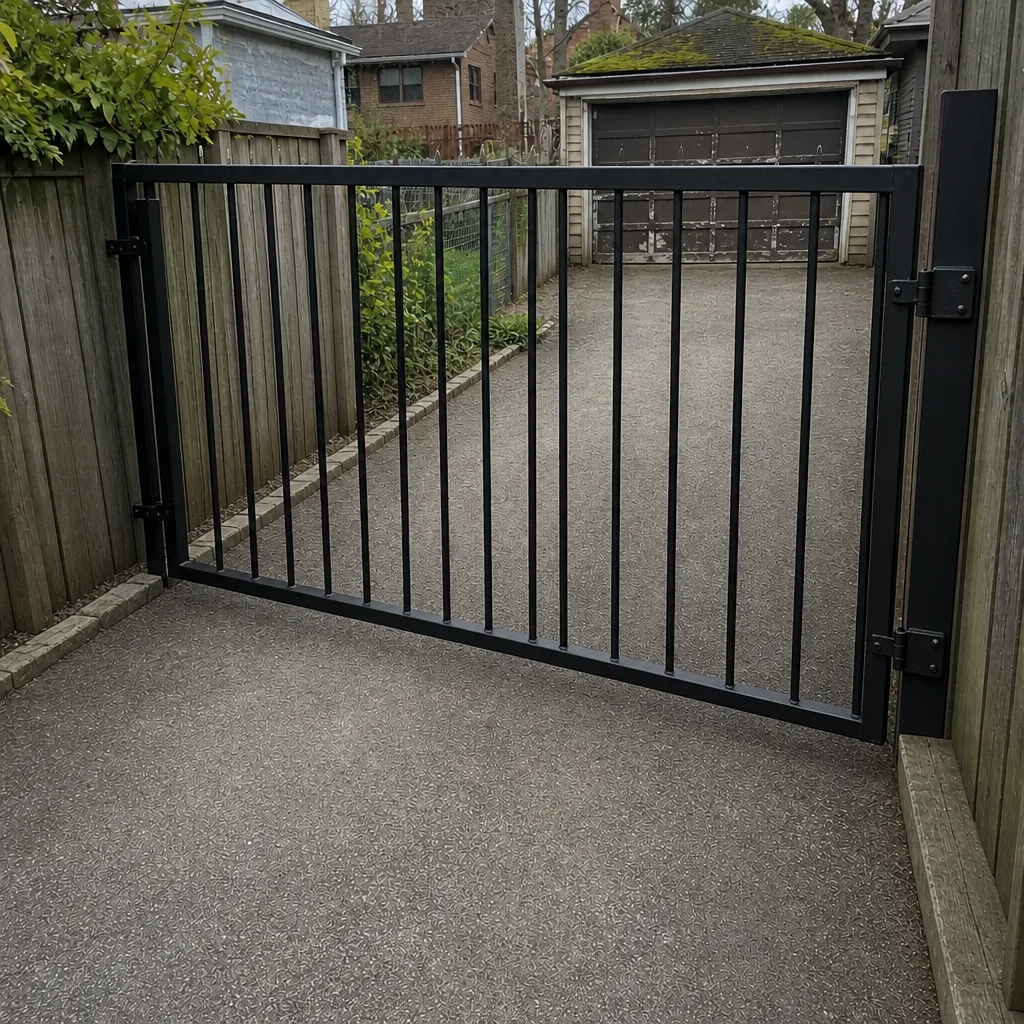
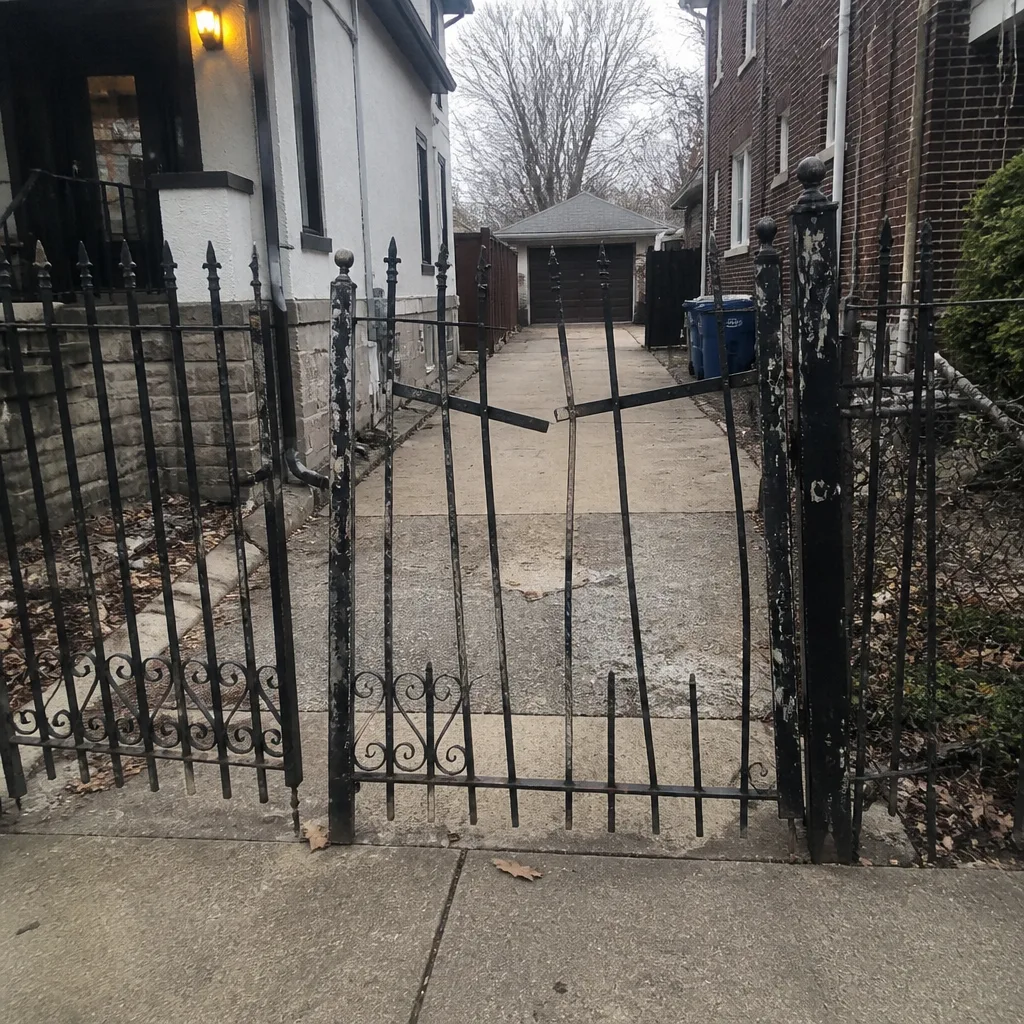
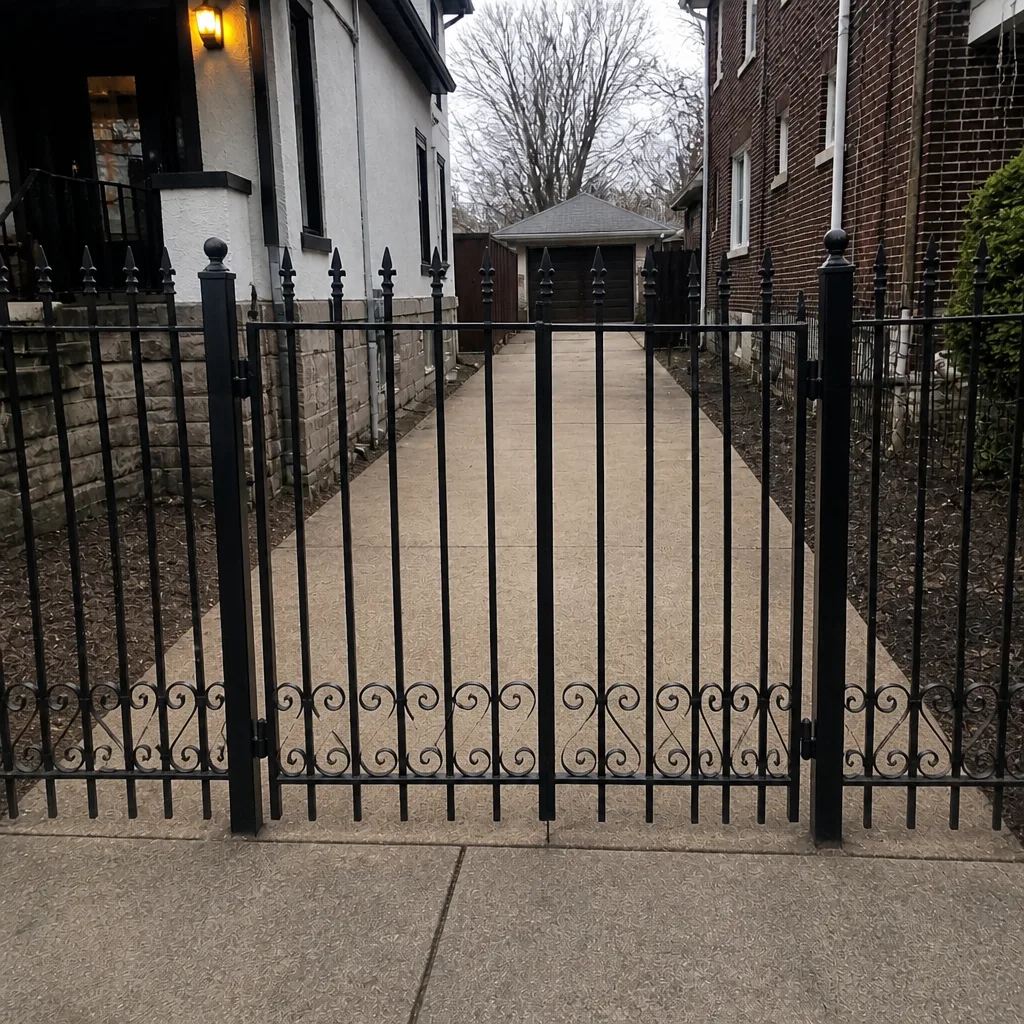
See the difference
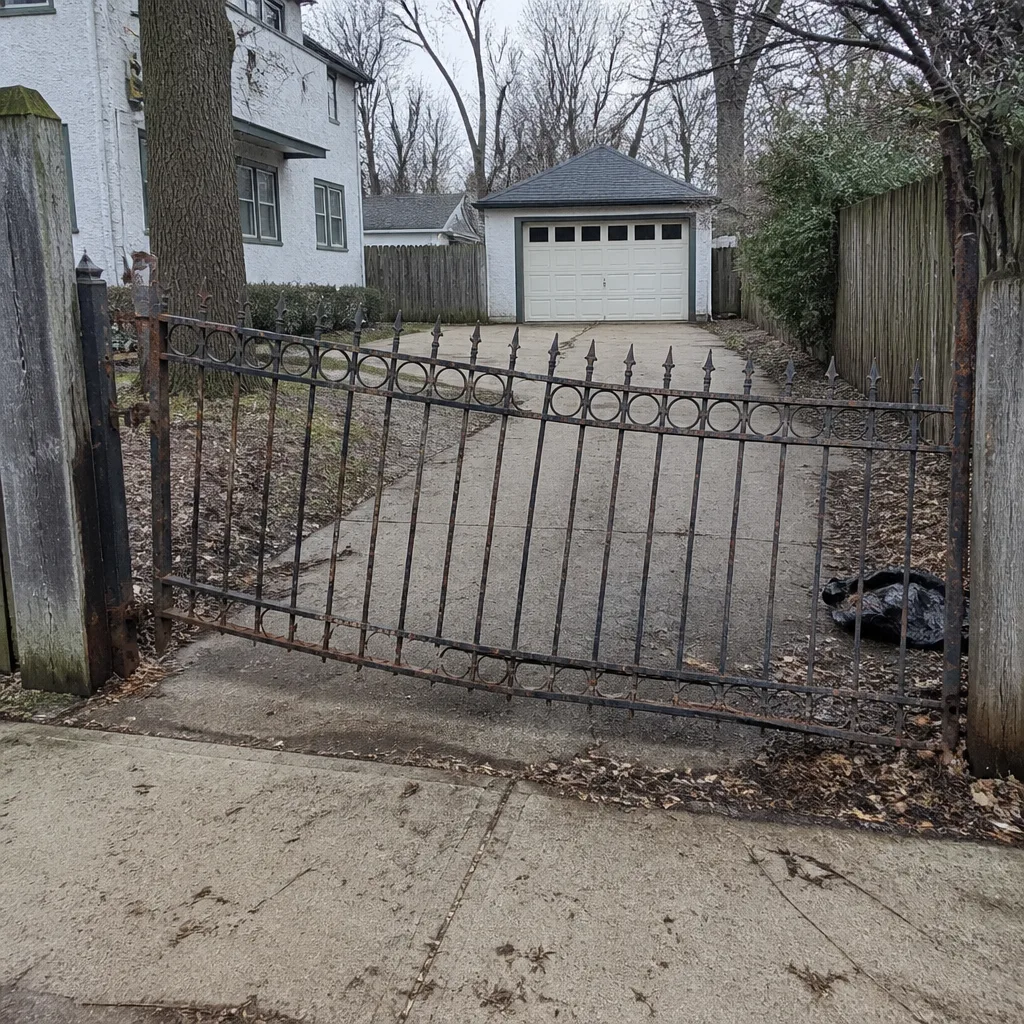 Before
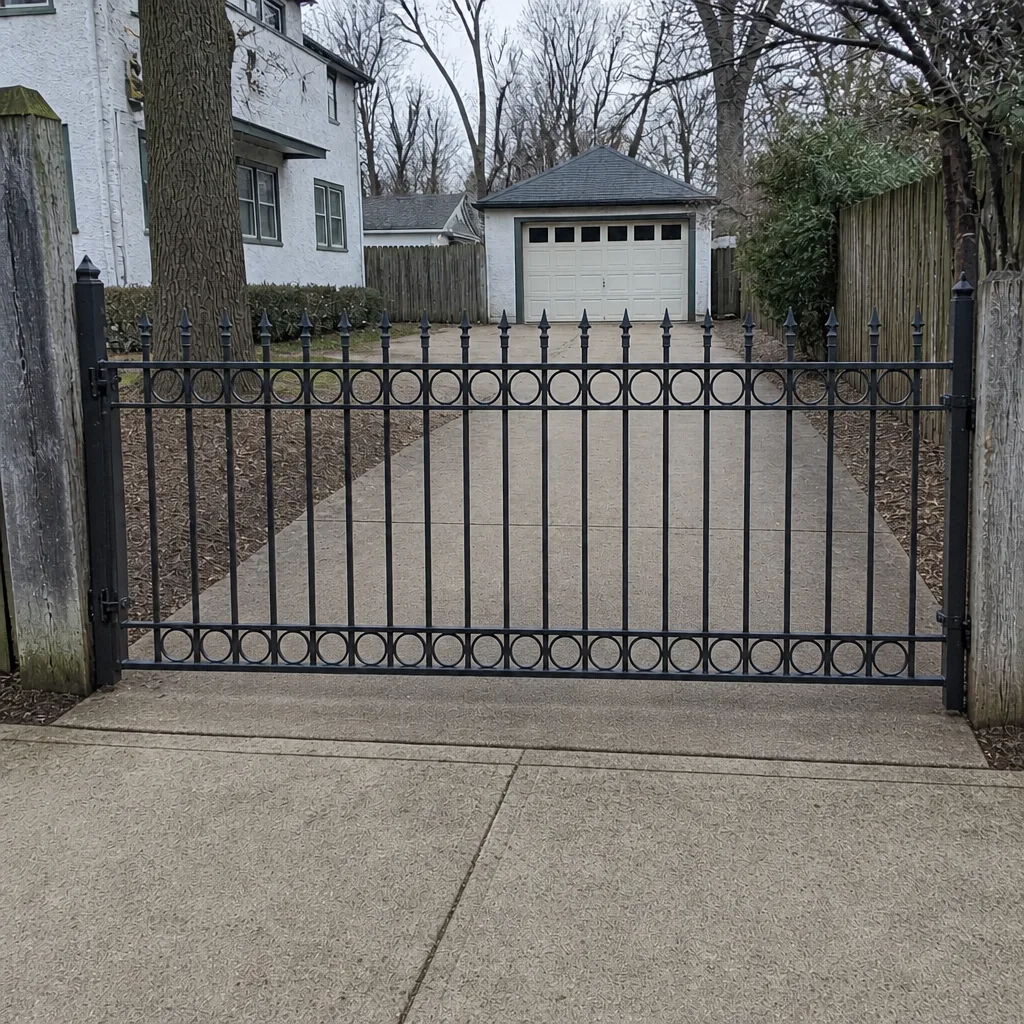 After
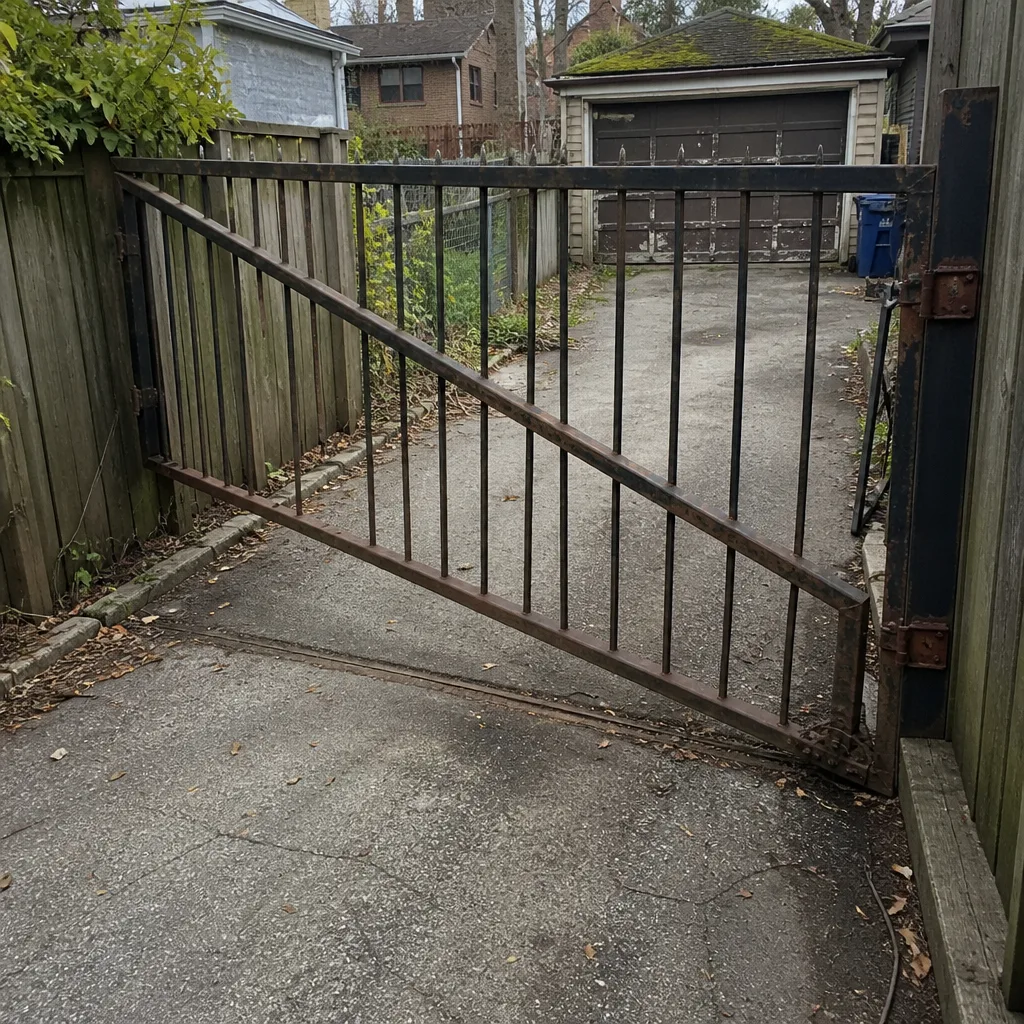 Before
 After
 Before
 After
When to Call a Professional
Call a professional when a safety device fails, when the operator makes grinding or straining noises, when the gate reverses or stops on its own, when a keypad or intercom works only sometimes, or when a post or footing has clearly moved. Any work inside the operator, any wiring, any safety-device adjustment and any structural repair should go to a trained technician, full stop. Evanston Gate Repair offers free estimates in Evanston and works on liftmaster, FAAC, Elite and Mighty Mule systems as well as other major brands. Call (833) 467-5627 to book a visit or talk through a symptom, and we’ll give you a clear, upfront price before any work starts.
Frequently Asked Questions
Hardware should be checked every six months, the operator once a year, access-control electronics every six months, and the backup battery replaced every 2 to 3 years. Evanston’s salting season and freeze-thaw cycles make the hardware and footing checks worth doing after hard weather as well. Call (833) 467-5627 for an exact service plan and free estimate.
A gate backup battery typically lasts 2 to 3 years regardless of how often the power goes out. It ages on a timer, not on outages, which is why it gets replaced on a fixed cycle rather than after it fails. If you’re unsure of the age, a technician can test it and tell you where it stands.
Cleaning and lubricating hardware, clearing debris and testing photo eyes are usually fine for an owner to do, but anything inside the operator or involving wiring and safety-device adjustment should go to a technician. Many warranties exclude damage from owner adjustments to internals. Call (833) 467-5627 if you’re not sure which side a task falls on.
Hardware wear from road salt drift, footing shifts from freeze-thaw movement, and moisture-related faults in control boards and keypads are the most common issues we see. Backup battery failure is the most common surprise. All of them are easier and cheaper to fix when caught on the checklist, before they turn into a breakdown.
A maintenance visit covers hardware inspection, operator internals, access-control electronics, safety devices and a battery check, each on its own interval. The technician reports what was found and what’s coming due, and any repair is quoted and agreed before work starts. Call (833) 467-5627 for a free estimate.
Yes, because the log travels with the gate and helps any technician diagnose faster. Recording dates, adjustments, parts and symptoms means a breakdown starts from answers rather than guesswork. It takes a couple of minutes after each visit and can save a lot of diagnostic time.
The Bottom Line
A gate lasts longer when maintenance follows each component’s own clock. Hardware wants checking every six months, the operator once a year, access-control electronics every six months, safety devices tested every six months, and the backup battery replaced on a fixed 2 to 3 year cycle no matter how the gate behaves. In Evanston, road salt drift, freeze-thaw movement and humid summers make hardware cleaning and footing checks worth doing on top of the standard schedule. Keep a simple log, test the safety devices, and act on red flags early. Evanston Gate Repair offers free estimates in Evanston – call (833) 467-5627 to get started.
Written by the team at Evanston Gate Repair.