Last updated November 25, 2026
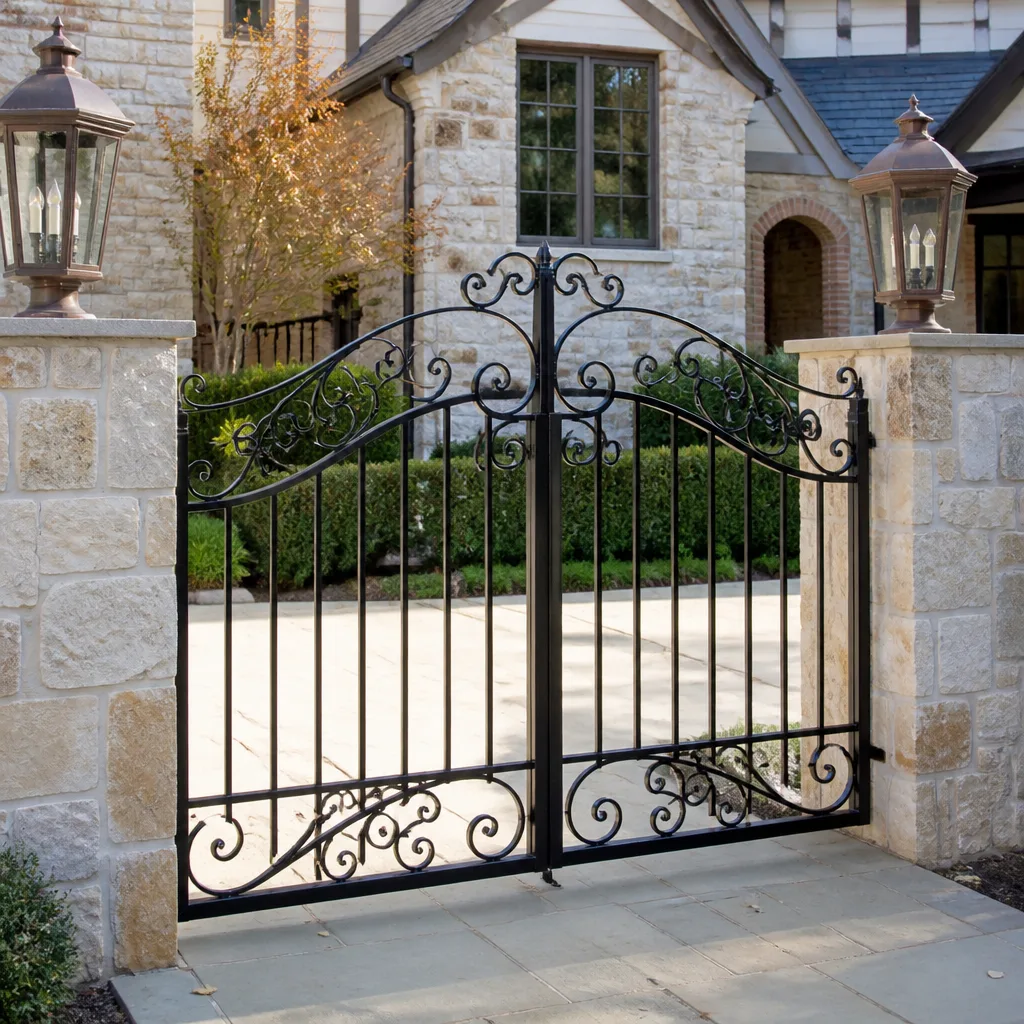 Wrought iron
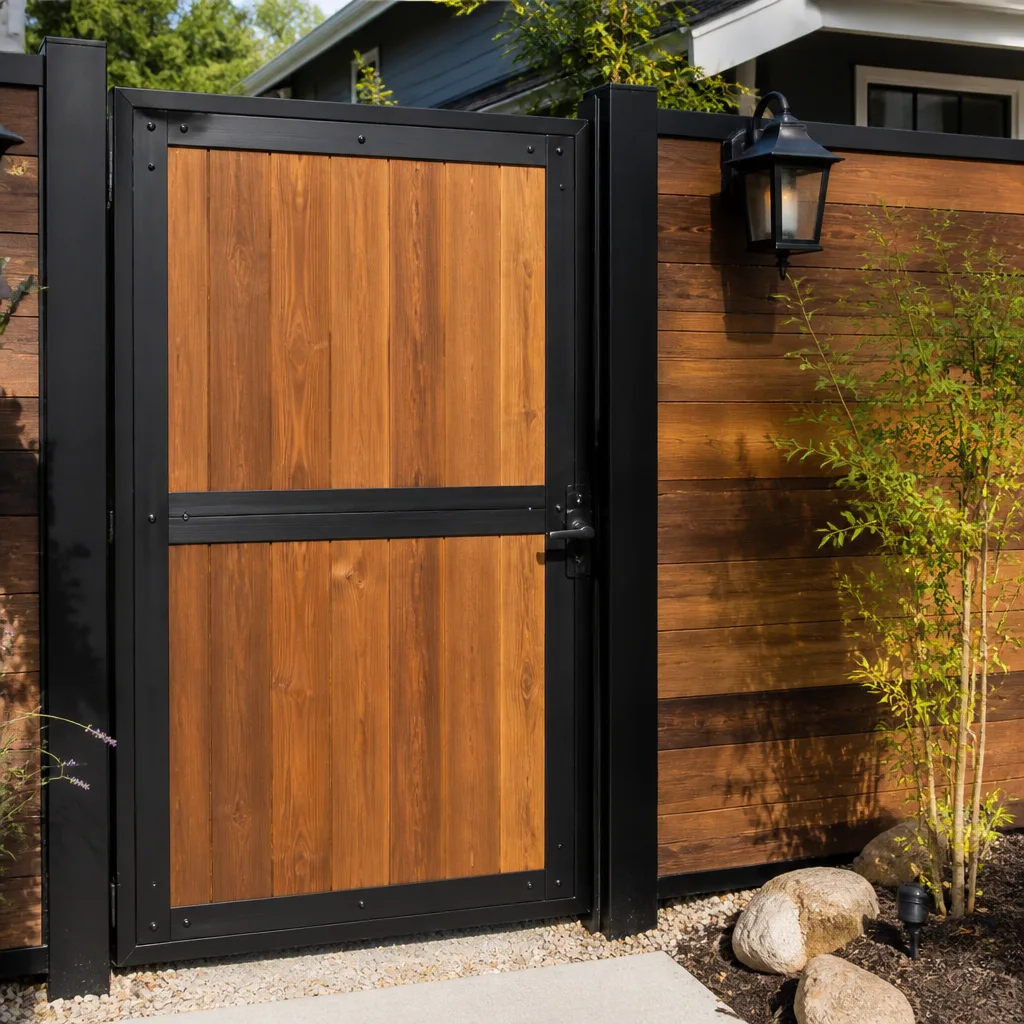 Wood & steel frame
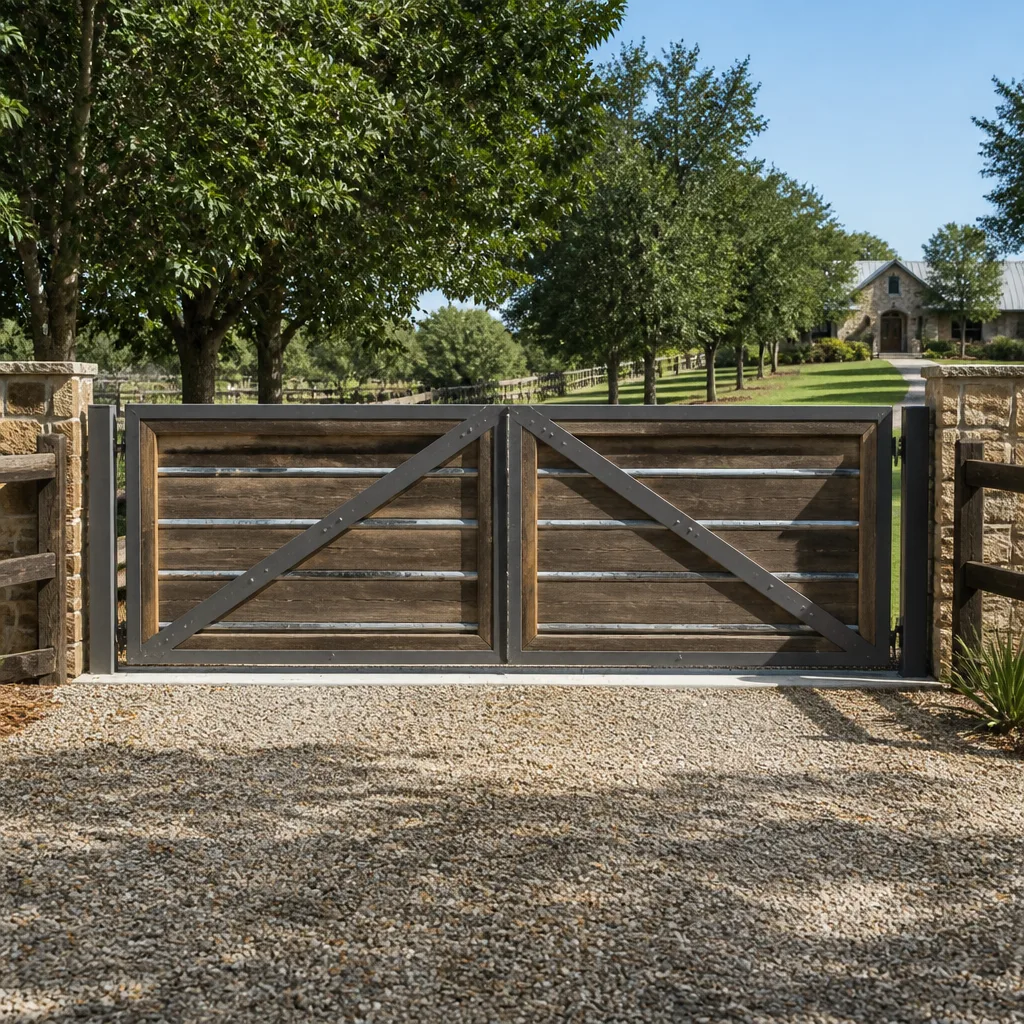 Farm & ranch
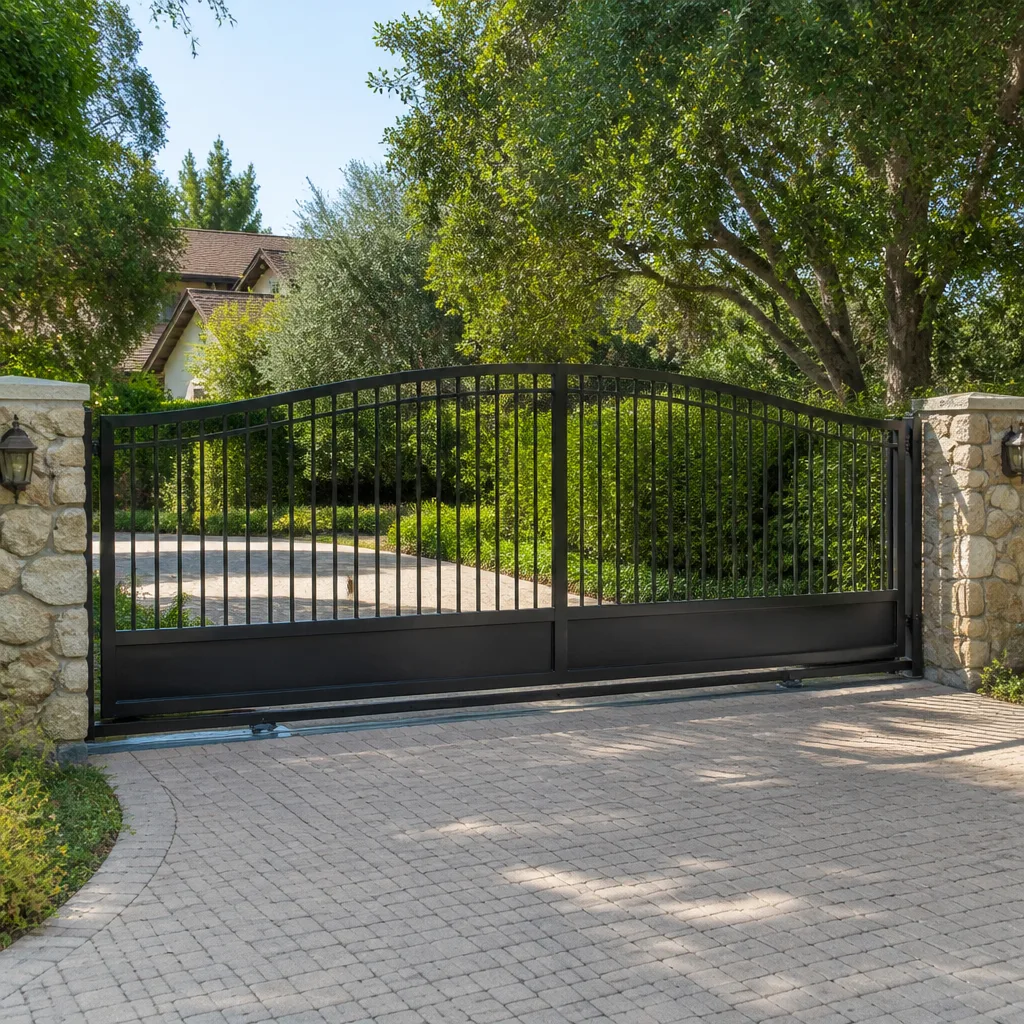 Sliding driveway gates
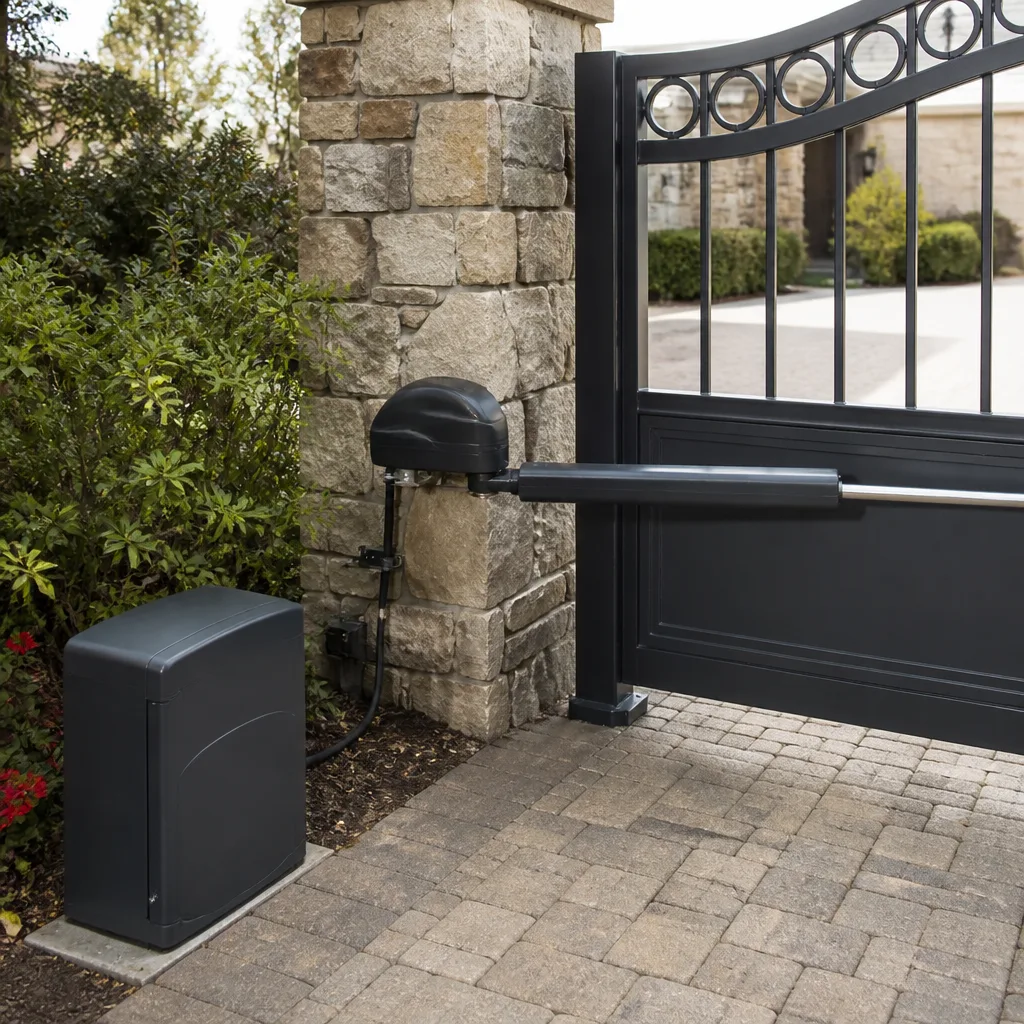 LiftMaster operators
Free on-site gate assessment - hinges, posts, and your LiftMaster or Nice gate operator checked before anything is quoted
The assessment is free and the quote is the invoice.
Get your free estimateGate Repair Warning Signs: An Evanston Homeowner’s Reference Guide
A gate that beeps three times and stops isn’t malfunctioning. It’s communicating a specific error code, and most homeowners don’t know that, so they describe it as “broken” and get quoted for a full replacement. That gap between what a gate is telling you and what gets reported is where money disappears. A gate that hesitates at the same spot every cycle is pointing at something completely different than a gate that works fine for weeks and then suddenly won’t respond. This guide maps symptoms to their most likely causes so you can describe the problem accurately, know which warning signs demand an immediate shutdown, and avoid being sold an operator you don’t need. We’ll walk through the signs we see most often on gates across Evanston.
Quick Answer
The most common gate repair warning signs are hesitation at a consistent point in the cycle, reversal before full closure, grinding or scraping sounds, failure to respond to the remote or keypad, and gates that stop partway open. A consistent symptom points to a mechanical or alignment problem; an intermittent symptom points to the operator, safety devices, access control, or power supply. Anything involving entrapment risk, sheared hardware, or compromised photo-eyes is a safety hazard and the gate should be shut down until a technician inspects it.
Styles & brands we work with
- Wrought iron
- Wood & steel frame
- Farm & ranch
- Sliding driveway gates
- LiftMaster operators
Table of Contents
- Symptom-to-Cause Mapping: What Each Warning Sign Usually Means
- Is the Problem in the Operator, the Safety Devices, the Access Control, or the Power Supply?
- Warning Signs That Are Safety Hazards (and Ones That Aren’t)
- How to Document Your Gate’s Symptoms Before You Call
- The Warning Signs Evanston Homeowners Most Often Ignore
- Why Brand Familiarity Changes a Gate Diagnosis
- How Evanston Weather Shapes Gate Wear
- What Gate Repair Typically Costs
Symptom-to-Cause Mapping: What Each Warning Sign Usually Means
Most gate problems announce themselves well before the gate stops working entirely. The key is knowing which part of the system each symptom points toward. Here’s how we map the common ones.
Hesitation at the same point every cycle
A gate that pauses, stutters, or jerks at the same spot on the track, every single time, is almost always telling you about something physical. That could be a bent track, a worn roller, a misaligned hinge on a swing gate, or debris in the path. The consistency is the clue. The operator is trying to move the gate, and something is resisting at that exact location. This is usually a mechanical repair, not a motor replacement.
Reversal before full closure
A gate that reverses without an obstruction in the way is typically reacting to its safety devices. Photo-eyes, loop detectors, or edge sensors may be misaligned, dirty, or picking up a false reading. On some systems, a failing safety edge on the gate itself will trigger a reversal every time the gate reaches a certain point. This is both a diagnostic sign and a potential safety concern, because a gate that reverses unpredictably near a person or vehicle is a risk.
Grinding, scraping, or squealing
Noise points to friction. On a slide gate, a grinding sound often means worn wheels, a track that’s collected grit, or a chain that needs tension. On a swing gate, it may be hinge wear or a failing operator gear. Ignoring a grinding gate usually turns a smaller mechanical fix into a larger one, because the friction keeps accelerating the wear.
No response at all
A gate that does nothing when you press the remote or enter the keypad code could be a dead remote battery, a power supply problem, a failed operator board, or an access control fault. The way to narrow it down is to test each layer separately, which we cover in the next section.
Partial open or partial close
A gate that opens halfway and stops, or closes most of the way and reverses, is usually hitting a limit switch issue, an encoder fault, or an obstruction sensor. On commercial-grade operators like FAAC and BFT systems, the control board logs these events, and a technician can often read the fault directly.
Is the Problem in the Operator, the Safety Devices, the Access Control, or the Power Supply?
Intermittent problems are the hardest to diagnose because the gate works fine when the technician arrives. The good news is that a few simple field tests can narrow down which layer of the system is failing.
- Test the remote and the keypad separately. If the remote works but the keypad doesn’t, the problem is in the access control, not the operator. If neither works, the issue is more likely in the operator or the power supply.
- Check the power supply. Confirm the breaker hasn’t tripped and the operator has power. On battery-backed systems like Mighty Mule and Ghost Controls, a weak battery can cause intermittent failures that look like operator faults.
- Watch the safety devices during a cycle. If the gate reverses or stops when a person or vehicle passes, the photo-eyes or loop detector is likely misaligned or failing. Clean the lenses and check for obstructions first.
- Listen for the operator’s response. If you hear the motor engage but the gate doesn’t move, the problem is mechanical. If you hear nothing, the problem is electrical or in the control board.
- Note when it happens. If the gate fails only in cold weather, only after heavy use, or only at certain times of day, that pattern points toward specific components like a failing battery, a thermal issue, or a power fluctuation.
For systems where the gate works but the entry controls don’t, a dedicated gate access control diagnostic is often the fastest path, because keypads, intercoms, and loop detectors have their own failure modes separate from the operator.
Warning Signs That Are Safety Hazards (and Ones That Aren’t)
Not every gate problem is an emergency, but some are. Knowing which is which protects your household and anyone who uses the gate.
Shut the gate down immediately if you see:
- Compromised photo-eyes or safety edges. If the gate closes on a person or object, or the safety devices don’t stop it, that’s an entrapment risk.
- Sheared or visibly broken hardware. A hinge, bracket, or arm that’s cracked or sheared can fail completely mid-cycle.
- A gate that falls or drops. On a swing gate, a sagging or dropping gate can crush or trap.
- Exposed or damaged wiring. Damaged power or control wiring near a gate operator is an electrical hazard.
- A slide gate that has come off its track. A heavy gate panel off track can topple.
Normal use is usually fine short-term if you see:
- Grinding or squealing that hasn’t worsened
- A remote with a weak battery
- A keypad that needs a second press
- Hesitation at a consistent point that isn’t getting worse
- Cosmetic wear on the gate panel
These aren’t emergencies, but they’re early warnings. A minor mechanical issue that gets ignored tends to grow into a larger repair, and sometimes into a full operator replacement. For gates with heavy panels or automated arms, working on the moving parts yourself carries real risk of crushing or entrapment; a trained technician should handle anything mechanical on a powered gate.
How to Document Your Gate’s Symptoms Before You Call
Good documentation turns a guessing game into a fast diagnosis. It also gives you a record if the problem gets misdiagnosed or a repair doesn’t hold. Here’s what to capture.
- Record a video of the failure. Film the full cycle from a safe distance, including the gate’s movement and any sounds. A 30-second clip is often worth more than a long phone description.
- Note the timing. Does the gate fail at a specific point in the cycle? Does it take longer than usual to open or close? Timing patterns point toward mechanical or encoder issues.
- Note the weather and conditions. Cold, rain, and heavy use all affect gate behavior. Evanston winters in particular can expose battery and lubrication problems.
- Capture error codes. Many operators display or beep a specific code when they fault. Write down the code or record the beeps. A technician familiar with the brand can identify the fault immediately.
- Test and note each control separately. Try the remote, the keypad, and any intercom or loop detector, and note which ones work.
- Check for obvious obstructions. Note any debris, snow, ice, or misalignment in the track or path.
When you have this information ready, a technician arrives already knowing where to look, which shortens the diagnostic visit and reduces the chance of an unnecessary part replacement.
The Warning Signs Evanston Homeowners Most Often Ignore
Some warning signs get dismissed as normal, and they’re the ones that most often lead to an operator replacement rather than a repair. In our experience, these are the top offenders.
- A gate that’s slowly getting slower. A gate that takes a few extra seconds each month is usually a sign of increasing friction or a weakening motor. Waiting until it stops entirely often means replacing the operator instead of repairing it.
- Intermittent remote or keypad failures. A remote that works “most of the time” is often a dying battery or a failing receiver. Homeowners tend to replace the remote and ignore the underlying problem.
- Grinding that’s “always been there.” Noise that’s been present for months is usually a mechanical issue that’s been wearing down the system the whole time.
- Safety devices that get nudged out of position. A photo-eye that’s slightly off gets pushed back into place and forgotten, but misalignment causes false reversals and creates a safety gap.
- A gate that reverses “sometimes” with no obstruction. This is often a failing safety edge or an operator board issue. It gets ignored because it’s inconsistent, until it becomes a full failure.
- Winter-related stiffness. Cold weather makes gates harder to move, and homeowners often assume it’s just the season. A gate that’s significantly stiffer in winter is telling you about lubrication or battery issues.
Each of these is cheaper to fix early. And with our Evanston neighbors, catching them early also avoids the most frustrating scenario: a gate that finally quits, a household scrambling for a fix, and the repair slipping into a busier week.
Why Brand Familiarity Changes a Gate Diagnosis
Not all gate systems behave the same way, and the same symptom can mean different things depending on the operator. A hesitation on a Mighty Mule residential system may be a battery issue; a hesitation on a FAAC or BFT commercial arm may be an encoder or limit setting. Knowing the brand’s fault patterns shortens diagnosis considerably.
We work on systems from LiftMaster, FAAC, BFT, Linear, Viking, Ghost Controls, DoorKing, Elite, and Mighty Mule, spanning residential, commercial, and estate gates. That range matters when a gate fault could come from the operator, the safety devices, or the access control. A generalist technician may only diagnose the part they recognize. A gate-only specialist can read the fault code, check the mechanical side, and test the entry controls in a single visit, which is the whole point of Evanston Gate Repair.
Residential operators like Mighty Mule and Ghost Controls have their own battery and control board failure patterns. Commercial-grade systems like FAAC, BFT, Viking, and DoorKing are built for heavy use and more elaborate access control, and their faults often sit in the keypad, intercom, or loop detector rather than the motor. If you’re not sure which system you have, the brand name is usually visible on the operator housing, and it’s the first thing a technician will look at.
How Evanston Weather Shapes Gate Wear
Gates in Evanston live through real seasonal swings, and those swings accelerate certain failure modes. Cold snaps make lubricants thicker, batteries weaker, and metal more brittle. Ice and snow in the track or path cause the gate to work harder, which stresses the operator. And freeze-thaw cycles shift the ground slightly, which can affect post alignment on swing gates and track alignment on slide gates.
That means some warning signs are seasonal. A gate that hesitates only in January, or reverses more often after a freeze, is often telling you about lubrication, battery health, or alignment rather than a failing motor. Checking your gate before the cold sets in is one of the simplest ways to avoid a mid-winter repair. If you notice your gate behaving differently as temperatures drop, that’s worth a look before it becomes a stuck gate in the cold.
For general repair needs on a warning sign that’s already turned into a problem, our gate repair service covers the full range of mechanical and electrical fixes. When the issue sits in the motor or the opener, that’s a gate motor & opener job.
What Gate Repair Typically Costs
Costs vary by system and fault, but a rough structure helps you understand what you’re looking at before the estimate. These are typical ranges for the Evanston market, and your written estimate sets the final price.
| Service | Typical Estimated Range |
|---|---|
| Diagnostic visit | $95 – $150 |
| Remote or keypad replacement | $120 – $300 |
| Safety device repair or realignment | $150 – $350 |
| Operator control board repair or replacement | $250 – $600 |
| Battery replacement (residential operators) | $150 – $300 |
| Mechanical repair (rollers, hinges, track) | $200 – $500 |
| Full operator replacement | $900 – $2,500+ |
That last line is the one to avoid if you can, and it’s usually avoidable when a warning sign is caught early. The price is always quoted and agreed before any work starts, so there are no surprises after the fact. If you’re comparing repair versus replacement, a technician should explain which parts are actually failing rather than defaulting to a full swap.
Common Mistakes to Avoid
- Describing the gate as “broken” without details. “Broken” usually gets quoted as a replacement. A specific symptom and a video get you a repair quote. Be as precise as you can.
- Assuming the operator is at fault. Many “failing operator” diagnoses are actually a keypad, photo-eye, or wiring problem. Test the controls before agreeing to a motor replacement.
- Ignoring the warning signs through the winter. Cold weather can worsen a gate problem quickly. In Evanston, a gate that hesitates in November may be stuck in January, so deal with it before the deep cold.
- Nudging a misaligned photo-eye and calling it fixed. A photo-eye that’s out of alignment creates a safety gap. It needs to be properly realigned, not just shifted back into place.
- Replacing a remote when the receiver is failing. If a new battery doesn’t fix the remote, the issue may be in the operator’s receiver, not the remote itself.
- Trying to fix a heavy gate mechanism yourself. Power can remain in the operator after the breaker is off, and a gate panel or arm can crush. Leave mechanical and wiring work to a trained technician.
- Skipping documentation. A video of the symptom and any error codes makes diagnosis faster and gives you a record if a repair needs to be revisited.
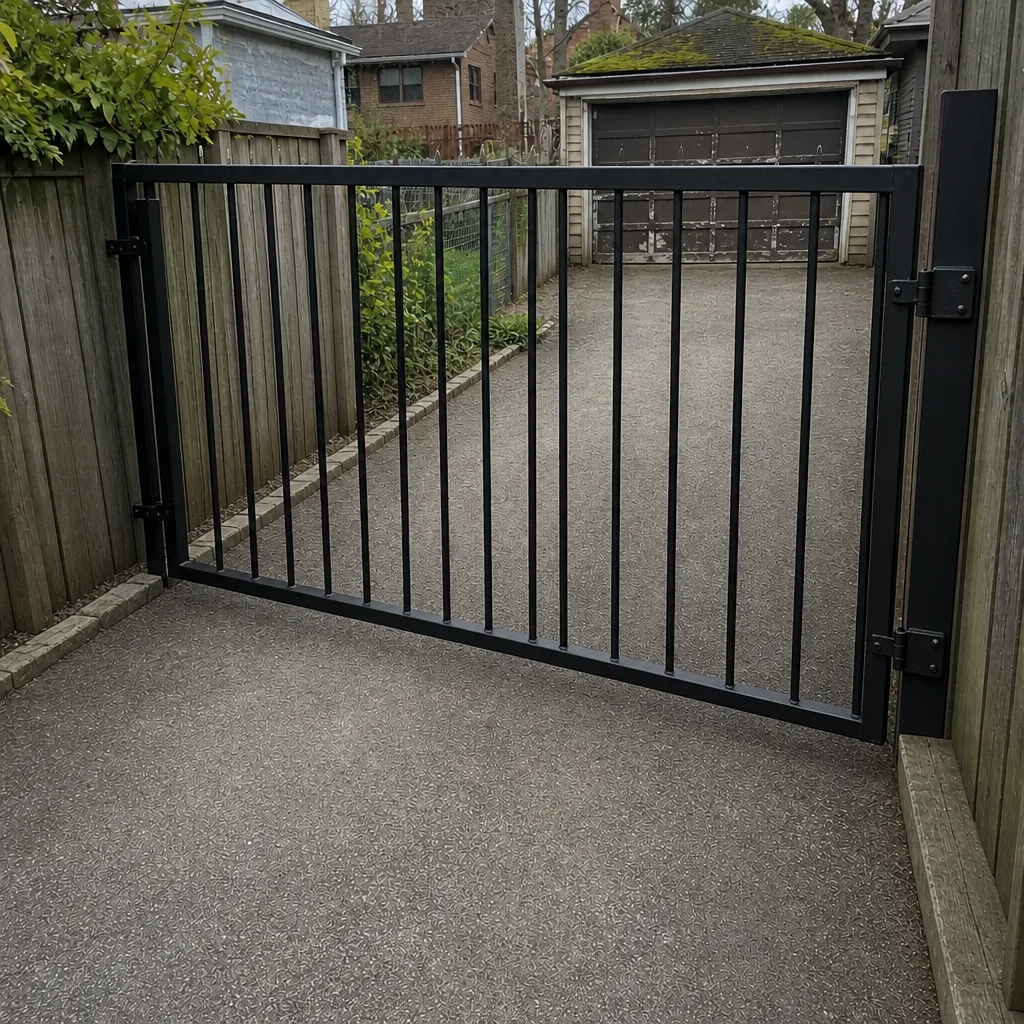
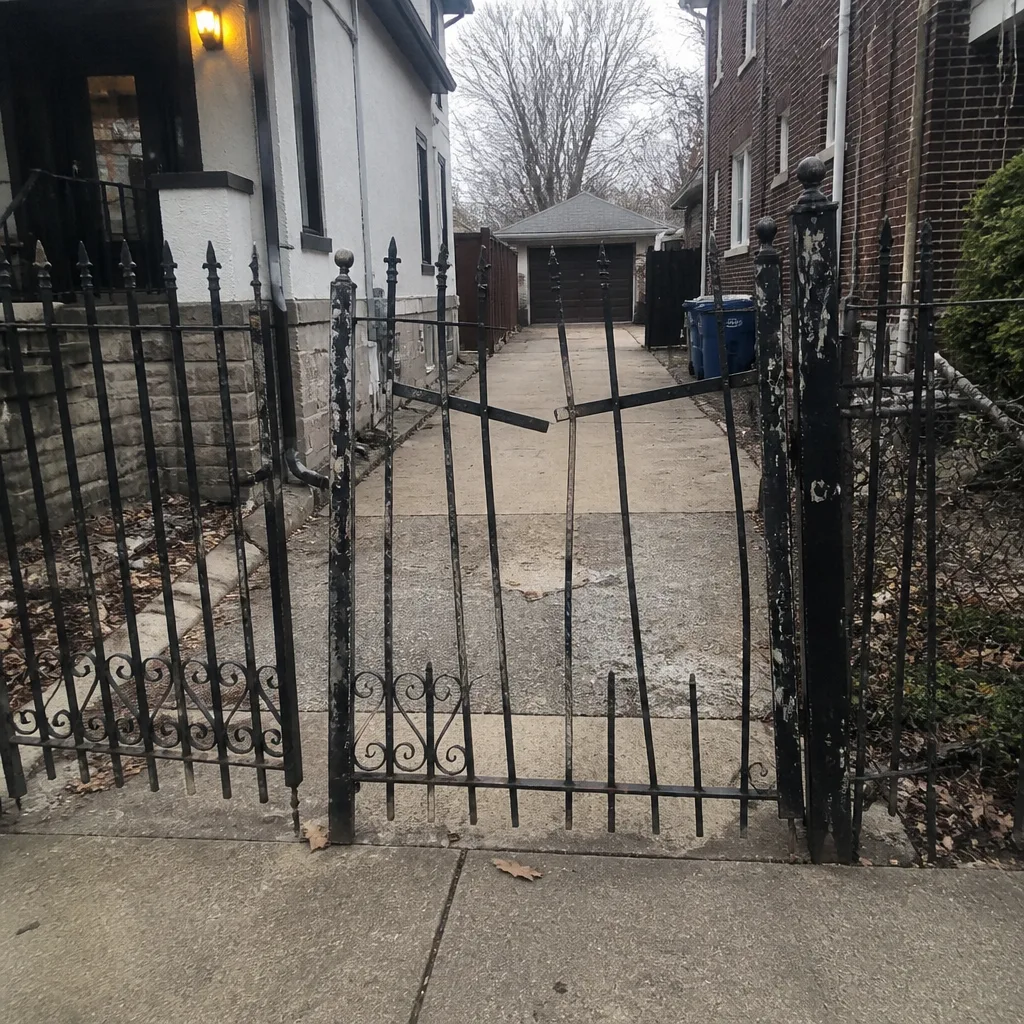
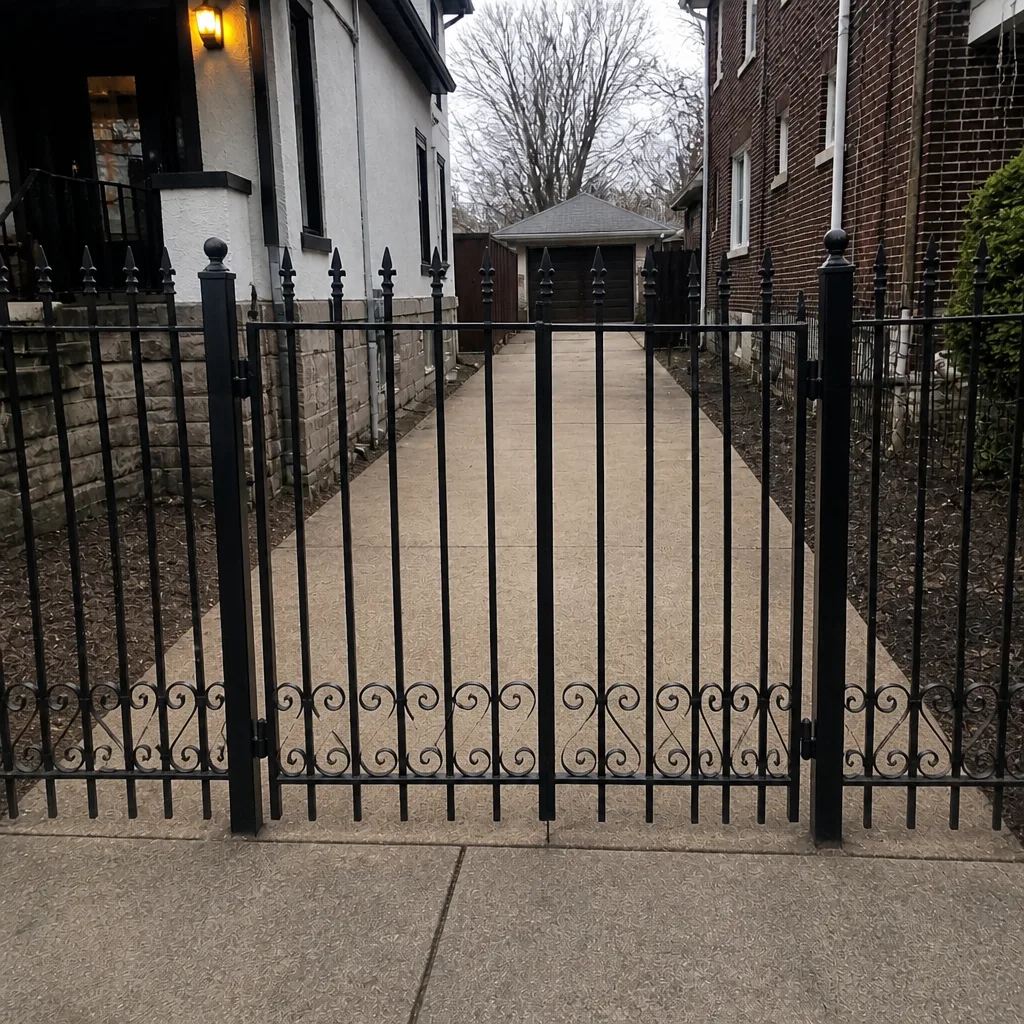
See the difference
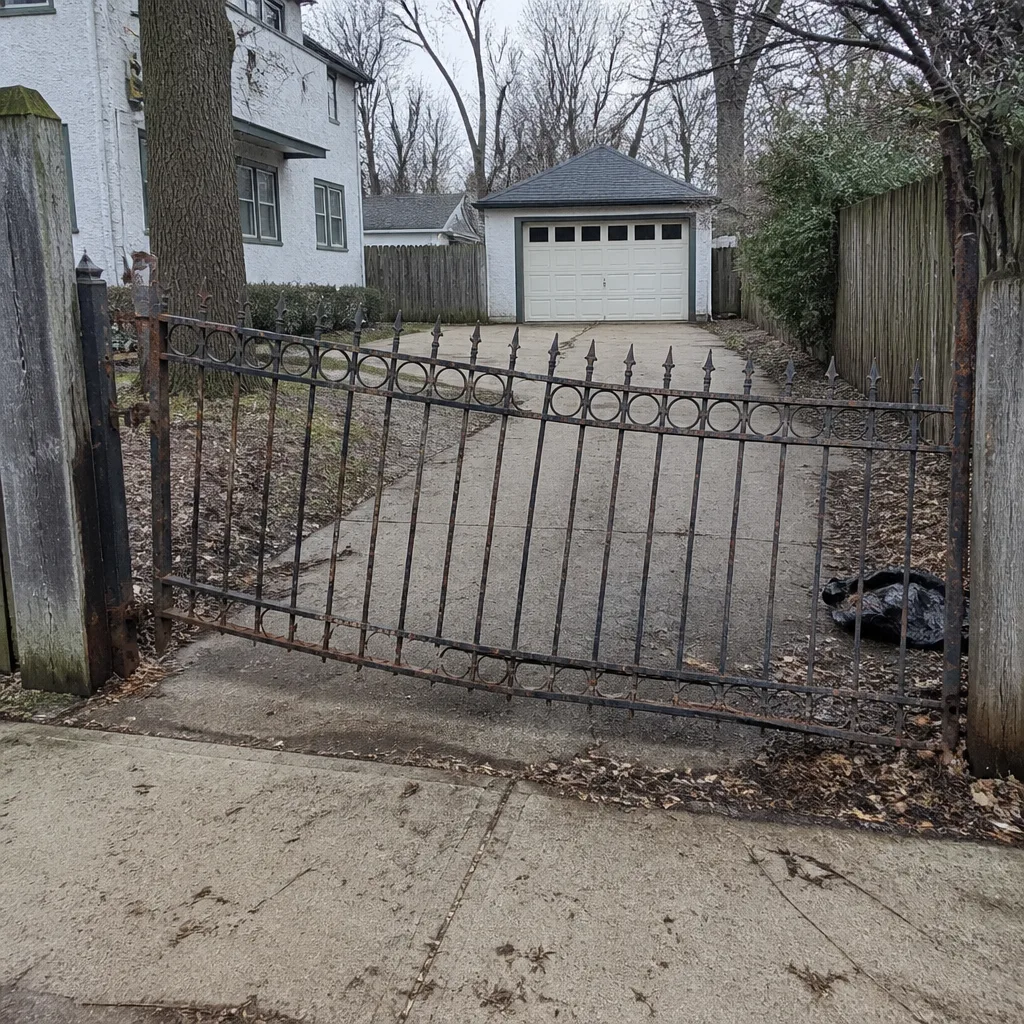 Before
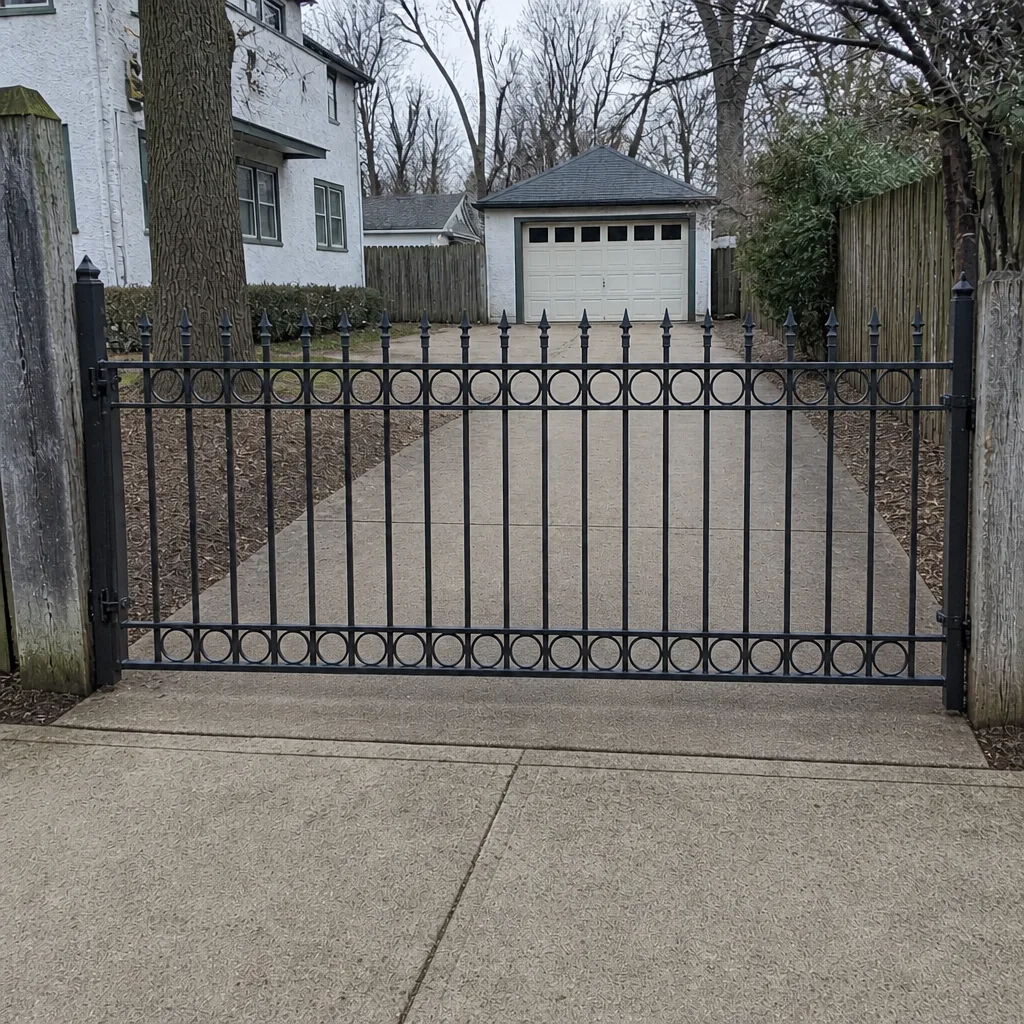 After
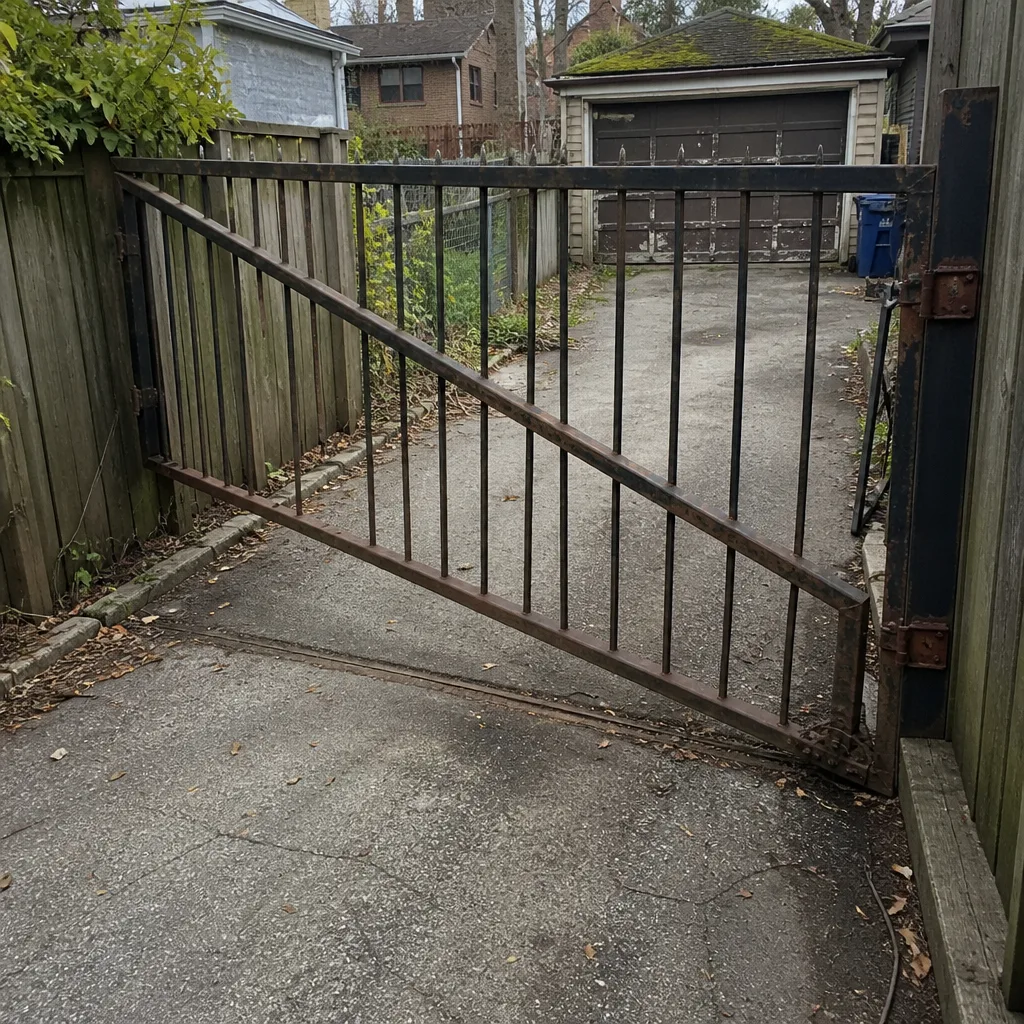 Before
 After
 Before
 After
When to Call a Professional
Call a technician when the gate is a safety hazard (entrapment risk, sheared hardware, compromised photo-eyes), when the gate won’t respond at all, when a symptom is getting worse, or when a warning sign has been ignored through a season. Call before you agree to a replacement, so the fault can be properly diagnosed. For an intermittent problem, the documentation you’ve gathered makes the visit considerably faster.
Our technicians have up to 12 years of experience with gate systems across Evanston. Evanston Gate Repair offers free estimates in Evanston; call (833) 467-5627. We’re open Sunday through Friday, 7am to 7pm, and closed Saturday.
Frequently Asked Questions
The most common signs are hesitation at a consistent point in the cycle, reversal before full closure, grinding or scraping, no response to the remote or keypad, and gates that stop partway open. A consistent symptom points to a mechanical issue; an intermittent one points to the operator, safety devices, access control, or power supply. Call (833) 467-5627 for a free estimate.
Typical estimated ranges in Evanston are about $95 – $150 for a diagnostic visit, $150 – $350 for safety device repair or realignment, $250 – $600 for control board work, and $900 – $2,500+ for a full operator replacement. The written estimate sets the final price. Call (833) 467-5627 for an exact quote; estimates are free.
In most cases, a gate that won’t move at all or presents a safety hazard can be seen quickly. We’re open Sunday through Friday, 7am to 7pm, and closed Saturday. Call (833) 467-5627 and we’ll confirm the soonest available visit.
Test the remote and the keypad separately. If the remote works but the keypad doesn’t, the fault is usually in the access control; if neither works, it’s more likely the operator or power supply. This simple test points a technician in the right direction before they arrive. Call (833) 467-5627 for a free estimate.
Yes. Compromised photo-eyes, sheared hardware, a gate that falls or drops, exposed wiring, or a slide gate off its track are all safety hazards and the gate should be shut down until a technician inspects it. Grinding, weak remotes, and consistent hesitation are not emergencies but should be repaired soon. Call (833) 467-5627 for a free estimate.
Yes, we work on systems from LiftMaster, FAAC, BFT, Linear, Viking, Ghost Controls, DoorKing, Elite, and Mighty Mule. Brand familiarity shortens diagnosis because the same symptom can mean different things on different operators. Call (833) 467-5627 for a free estimate.
The Bottom Line
A gate’s warning signs aren’t all the same, and treating them as one problem is how homeowners end up replacing an operator they didn’t need to replace. A consistent symptom usually points to something mechanical; an intermittent one points to the operator, safety devices, access control, or power supply. Anything that involves entrapment risk, sheared hardware, or compromised photo-eyes is a safety hazard and the gate should be shut down. Document what you see, including video, timing, conditions, and error codes, and you’ll get a faster, more accurate diagnosis. Catching these signs early keeps a minor repair from becoming a full replacement. When you’re ready to have a gate looked at, Evanston Gate Repair is here to get your gate moving again. Call (833) 467-5627 for a free estimate.
Written by the team at Evanston Gate Repair.