Last updated November 25, 2026
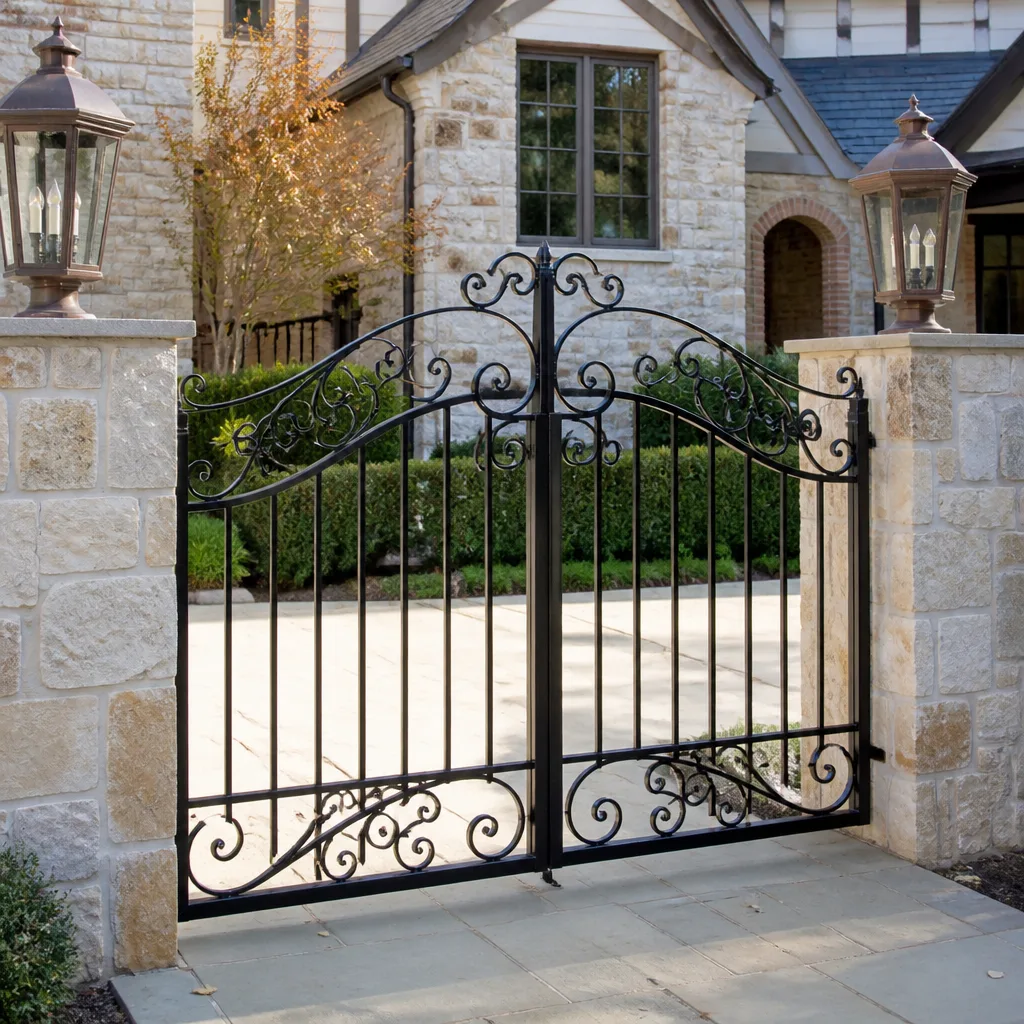 Wrought iron
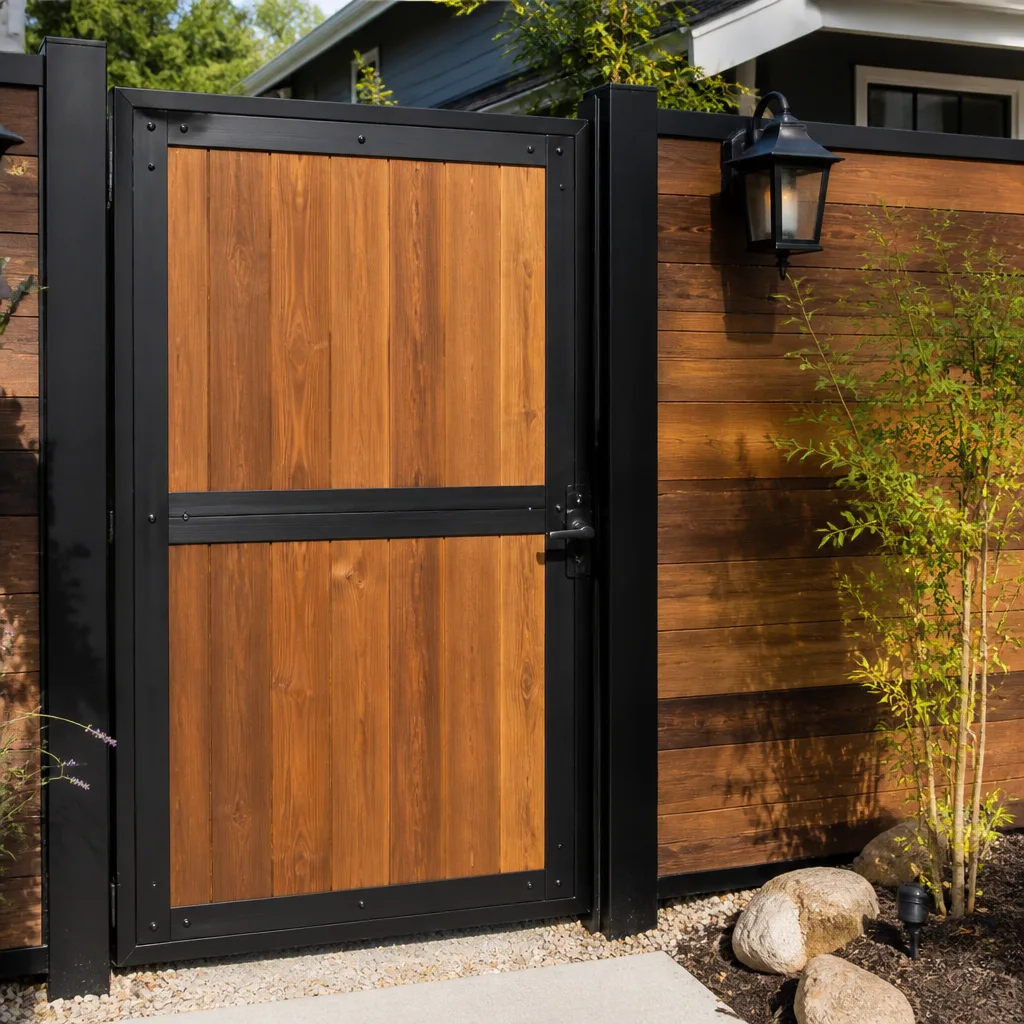 Wood & steel frame
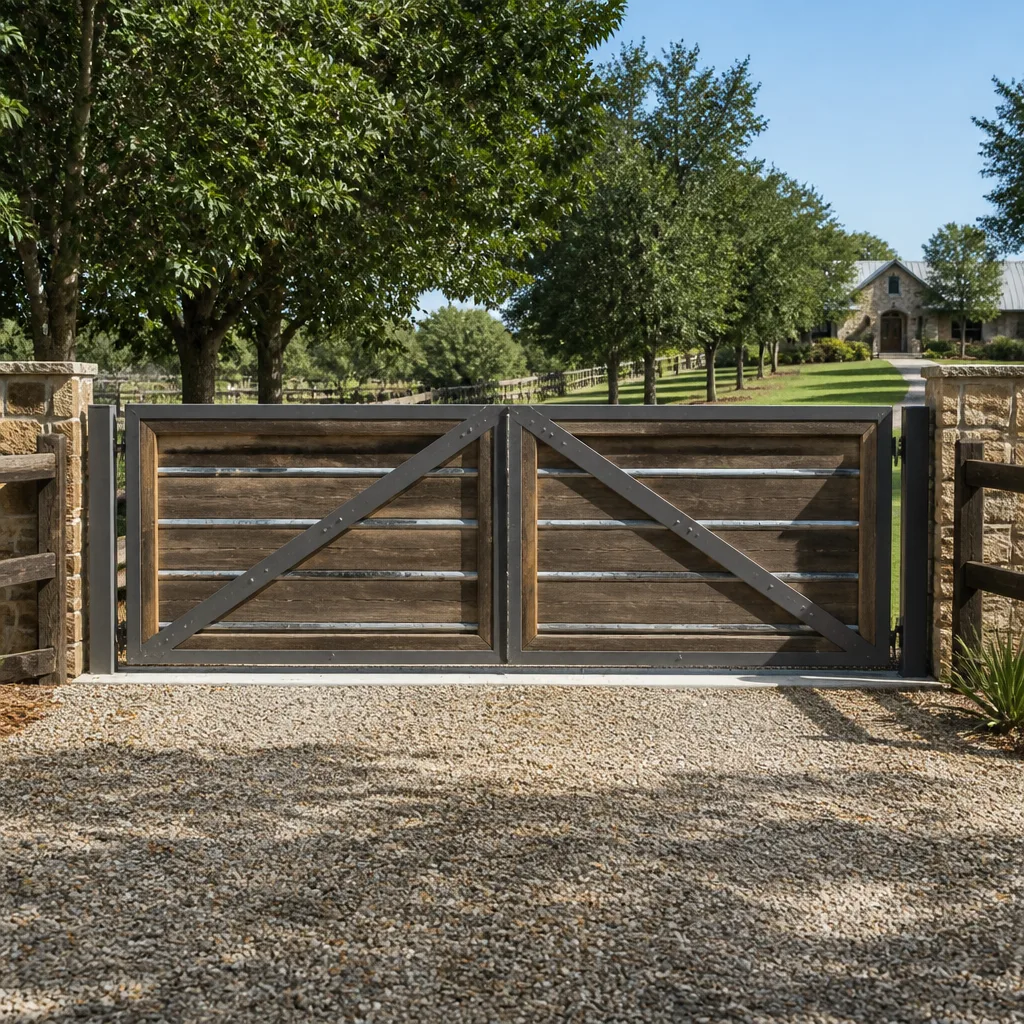 Farm & ranch
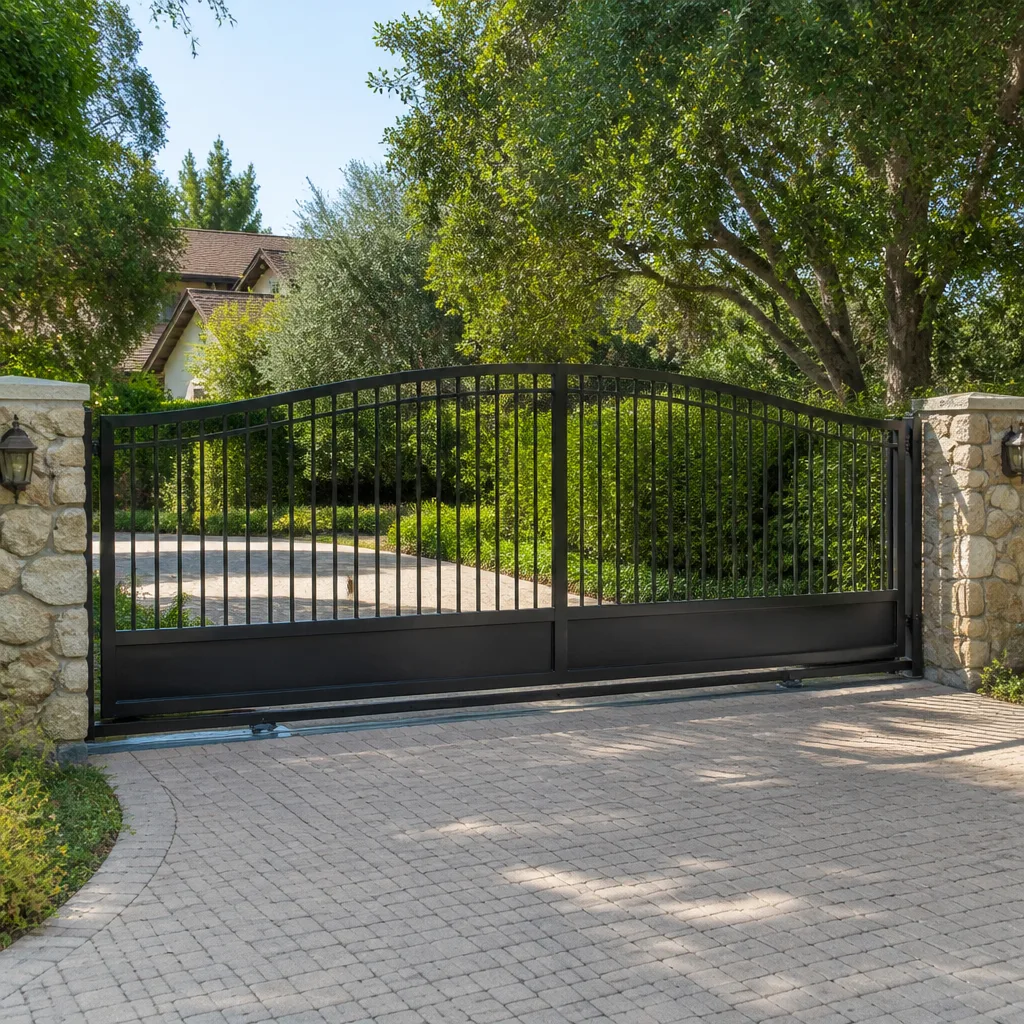 Sliding driveway gates
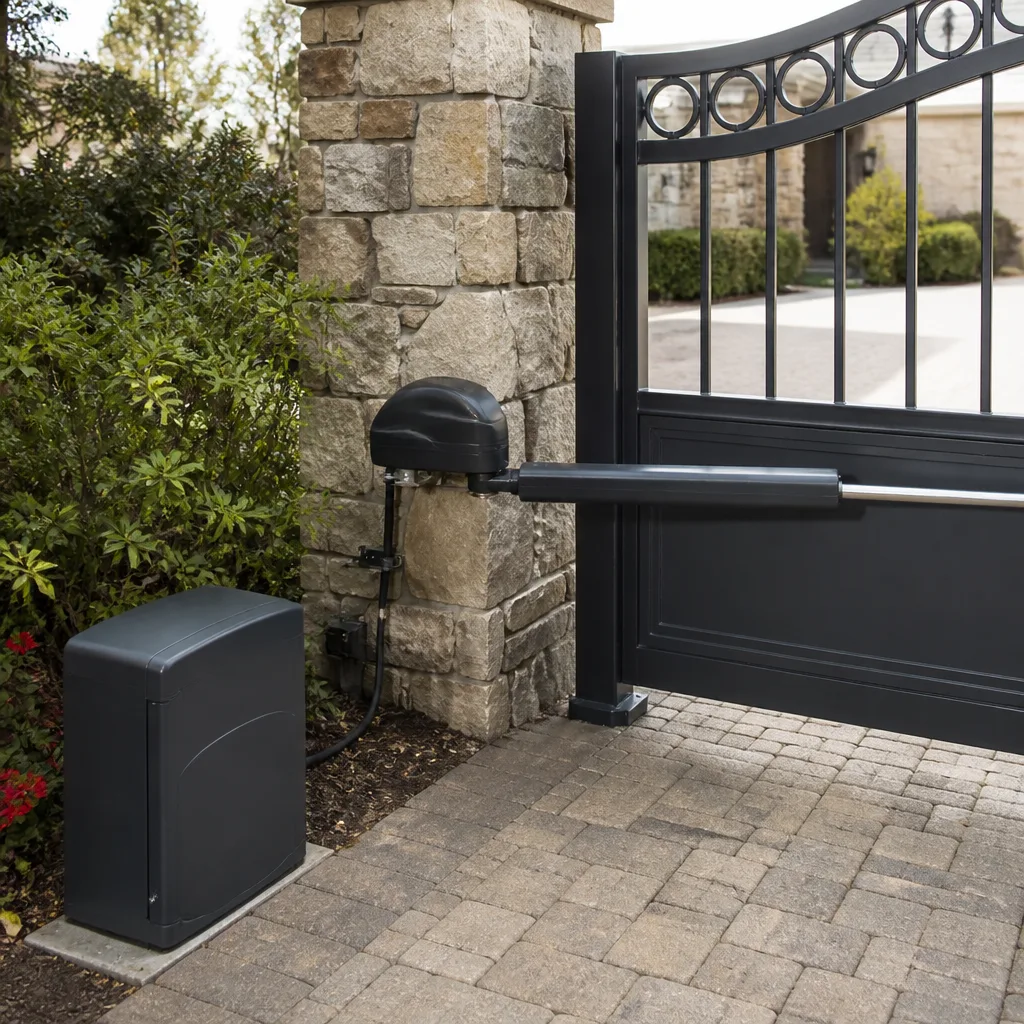 LiftMaster operators
Free on-site gate assessment - hinges, posts, and your LiftMaster or Nice gate operator checked before anything is quoted
The assessment is free and the quote is the invoice.
Get your free estimateGate Repair Cost Breakdown: The Evanston Homeowner’s Reference for 2026
The biggest line item on many gate repair invoices isn’t labor. It’s a small control board that costs a few hundred dollars and takes about twenty minutes to swap. That surprises people. Most homeowners assume the bill scales with how long a technician is on the property, so a five-hundred-dollar quote feels reasonable for a two-hour visit and a two-thousand-dollar quote feels like a scam for the same job. Neither instinct is reliable. What actually drives the price is which component failed, and the same symptom can point to a forty-dollar hinge or a failing access-control board depending on the gate. This reference breaks down what each category of gate repair costs in the Evanston market for 2026, how diagnostic fees should work, when aftermarket parts make sense, and how to read an estimate line by line so you can tell a fair quote from a padded one.
Quick Answer
In Evanston, gate repair typically runs $150 to $400 for mechanical jobs like hinges, rollers, and chains, $350 to $900 for operator and motor repairs, and $450 to $1,200 when a control board or access-control system is involved. Full structural work on posts or columns can reach $1,500 or more. A diagnostic visit usually costs $75 to $150 and should be credited toward the repair if you authorize the work.
Styles & brands we work with
- Wrought iron
- Wood & steel frame
- Farm & ranch
- Sliding driveway gates
- LiftMaster operators
Table of Contents
- What does gate repair cost by category in Evanston?
- How do diagnostic fees work in the Evanston market?
- Parts pricing: OEM vs. aftermarket and when each makes sense
- Why access-control boards drive so much of the invoice
- Where DIY saves real money and where it backfires
- How to read a gate repair estimate line by line
- Evanston weather, soil, and permit realities that affect cost
- Common mistakes to avoid
What does gate repair cost by category in Evanston?
Gate repair pricing falls into five broad categories, and knowing which one your problem lives in is the single best way to judge a quote before you commit. Here’s what each typically costs for Evanston homeowners in 2026. These are estimates, and the written estimate you receive after an on-site look sets the final price.
- Mechanical and hardware (hinges, rollers, chains, latches, tracks): $150 to $400. This is the most predictable category. Parts are inexpensive relative to labor, and the work is usually straightforward.
- Operator and motor repairs: $350 to $900. This covers motor replacement, gear and drive repairs, limit-switch adjustments, and operator board faults. The range is wide because residential operators and commercial-grade units like a FAAC or BFT sit at very different price points.
- Control board and wiring: $450 to $1,200. Board swaps are fast in labor terms but the board itself is the cost driver. Rewiring damaged runs, replacing failed loop detectors, and tracing intermittent faults fall here too.
- Access-control systems (keypads, intercoms, loop detectors, card readers): $400 to $1,100 depending on whether you’re replacing a component or upgrading a system like a DoorKing entry setup.
- Structural work (posts, columns, concrete, sagging gates): $600 to $1,500 and up. Posts that have shifted in Evanston’s clay-heavy soil or columns that cracked over a winter are the most variable jobs, because the repair depends on how far the gate has moved.
The reason these ranges overlap is simple. A gate that won’t close could be a misaligned roller ($150), a failing limit switch ($400), or a dead control board ($800). The symptom is identical. The cost isn’t. That’s why a diagnostic visit matters before anyone quotes a number, and why a phone quote without an on-site look should be treated as a rough ceiling rather than a promise.
How do diagnostic fees work in the Evanston market?
A diagnostic fee in Evanston usually runs $75 to $150, and in most cases it should be credited toward the repair if you authorize the work. That’s the standard. When you call gate repair in Evanston, a fair shop will explain upfront what the visit costs, what it covers, and whether it comes off the final bill.
There’s a range of practice here worth understanding, because the diagnostic fee is where some operators make their margin. Three common models exist:
- Fee credited toward repair. You pay nothing extra if you proceed. This is the most homeowner-friendly model and the most common among reputable gate specialists.
- Flat fee, not credited. You pay the diagnostic regardless of whether you repair. This is legitimate when the diagnosis is genuinely involved – a commercial gate with an intermittent fault might take over an hour to trace – but it should be disclosed clearly before the visit, not after.
- “Free estimate” with hidden diagnosis charge. The visit is advertised as free, but a diagnosis charge appears on the invoice. Watch for this. A free estimate means free.
The key question to ask before booking is not “how much is the diagnostic” but “does the diagnostic fee come off the repair if I go ahead?” That single question sorts out most of the ambiguity. If the answer is vague, ask again. A gate specialist who works on gate motor & opener systems every day knows exactly how their diagnostics are billed and won’t hesitate to explain it.
Parts pricing: OEM vs. aftermarket and when each makes sense
Parts markup is the quiet variable in gate repair pricing, and it’s where two quotes for the same job can differ by hundreds of dollars without either being dishonest. The main distinction is between OEM (original equipment manufacturer) parts and aftermarket equivalents, and the right choice depends on what’s being replaced and how old the operator is.
OEM parts are made by the original manufacturer to the original spec. For a system like a Linear or Viking operator, an OEM board or motor carries the manufacturer’s intended tolerances. Aftermarket parts are made by third parties and range from excellent to unreliable. The markup reality is that OEM parts cost more at wholesale, so an invoice using OEM parts will be higher on the parts line. That’s not padding; it’s a genuine cost difference.
When each makes sense:
- OEM is the right call on a newer operator still under any manufacturer coverage, on complex access-control boards, and on any part where a failure means the gate is stuck open or closed. Saving forty dollars on an aftermarket board that fails in a year isn’t a saving.
- Aftermarket is legitimate for wear items on older systems where OEM parts are no longer produced or where the cost of OEM parts approaches the value of the whole operator. Rollers, chains, and standard hardware often work fine aftermarket.
- Mixed builds are common and fine. A repair might use an OEM board and aftermarket hardware. What matters is that the estimate tells you which is which.
Ask directly whether the parts on your estimate are OEM or aftermarket. A gate specialist will know. If you’re quoted a board replacement on a newer system, ask whether an aftermarket board would affect any manufacturer coverage on the operator before you decide.
Why access-control boards drive so much of the invoice
The reason access-control boards account for such a large share of gate repair invoices is that they fail for reasons homeowners never see, and the part itself is expensive relative to the labor of swapping it. A control board is often a $300 to $600 part that takes a technician twenty minutes to replace. That’s a strange ratio, and it’s why understanding the component changes how you read the quote.
Control boards and the entry systems attached to them do far more than open and close the gate. They run the safety loop detectors that stop a gate from closing on a car, they manage the keypad or intercom, they handle the timing limits, and they coordinate multiple operators on a commercial install. When one of those functions fails, the whole system often fails together. A gate that opens but won’t close, a keypad that beeps but does nothing, a gate that reverses mid-travel for no obvious reason – these are classic board and gate access control symptoms.
Diagnostic accuracy matters more here than anywhere else on the invoice. Replacing a board is a $600 exercise if the board is actually the problem. Replacing a board because nobody traced the wiring properly can be $600 wasted on top of the repair you actually needed. That’s the difference a gate-only specialist brings: fault tracing that starts at the component and works through the full entry system rather than guessing at the board. We work on the entry systems from the motor to the keypad because on an automated gate they’re a single circuit, not separate jobs.
Where DIY saves real money and where it backfires
Some gate repairs are genuinely accessible to a homeowner with basic tools. Others aren’t, and a failed DIY attempt usually costs more than the repair would have to begin with. Here’s the honest split.
Where DIY saves real money:
- Manual gate hardware. Replacing a hinge, tightening a latch, adjusting a roller on a swing gate. Straightforward, low-risk, and the parts are cheap.
- Cleaning and lubrication. Keeping the moving parts free of grit and grime is real maintenance and extends the life of the hardware.
- Battery and remote changes. Swapping a battery in a remote or a backup battery in the operator is safe and quick.
- Clearing obstruction. Debris caught in the track or under the gate, and resetting a tripped operator, are reasonable homeowner tasks.
Where DIY backfires:
- Any work inside the operator or on the board. The operator housing contains high-voltage wiring and stored energy in the moving parts. Beyond the safety risk, disconnecting the wrong lead or shorting a board during a repair attempt can turn a $400 motor fix into a $1,000 board-and-motor replacement.
- Wiring, loop detectors, and access control. Low-voltage but unforgiving. A miswired loop detector or a crossed lead at the keypad can damage the controller.
- Structural adjustment of posts or columns. A gate that has shifted often needs the post reset, not the gate forced. Forcing a misaligned gate can bend the operator arm or strip the drive.
If your gate is stuck, the safe move is to leave it in a position that won’t damage the mechanism and call for a diagnostic. A homeowner who tells the technician exactly what symptoms appeared and when is a homeowner who gets the right repair the first time.
How to read a gate repair estimate line by line
A trustworthy gate repair estimate is itemized, and the itemization is what tells you where the money goes. Here’s what a fair estimate should show, and what it should never hide.
What should always be itemized:
- Parts, with brand and OEM/aftermarket noted. “Control board” is vague. “Control board, OEM, model X” is fair.
- Labor, with hours or a flat rate stated. Either is fine, but it should be visible, not bundled into a single total.
- Diagnostic fee, and whether it’s credited.
- Any additional work discovered after the gate is opened up, listed separately. Nothing should be added to the total without your approval.
- Warranty terms on the parts and labor, if the shop offers them.
Vague line items that hide margin:
- “Miscellaneous” or “shop supplies” running to more than a small percentage of the total.
- “Repair gate” with a single lump-sum price.
- Labor bundled into the parts line, obscuring what you’re actually paying for.
- A “system reset” or “reprogramming” charge without a specific description of what was done and why.
The most important rule is simple: the price should be quoted and agreed before any work starts. If the estimate changes once the gate is apart, you should be told what changed and given a chance to approve it. That’s the standard we hold our technicians to, and it’s the standard you should expect from anyone working on your gate.
Evanston weather, soil, and permit realities that affect cost
Evanston’s climate and soil shape the repair costs that show up on local invoices, and they’re a reason a job here can differ from a general national price guide. The long freeze-thaw cycle that runs from late autumn through early spring puts real stress on post footings and gate hardware. Ground that heaves in the frost and softens in the thaw shifts posts out of true, and a gate that was perfectly aligned in October can drag, sag, or miss its catch by the following spring. That pattern is why structural work on posts and columns is a bigger share of gate repair cost in Evanston than in a place with a more stable ground temperature.
Snow and ice removal adds another layer. Bobcats, plows, and hand clearing around the gate can catch a low gate arm or a loop detector and leave damage that looks like a motor failure but isn’t. And the freeze months make a failing operator motor more obvious, because a slower operator or a weak battery that works fine in autumn stalls out once the temperatures drop.
On the permit side, whether a new gate, a post reset, or a full replacement requires a permit depends on what’s being done and where the gate sits. Most cities require a permit for structural work and new installations, so ask the City of Evanston building department directly about your project before committing. A qualified gate specialist will know which repairs are routine and which need a permit, and a fair estimate will tell you if a permit is expected on your job.
Common Mistakes to Avoid
- Accepting a phone quote as a final price. A gate that won’t close can need a $40 hinge or an $800 board. Anyone who quotes a fixed number over the phone without seeing the gate is guessing, and the guess gets adjusted on your invoice.
- Choosing the lowest quote without comparing line items. A $450 quote that doesn’t itemize parts and labor isn’t cheaper than an $800 quote that shows you exactly where the money goes. Compare what’s included, not just the total.
- Paying a diagnostic fee that isn’t credited. Ask before the visit whether the diagnostic comes off the repair. If it doesn’t, understand why before you book.
- Using aftermarket parts on a newer operator under manufacturer coverage. Saving $50 on an aftermarket board can quietly void the coverage on a motor still under its original terms. Ask before you approve.
- Forcing a misaligned gate instead of resetting the post. This is the classic Evanston mistake after a freeze-thaw cycle. A gate that’s dragging because the post has moved doesn’t need the gate bent; it needs the footing checked.
- Letting a generalist contractor touch the access-control system. Fence installers and handymen are perfectly capable on hardware. A failed board swap or a miswired loop detector is a different kind of bill.
- Ignoring a small fault until it strands the gate. A keypad that occasionally doesn’t respond or an operator that reverses for no reason usually gets worse, and the repair is cheaper before the failure than after.
See the difference
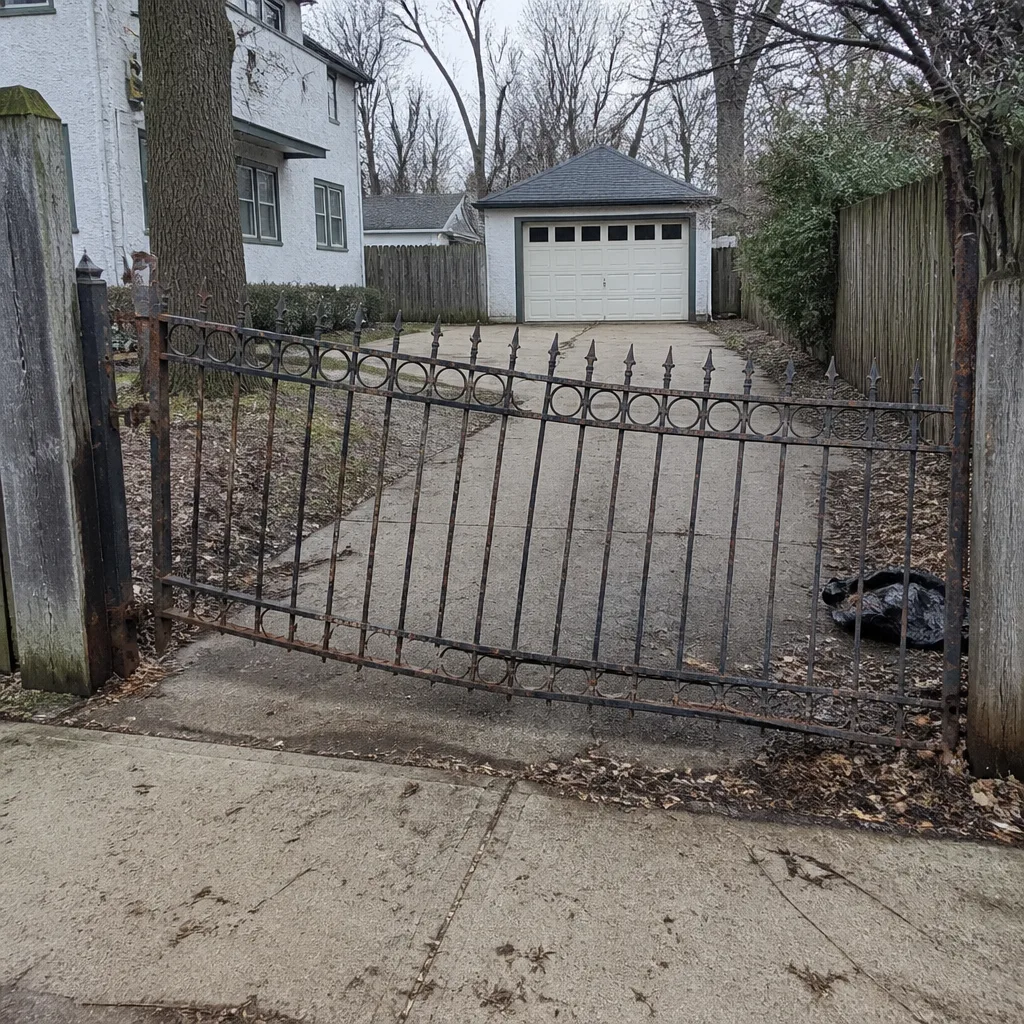 Before
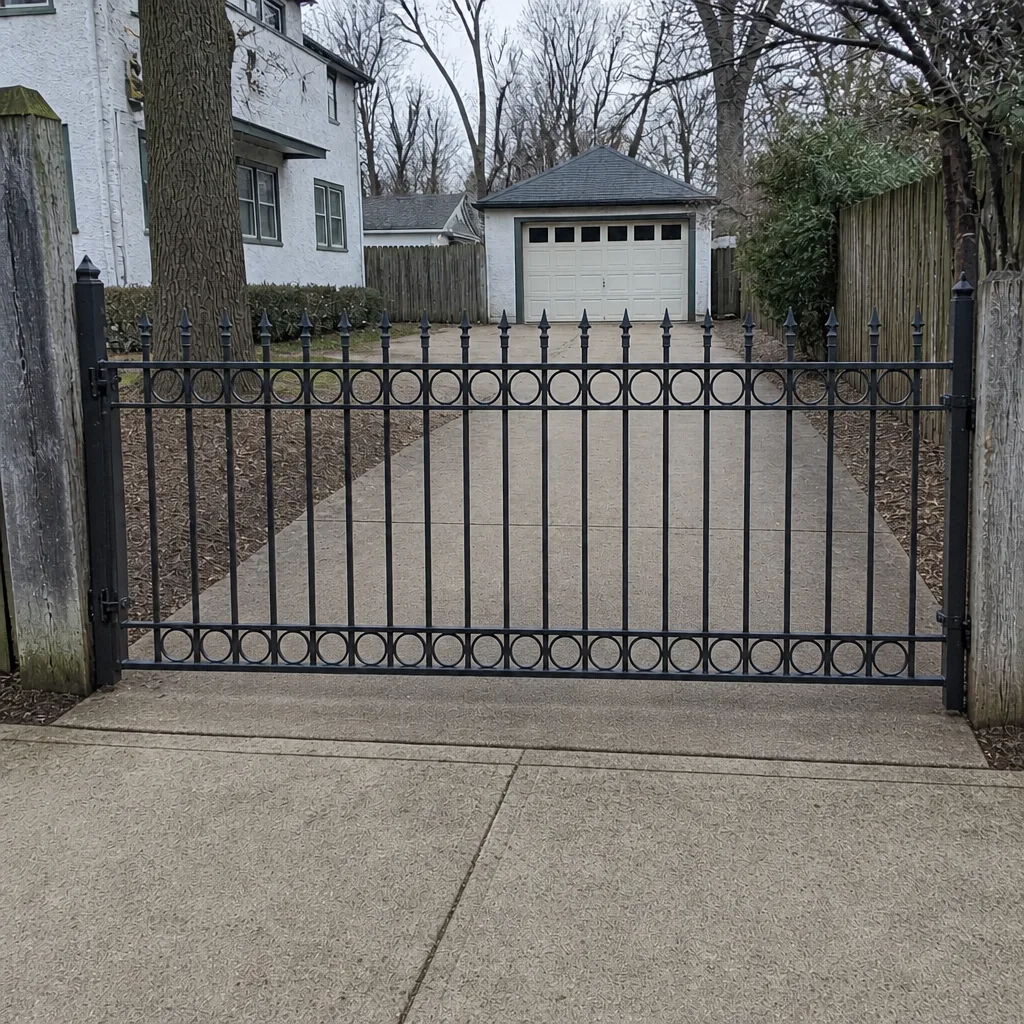 After
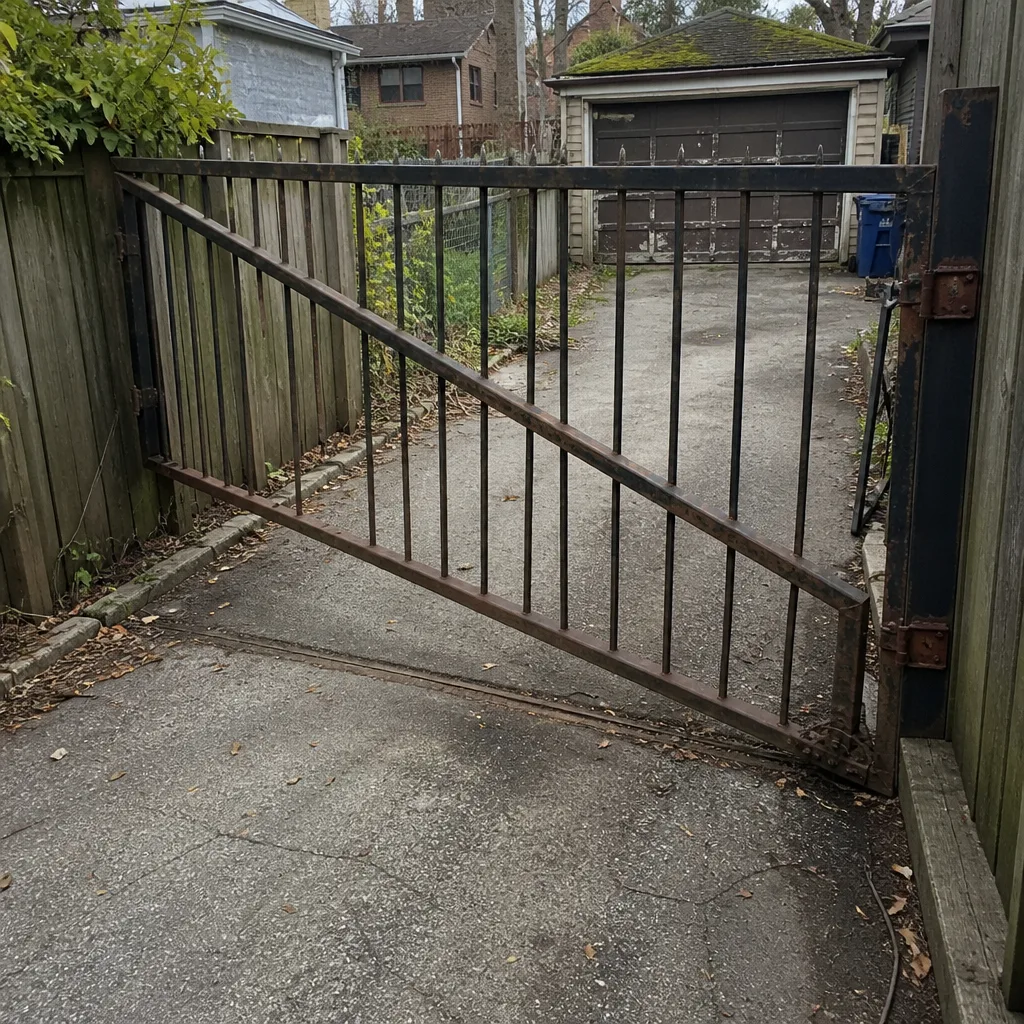 Before
 After
 Before
 After
When to Call a Professional
Call a professional when the gate involves any high-voltage wiring, the operator housing, or an access-control board, because those are the jobs where a DIY attempt costs more than the repair. Call when the gate has shifted, sagged, or stopped latching after a freeze-thaw cycle, because that’s structural and needs a footing check, not a wrench. Call when a brand-name operator (a FAAC, a BFT, a Linear, a Viking) is throwing a fault you can’t identify, because fault codes mean different things on each system and guessing at the board wastes money. And call when a gate is stuck open or unexpectedly won’t stop closing, because that’s a safety and security problem that shouldn’t wait. Evanston Gate Repair offers free estimates in Evanston – call (833) 467-5627 to book an on-site look.
Our technicians have up to 12 years of experience, and every one of them works exclusively on gate systems. We work on LiftMaster, FAAC, BFT, Linear, Viking, Ghost Controls, DoorKing, Elite, and Mighty Mule, and we handle residential and commercial gates on the same visit. If you’re comparing quotes and want to understand how Evanston Gate Repair approaches a job, start at Evanston Gate Repair.
Frequently Asked Questions
Most gate repairs in Evanston run $150 to $900 depending on the category: $150 to $400 for mechanical and hardware, $350 to $900 for operator and motor repairs, and $450 to $1,200 for control board and access-control work. Structural repairs to posts and columns can reach $1,500 or more. Call (833) 467-5627 for an exact quote – estimates are free.
Diagnostic visits in Evanston usually run $75 to $150, and most reputable shops credit that fee toward the repair if you authorize the work. Ask before you book whether the diagnostic comes off the repair and get the answer in writing if you can. Call (833) 467-5627 and our team will explain how our diagnostics are billed before you commit.
Many mechanical and operator repairs are done the same day once we’ve confirmed the fault, and same-day service is common for gates stuck open or closed. Fast service from 7am to 7pm, and a written quote agreed before any work starts. Control board and access-control replacements sometimes need a special-order part, in which case you’ll get the timeline upfront. Call (833) 467-5627 to check availability.
OEM parts are the right choice for newer operators still under manufacturer coverage and for complex access-control boards, while aftermarket parts make sense for wear items on older systems where the OEM equivalent is no longer produced. The important thing is that your estimate tells you which one is being quoted. Call (833) 467-5627 and our team will walk you through the options for your specific gate.
In Evanston, a gate that drags after a hard winter is most often a post that has shifted in the frost, not a gate that needs adjustment. A footing check tells you which. Forcing the gate rather than resetting the post is the classic mistake that turns a smaller repair into a bigger one. Call (833) 467-5627 to have it looked at properly.
We work on LiftMaster, FAAC, BFT, Linear, Viking, Ghost Controls, DoorKing, Elite, and Mighty Mule systems, which covers most residential and commercial gates in Evanston. If you’re not sure what system you have, the operator housing or keypad usually carries the brand name. Call (833) 467-5627 with the brand and a description of the fault.
The Bottom Line
Gate repair pricing in Evanston is driven by component, not by labor time, and the same symptom can land anywhere from $150 to $1,200 depending on which part is actually failing. Diagnostic fees should be credited toward the repair, parts should be itemized as OEM or aftermarket, and any estimate should be quoted and agreed before work starts. The structural jobs tied to Evanston’s freeze-thaw cycle are where a small issue quietly becomes an expensive one, and the access-control jobs are where a gate-only specialist saves you real money. Read the line items, ask the diagnostic question, and don’t force a misaligned gate. Call (833) 467-5627 for a free estimate and a written price on the job.
Written by the team at Evanston Gate Repair.