Last updated November 25, 2026
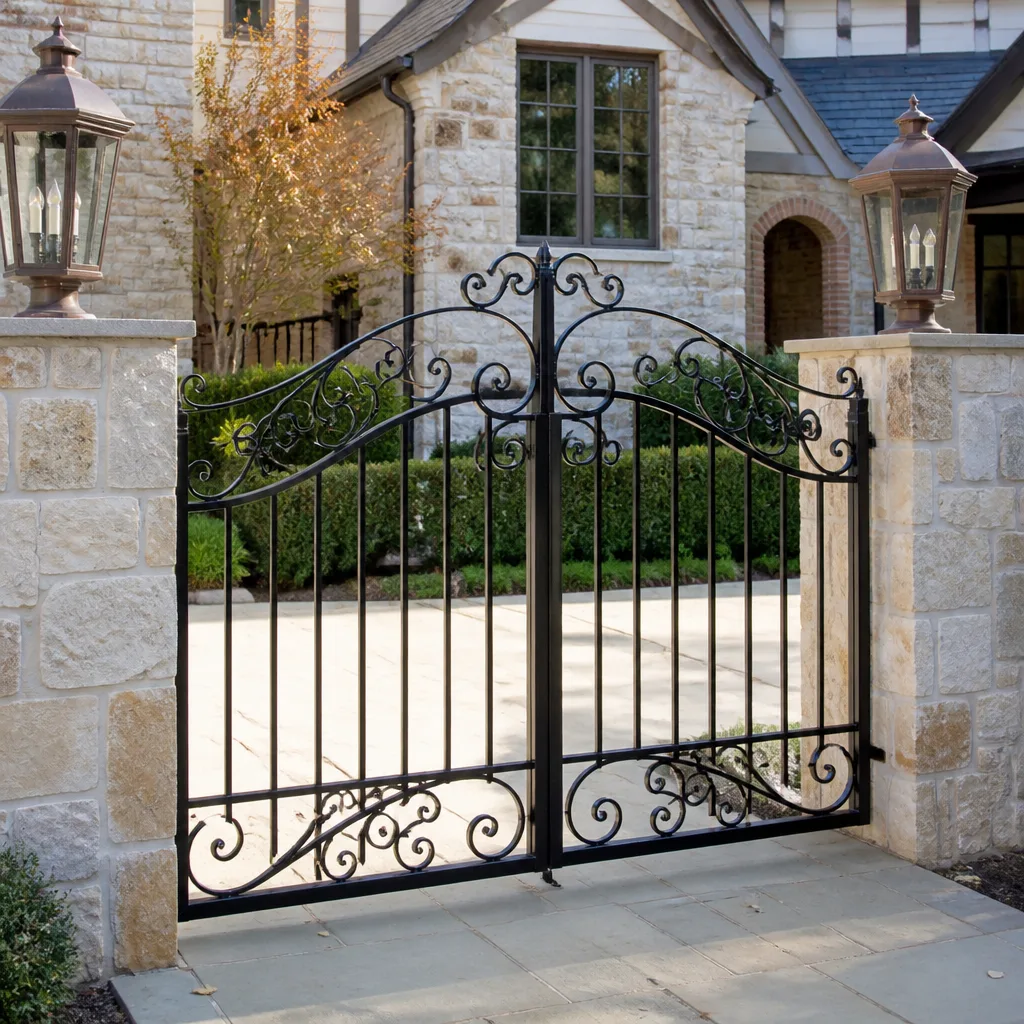 Wrought iron
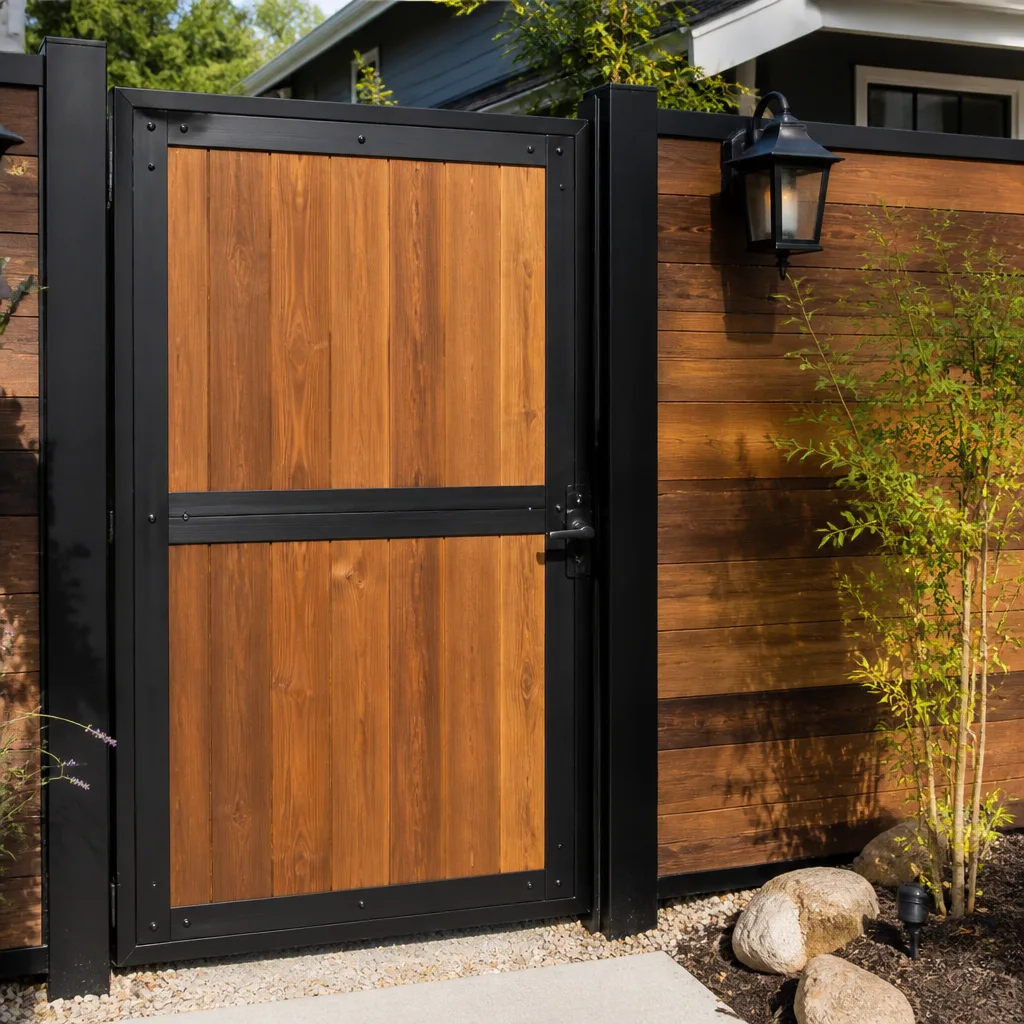 Wood & steel frame
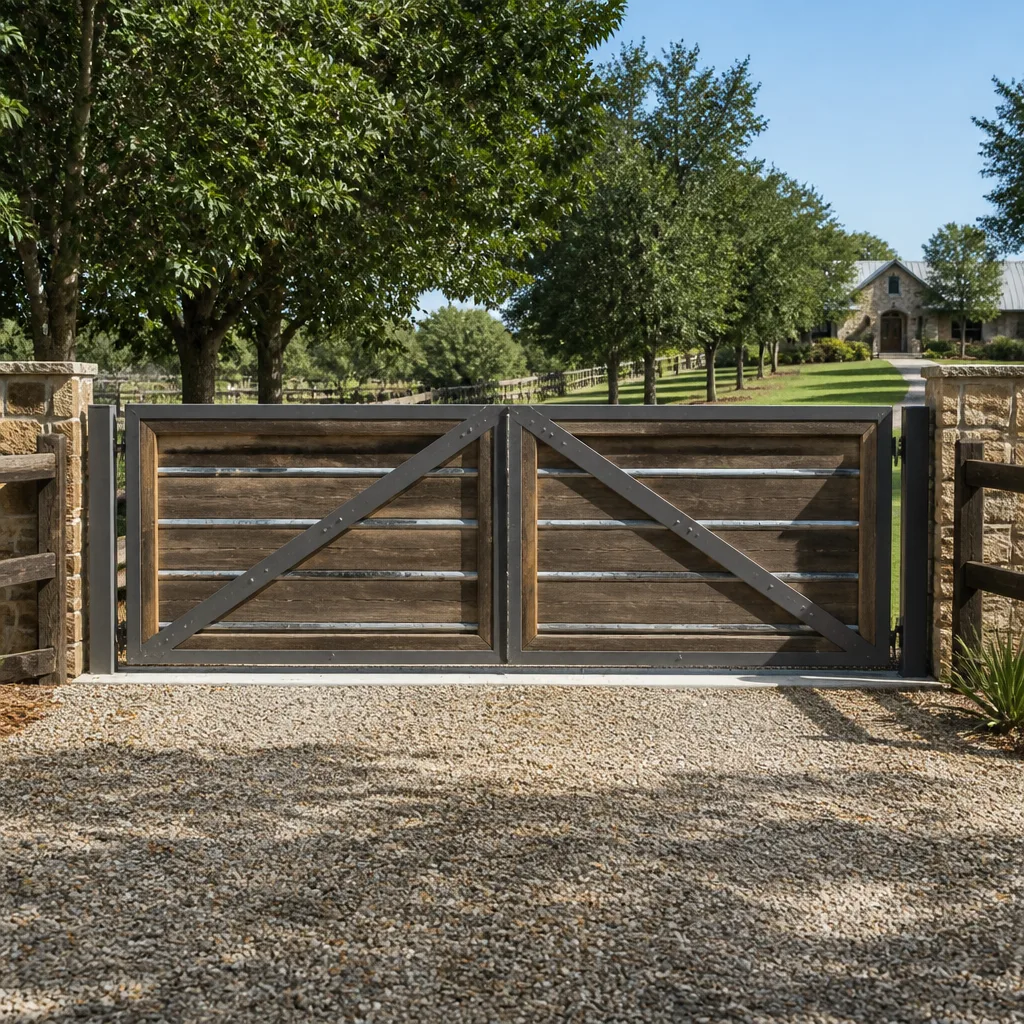 Farm & ranch
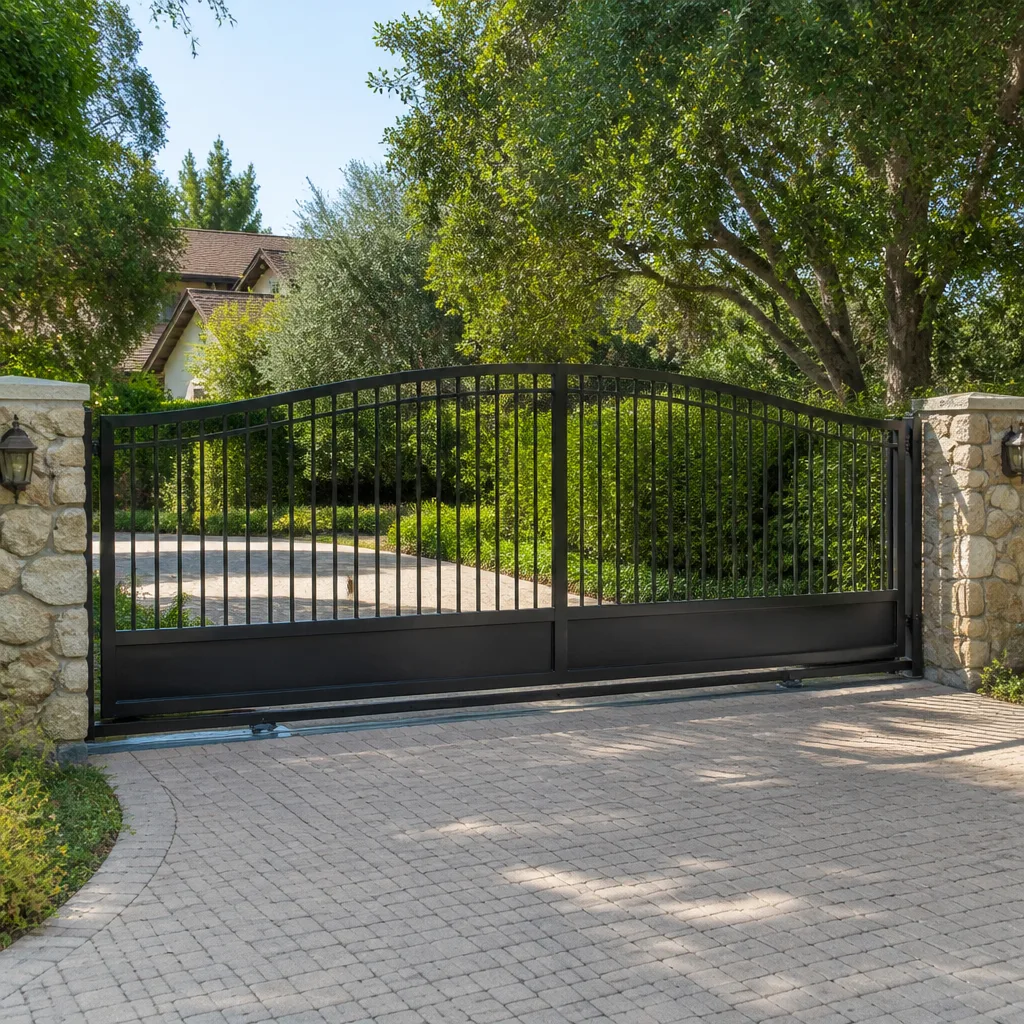 Sliding driveway gates
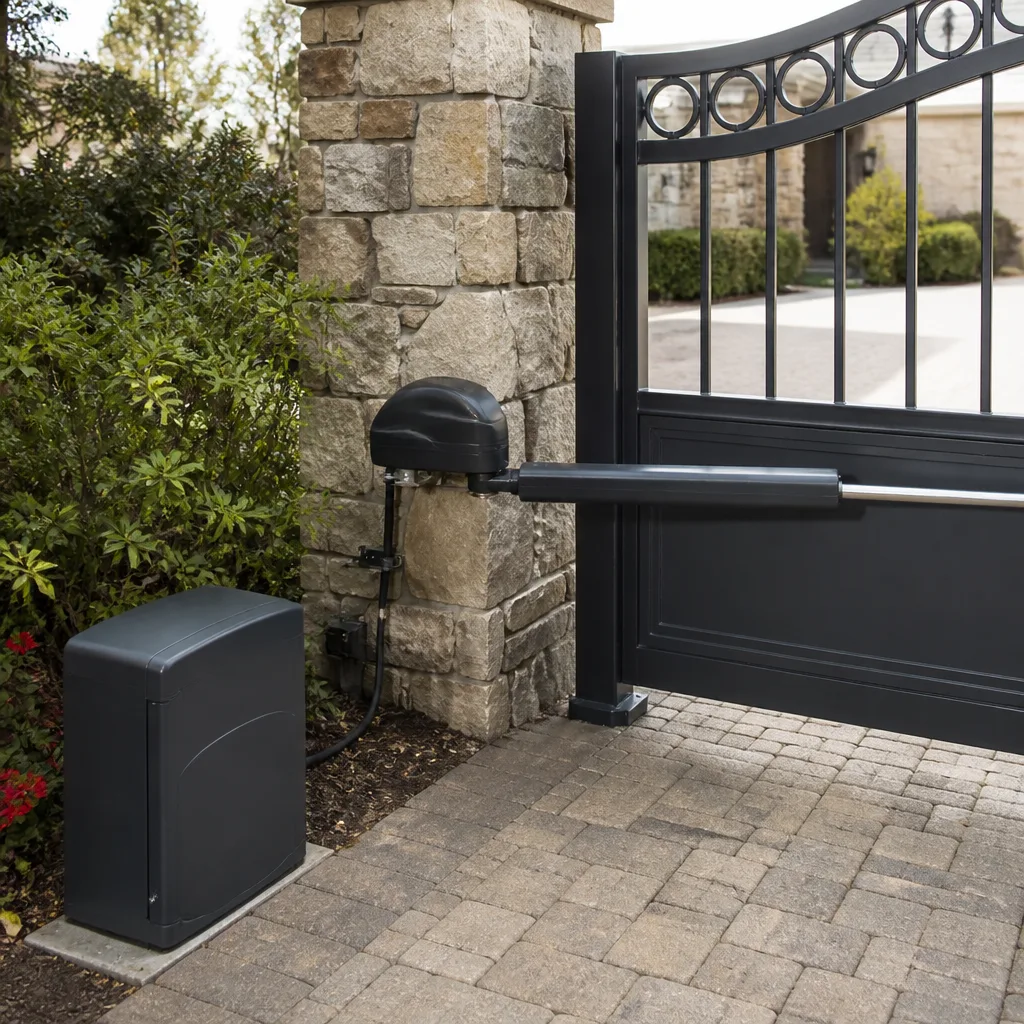 LiftMaster operators
Free on-site gate assessment - hinges, posts, and your LiftMaster or Nice gate operator checked before anything is quoted
The assessment is free and the quote is the invoice.
Get your free estimateGate Repair Emergency Preparedness Guide for Evanston Homes
Every automated gate has a manual release. That’s the part people get right. The part that trips them up is that the release looks completely different from one operator to the next – a lever here, a keyed hub there, a pull cord tucked behind a cover plate on a third – and the procedure changes again depending on whether the gate swings, slides, or rises on a barrier arm. Trying to sort that out during an emergency, in a dark Evanston alley in January with a car trapped on one side, is how people get hurt. This guide walks through what to know before that night arrives: the release on the brands you’re most likely to own, how to secure a gate stuck open, what a dead battery backup is telling you, and the details that get a technician to you faster. Read it once now, and you’ll never have to puzzle it out in the cold.
Quick Answer
A gate emergency in Evanston calls for three things in order: get people and vehicles clear, put the gate into manual release so it can’t move under power, then call a gate-specific technician with your operator brand, gate type, and power status ready. Manual release locations vary by brand – a LiftMaster or Linear slide operator usually has a keyed release handle or chain hoist, while a FAAC swing arm typically has a manual release key and lever at the operator housing. Never force a stuck gate or prop it with a vehicle. Freeze it in place and get a professional out to look at it.
Styles & brands we work with
- Wrought iron
- Wood & steel frame
- Farm & ranch
- Sliding driveway gates
- LiftMaster operators
Table of Contents
- Where Is the Manual Release on Your Gate?
- What to Do When Your Gate Is Stuck Open
- Power Outage Protocol: What Your Backup Should Do
- When a Gate Problem Becomes a Safety Emergency
- Swing, Slide, or Barrier Arm: How the Emergency Differs
- What to Have Ready When You Call for Emergency Gate Repair
- Preparing Your Evanston Gate Before Winter
Where Is the Manual Release on Your Gate?
The manual release is the mechanical override that disconnects the gate from the motor so you can push it open or closed by hand. Every automated gate has one. The location depends on the operator brand and the gate type, and the sequence to use it safely is not the same for a slide gate as it is for a swing gate. Knowing yours before an emergency is the single most useful thing you can do for a gate in Evanston.
Here’s what the release looks like on the operator brands we see most often:
- LiftMaster slide operators: usually a keyed release handle on the operator housing, or a manual release chain on heavier units. Turn the key, follow the release sequence, then push the gate by hand.
- Linear slide operators: typically a keyed manual release lever on the housing. Some models use a release chain; check the operator cover for the label.
- FAAC swing operators: a manual release key plus a lever at the operator, with the release procedure usually printed on a sticker inside the housing cover.
- Elite operators: a covered release mechanism on the housing, often with a keyed access. The cover plate is easy to miss on a dark night, so learn its location now.
On swing gates the release lets the arm or ram detach from the gate leaf so the gate swings free. On slide gates the release disengages the pinion from the rack, and you then push the gate along its track. Barrier arms use a clutch or counterweight release. Never put your hands near the hinge side or the track while the gate is powered. If the release won’t budge, stop – a bent arm or a jammed rack is a hardware problem, not something to force.
For a deeper walkthrough of release procedures and operator-specific repair, see our gate motor & opener page. Our technicians have up to 12 years of experience working on the brands that fail in Evanston, and we’re familiar with the release on every one.
What to Do When Your Gate Is Stuck Open
A gate stuck open is a security problem first and a repair problem second. The gate won’t close, so the property is unsecured, and the temptation is to force it or drag it shut by hand – which is how gates get bent and operators get burned out. The better move is to make the gate safe in place, then get a technician out to diagnose it.
Follow this sequence:
- Confirm nobody is in the gate path. Check both sides of the opening before you touch anything, especially if the gate has stopped mid-travel with a vehicle nearby.
- Cut power at the operator. Use the disconnect switch or the breaker feeding the operator. This stops the gate from moving on its own if the fault is intermittent.
- Put the gate into manual release only if you can do so safely and the gate isn’t already jammed. If it won’t release, leave it.
- Secure the opening with something physical. A temporary barrier, cones, or a wheel stop on a driveway slows down unauthorized access. Don’t rely on a piece of tape or a rope – a determined person will walk right past it.
- Call a gate-specific technician with the brand, gate type, and error code ready so they can bring the right parts on the first visit.
If your gate creeps open on its own at night, the usual suspects are a failed limit switch, a slipping clutch, or a photo-eye that’s tripped by moisture or a shifted post. That’s a common pattern in Evanston after a hard rain – the ground shifts, the eye goes out of alignment, and the operator thinks the path is blocked. A generalist handyman will often guess at it. A gate repair specialist reads the operator’s diagnostic display and knows in minutes. Tell the technician the brand, the error code, and when the gate last worked normally, and you’ll cut response time considerably.
Power Outage Protocol: What Your Backup Should Do
A gate operator with a battery backup should keep working through a power outage for a set number of cycles, then go into a low-battery state or stop entirely. When the power drops and the gate doesn’t move at all, the backup has likely failed, been disconnected, or never been installed. That’s the most common surprise we see on Evanston properties – a homeowner who assumed the gate had a backup and discovers on the first storm outage that it doesn’t, or that the battery is years past its useful life.
How the backup should behave:
- Normal operation: power loss triggers automatic switchover to battery; the gate continues to open and close on its normal cycle count.
- Low-battery state: many operators show a fault code or a chirp as the battery drains. That’s your warning to arrange a battery replacement before the next outage.
- Exhausted battery: the gate stops and usually needs a manual release to open by hand.
Cycle count and runtime vary with the operator model, gate weight, and how often the gate runs. A driveway gate that cycles a few times a day will last longer on a charge than a busy property gate. What matters is knowing whether the backup actually holds a charge. A simple test before the cold season is to cut power at the breaker and open and close the gate a few times on battery alone. If it won’t cycle, the battery is the first thing to check. Commercial systems, especially DoorKing and BFT access control setups, often have separate battery backups for the operator and the entry system, and a failure in one can mask the other. If your gate goes dead in a storm, call us – free estimates are available and we’ll diagnose the operator and the access side together. For the entry-system side, our gate access control page covers keypads, intercoms, and loop detectors.
When a Gate Problem Becomes a Safety Emergency
Most gate problems are inconvenient. Some are genuinely dangerous, and the difference is not always obvious. The line is crossed when a gate can no longer safely be left in service – when someone is trapped, a vehicle has made contact, hardware has sheared, or the gate is moving without a command. At that point the right move is a full shutdown, not a workaround.
Shut the gate down and call a professional immediately if any of these apply:
- Entrapment: someone, especially a child or a pet, is caught between the gate and a fixed point. Stop the gate, cut power, and free the person without operating the gate further.
- Vehicle contact: a car has hit or is pinned against the gate. Don’t cycle the gate to free the vehicle. A damaged gate can come off its track or swing unexpectedly.
- Sheared hardware: a hinge, track, roller, or weld has failed. The gate can drop or swing uncontrollably. Keep people clear of the gate path.
- Hydraulic leaks or runaway movement: oil on the ground near a hydraulic operator, or a gate that moves without a command, points to a failed seal or control fault.
- Sparking or burning smell at the operator: cut power at the breaker and do not re-energize. This is electrical and should only be handled by a trained professional.
Safety edges and photo-eyes are the gate’s first line of defense, and when they fail the operator should refuse to run. If your gate runs despite a blocked path, that’s a hard fault – stop using it until a technician can check the safety devices and the control board. On any question of electrical wiring or operator controls, don’t open the housing yourself. A gate-only technician can identify the fault and get the entry system back online safely.
Swing, Slide, or Barrier Arm: How the Emergency Differs
Not every gate emergency is the same because not every gate moves the same way. A swing gate, a slide gate, and a barrier arm each fail in their own way, and the manual release and safe handling differ for each. Knowing which type you have on an Evanston property will save time in the moment.
Swing gates open on hinges with an arm or ram on one leaf. The release lets the leaf swing free, and in an emergency you can push it open by hand if the release can be engaged. The danger with a swing gate is the hinge side – the leaf can weigh hundreds of pounds, and a failed hinge can drop it. Keep clear of the hinge line when you release.
Slide gates travel along a track on rollers. The release disengages the motor from the rack, and you push the gate along the track. A slide gate that comes off its track is genuinely heavy and dangerous – don’t try to lever it back on. The track and rollers are high-wear parts, and a shifted track after a freeze is a common cause of a gate that won’t travel.
Barrier arms, common on commercial and HOA entrances, use a counterweight or clutch release. The arm can be raised manually but swings back down under its own weight if the counterweight is set wrong – so lift it carefully and brace it. Barrier-arm operators have their own safety sensors, and a dead sensor often causes the arm to cycle endlessly.
Across all three, the operator brand determines where you find the release and how you use it. A FAAC swing operator releases differently from a LiftMaster slide unit. If you own a gate managed by an HOA, ask the property manager where the manual release key is kept – don’t count on finding it at 9pm in January. For commercial systems, our team works on the full commercial-grade range as well as residential operators. For the full picture of what we cover, see Evanston Gate Repair.
What to Have Ready When You Call for Emergency Gate Repair
The fastest way to get your gate moving again is to hand the technician the right information on the first call. In our experience, a homeowner who knows their operator brand, gate type, and error code gets a clear plan in minutes. Without it, the first visit often turns into a diagnostic trip with a follow-up for parts.
Have these ready before you call for gate repair:
- Operator brand and model: LiftMaster, FAAC, BFT, Linear, Elite, DoorKing, Ghost Controls, Viking, Mighty Mule – check the label on the operator housing.
- Gate type: swing, slide, or barrier arm.
- Power status: is the operator getting power, is the breaker on, is a battery backup installed.
- Error code or display readout: the operator’s control board usually shows a code that points directly to the fault.
- What happened right before the failure: a power surge, a storm, a car bump, an unusual noise.
- Whether the gate is open, closed, or stuck mid-travel and whether anything or anyone is trapped.
That list reliably cuts response time because the technician can bring the right parts on the first visit – Keypads, safety edges, and control boards differ by brand, and coming out twice for a part we could have brought is a waste of everyone’s time. We work on the brands above and we’re familiar with the release and diagnostic display on every one. Same-day service is available on gate repair, and pricing is quoted and agreed before any work starts, so you’ll know the cost before we touch the gate. If the fault is in the controller, the keypad, or the safety loops, we can look at the entry system on the same visit.
Preparing Your Evanston Gate Before Winter
Gate emergencies cluster in the cold months. Frozen tracks, dead batteries, and shiftings posts cause most of the gate failures we see on Evanston homes in the depths of winter, and most of them can be caught with a short fall inspection. The point isn’t a long maintenance routine – it’s a handful of specific checks that head off the calls you don’t want at night.
Walk these checks before the first hard freeze:
- Test the manual release. Engage and disengage it once so you know it moves freely. A release that’s seized from rust or seized from months of non-use is the one you want to find now, not in an emergency.
- Test the battery backup. Cut power at the breaker and cycle the gate a few times on battery alone. If the gate won’t run, the battery needs attention.
- Clear the track and rollers. Debris and grit on a slide track cause drag, and drag wears the operator faster. Sweep the track before the freeze.
- Check the safety eyes. Clear the lens, confirm the beam is unbroken, and make sure the posts haven’t shifted. Cold and frost heave move posts, and a shifted eye trips the safety sensor. For the entry side, test the keypad and intercom.
- Look for rust at hinges and hardware. Rust on a hinge or roller is a warning. Replace wear parts before they fail.
Evanston winters put real stress on any gate system, and a gate that was fine in September can fail on the first cold night. If you’re not sure how to test your release or battery safely, we can walk through it with you and quote any repair that’s needed. Free estimates are available – estimates are priced per job after we look at the gate.
Common Mistakes to Avoid
- Forcing a stuck gate by hand. A gate that won’t release is jammed, and pulling harder bends the arm, racks the track, and can spring a hinge. Stop and call a technician.
- Ignoring the battery backup until it fails. A backup that has never been tested is a backup you can’t trust. Test it each fall on an Evanston gate before the cold season.
- Propping a gate open with a vehicle or a brick. This leaves the gate under load and can damage the operator or the gate leaf. Use a proper physical barrier and call for repair.
- Cycling a gate that has made vehicle contact. A damaged gate can come off its track. Keep people clear and get a professional to assess it.
- Calling a general handyman for a brand-specific fault. A generalist may not know the release procedure or error codes on a FAAC or LiftMaster operator. A gate-only technician diagnoses faster and brings the right part.
- Opening the operator housing to fix the wiring. Electrical work inside the operator is hazardous and can void the operator’s protection. Let a trained technician handle it.
- Waiting until the gate is completely dead. A gate that creeps or hesitates is telling you something. Catching it early avoids an emergency call.
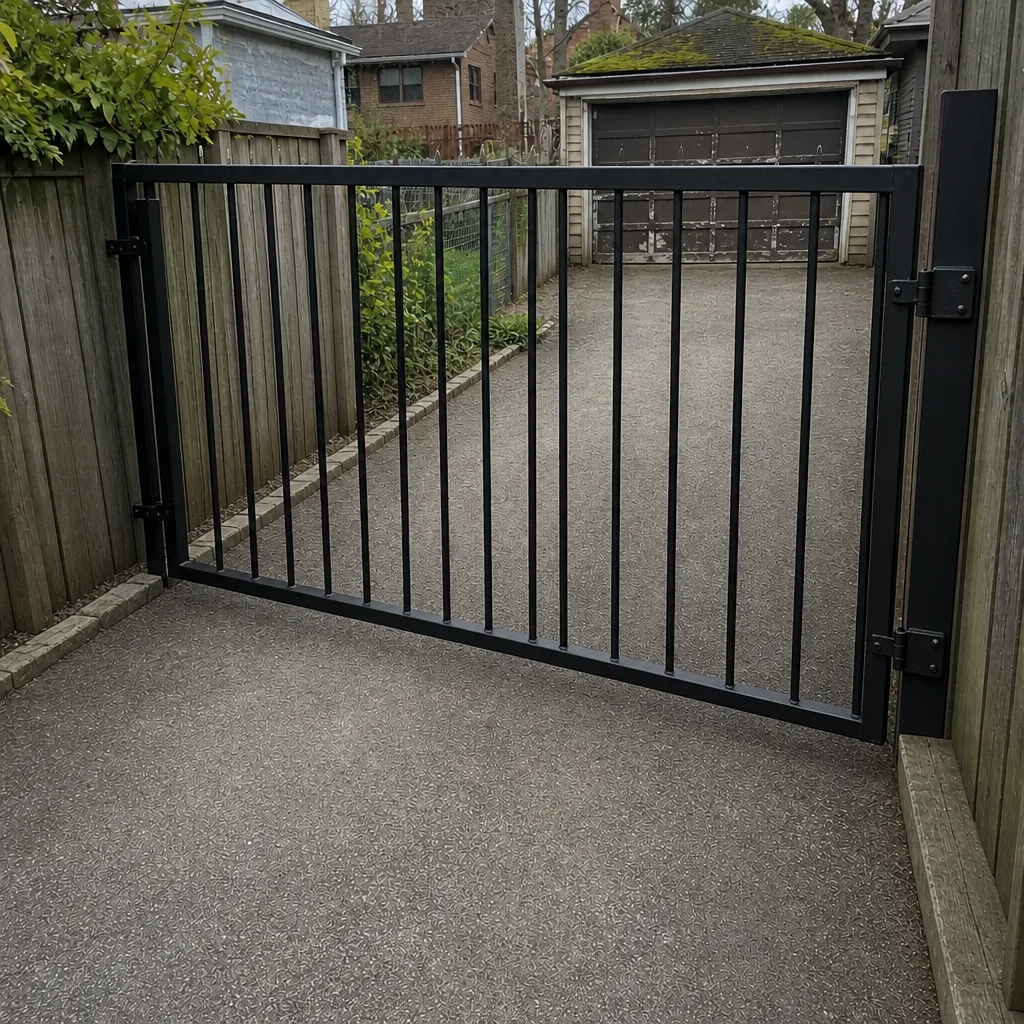
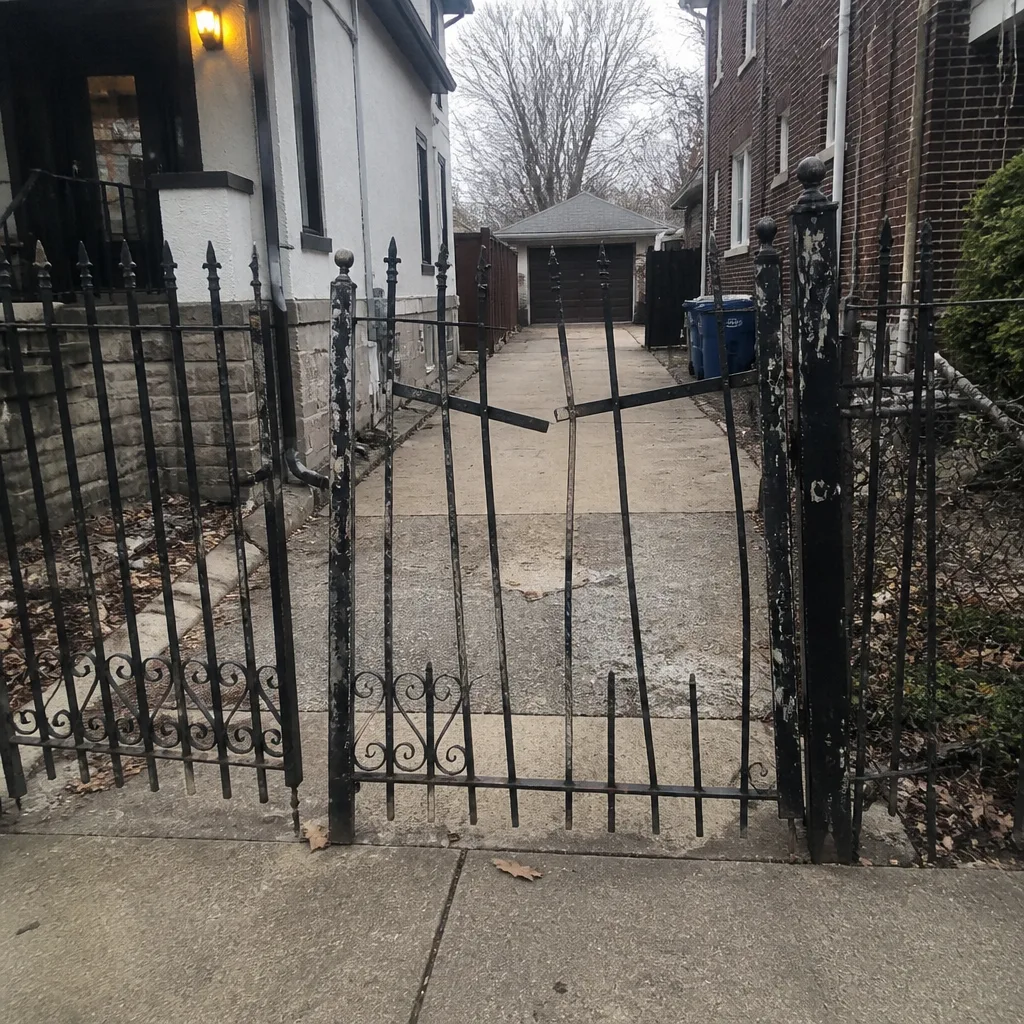
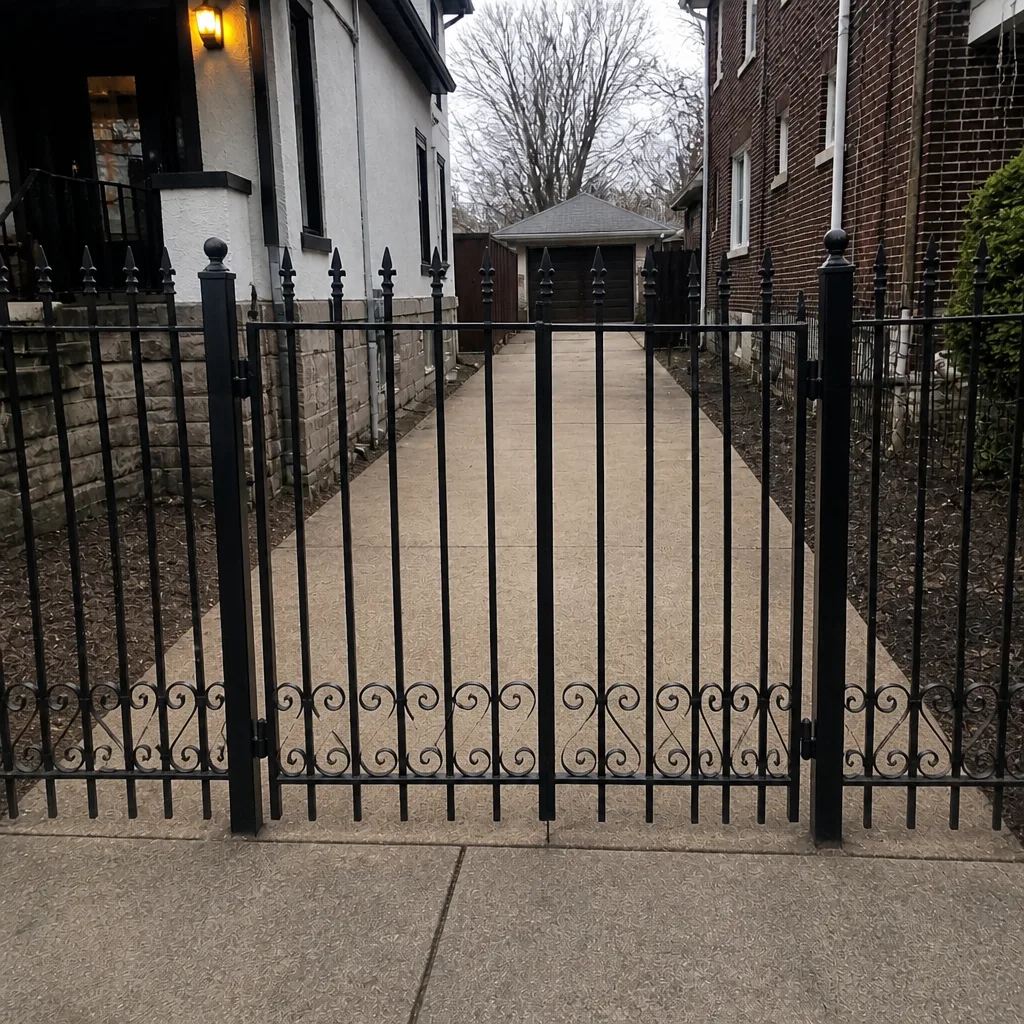
See the difference
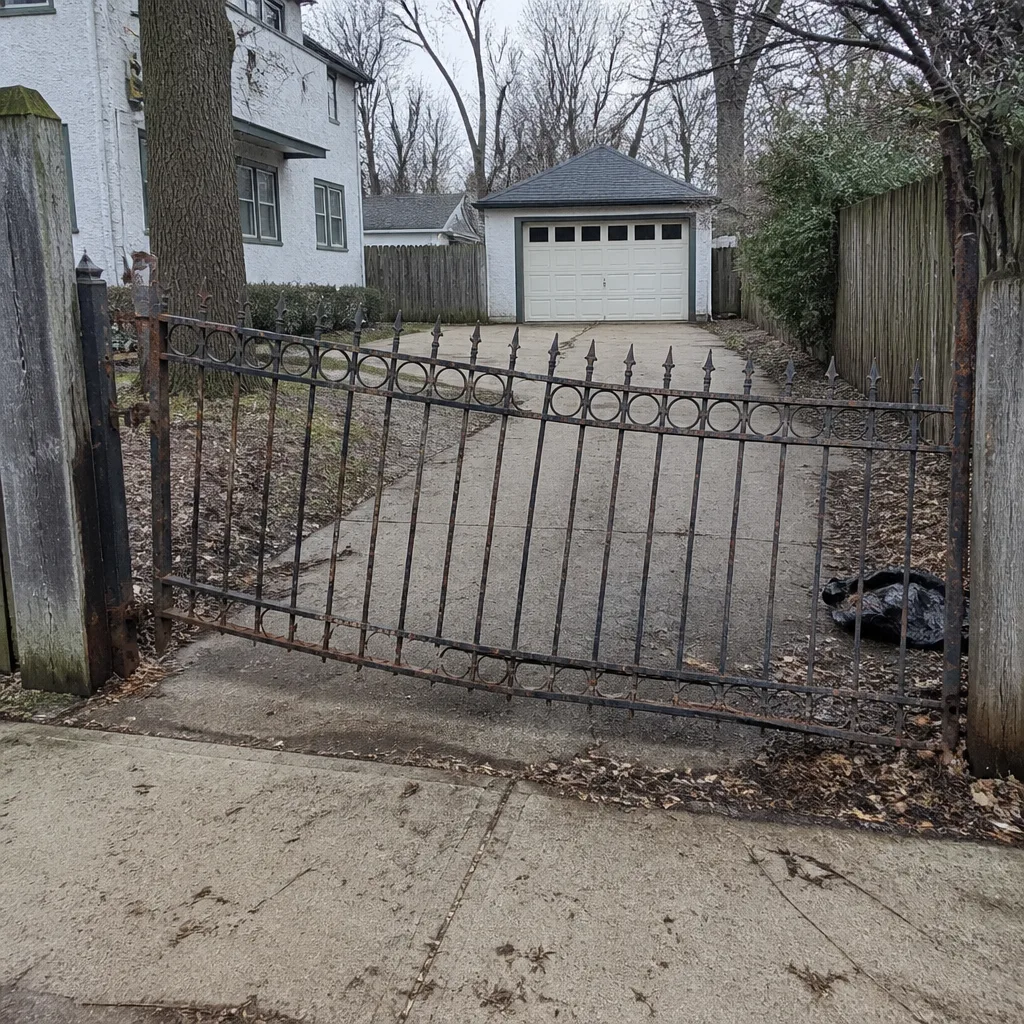 Before
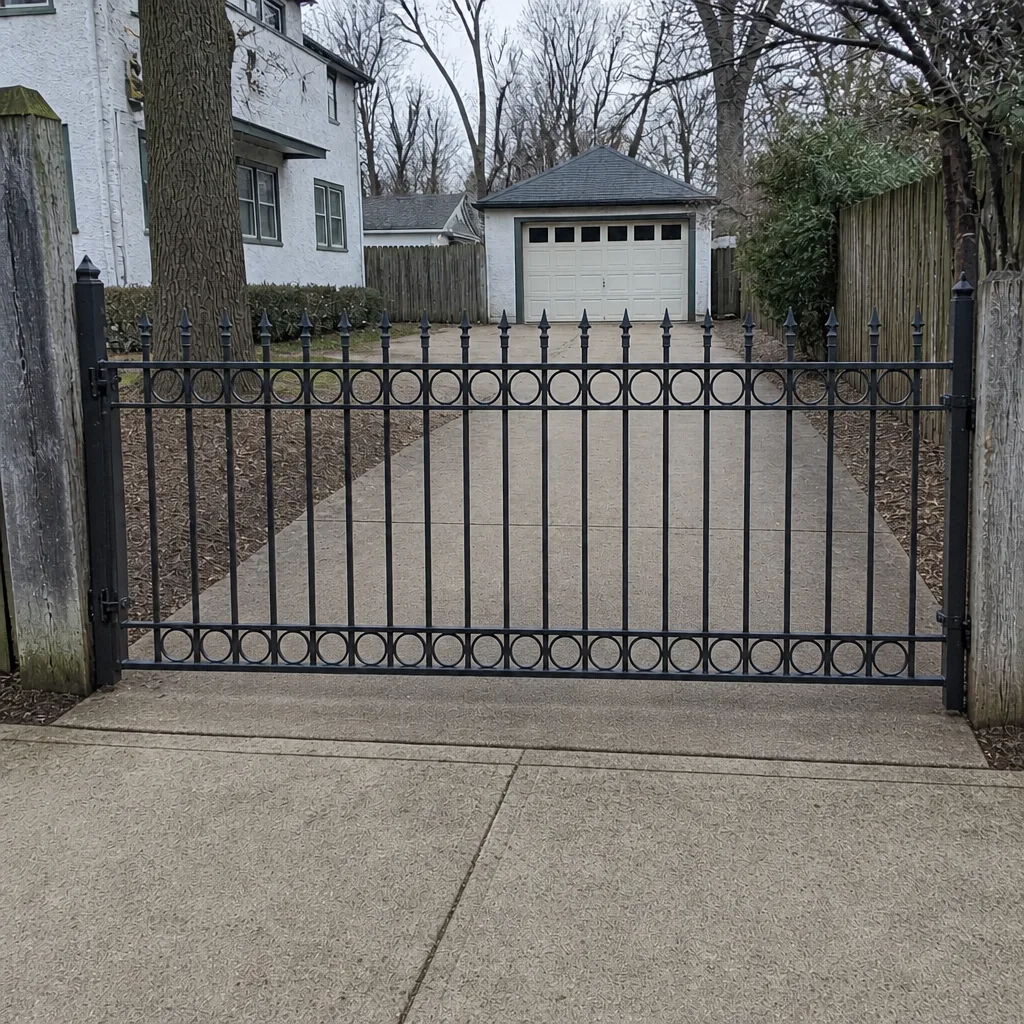 After
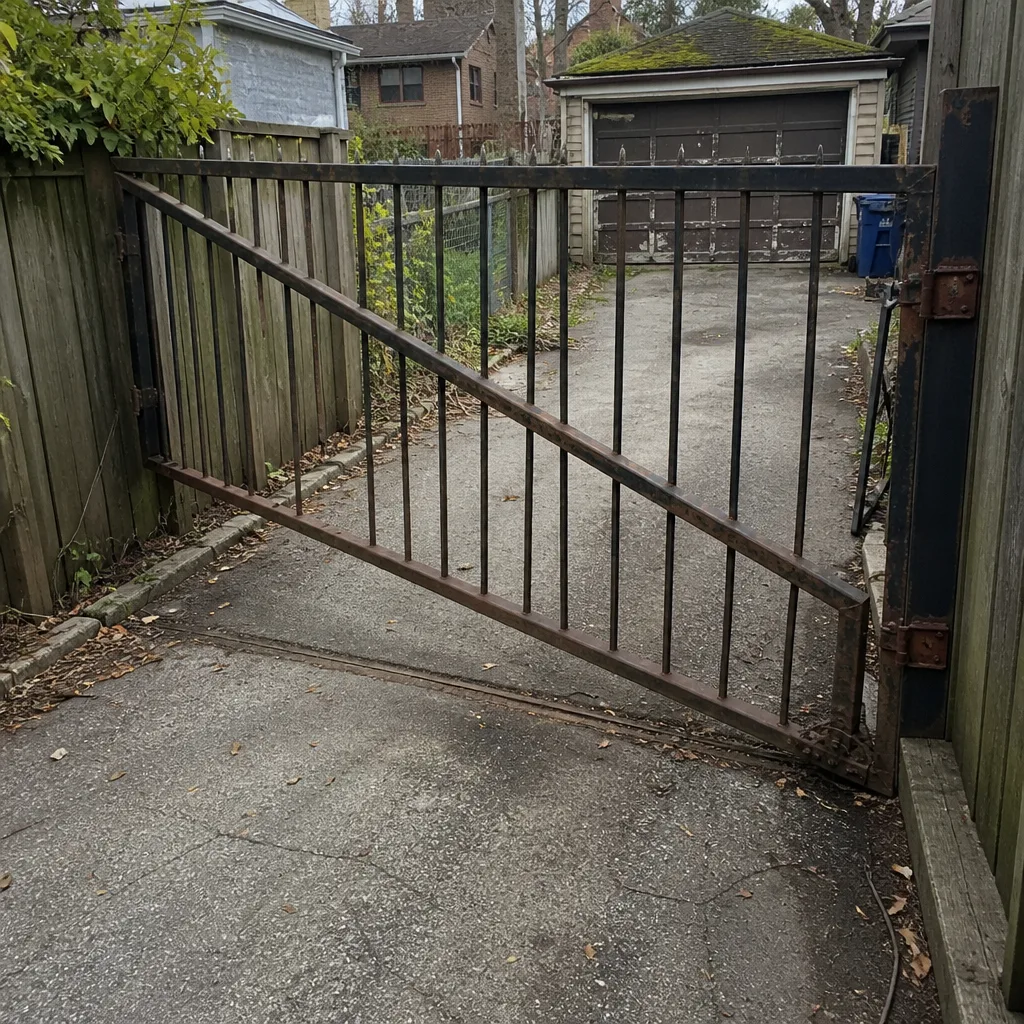 Before
 After
 Before
 After
When to Call a Professional
Call a professional gate repair service in Evanston when the manual release won’t operate, the battery backup won’t hold a charge, the gate has made vehicle contact, hardware has sheared, or the operator is sparking or burning. Call immediately if anyone is trapped or the gate is moving without a command – stop the gate and cut power first. For brand-specific faults on LiftMaster, FAAC, BFT, or Linear operators, a gate-only technician will diagnose faster and bring the right parts. Evanston Gate Repair offers free estimates in Evanston – call (833) 467-5627. Pricing is quoted and agreed before any work starts, same-day service is available on repair calls, and our technicians have up to 12 years of experience on the brands that fail here. The local pro we connect you with is licensed and insured as their state requires. Get your gate moving again.
Frequently Asked Questions
The manual release location depends on the operator brand and gate type. On a LiftMaster or Linear slide operator, it’s usually a keyed release handle or chain hoist on the operator housing; on a FAAC swing operator, a manual release key and lever at the housing; on an Elite unit, a covered release mechanism often with keyed access. Cut power at the operator first, confirm no one is in the gate path, then follow the release sequence printed on the housing label. If it won’t move, stop and call a technician – free estimates are available, so call (833) 467-5627.
It varies with the operator model, gate weight, and how often the gate cycles. A driveway gate that runs a few times a day will last longer on a charge than a busy commercial gate. Test the battery each fall by cutting power and cycling the gate; if it won’t run, the battery is the likely fault. For an exact assessment of your backup, call (833) 467-5627 for a free estimate.
Treat it as a security problem first. Cut power at the operator, put the gate into manual release only if you can do so safely, and secure the opening with a physical barrier. Don’t force the gate or prop it with a vehicle. Call a gate-specific technician with the brand, gate type, and error code ready; same-day service is available on repair calls, and estimates are free – call (833) 467-5627.
We work on LiftMaster, FAAC, BFT, Linear, Viking, Ghost Controls, DoorKing, Elite, and Mighty Mule. If your operator is one of these, we can diagnose it and bring the right parts. If your brand isn’t listed, call us and we’ll tell you whether we can help. Call (833) 467-5627 for a free estimate.
Have the operator brand and model, gate type (swing, slide, or barrier arm), power status, any error code shown on the control board, what happened before the failure, and where the gate is stuck. This cuts response time because the technician can bring the right parts on the first visit. Call (833) 467-5627 with those details for a free estimate.
Only the safe parts. You can cut power, clear people from the gate path, and secure the gate with a barrier. Don’t open the operator housing, handle electrical wiring, or force a jammed gate by hand. For entrapment, vehicle contact, sheared hardware, or a gate moving on its own, stop the gate and call a professional. Call (833) 467-5627 for a free estimate.
The Bottom Line
Gate emergencies are survivable homework problems. The release on your operator, the battery backup, and the safety eyes are all things you can test before the cold season, and knowing them turns a panicked night into a quick call. The most important steps: cut power, keep people clear, release the gate only if you can do it safely, and have the brand, gate type, and error code ready. For brand-specific faults on LiftMaster, FAAC, BFT, or Linear systems in Evanston, a gate-only technician diagnoses faster and gets the gate moving again. Call (833) 467-5627 for a free estimate.
Written by the team at Evanston Gate Repair.