Last updated November 25, 2026
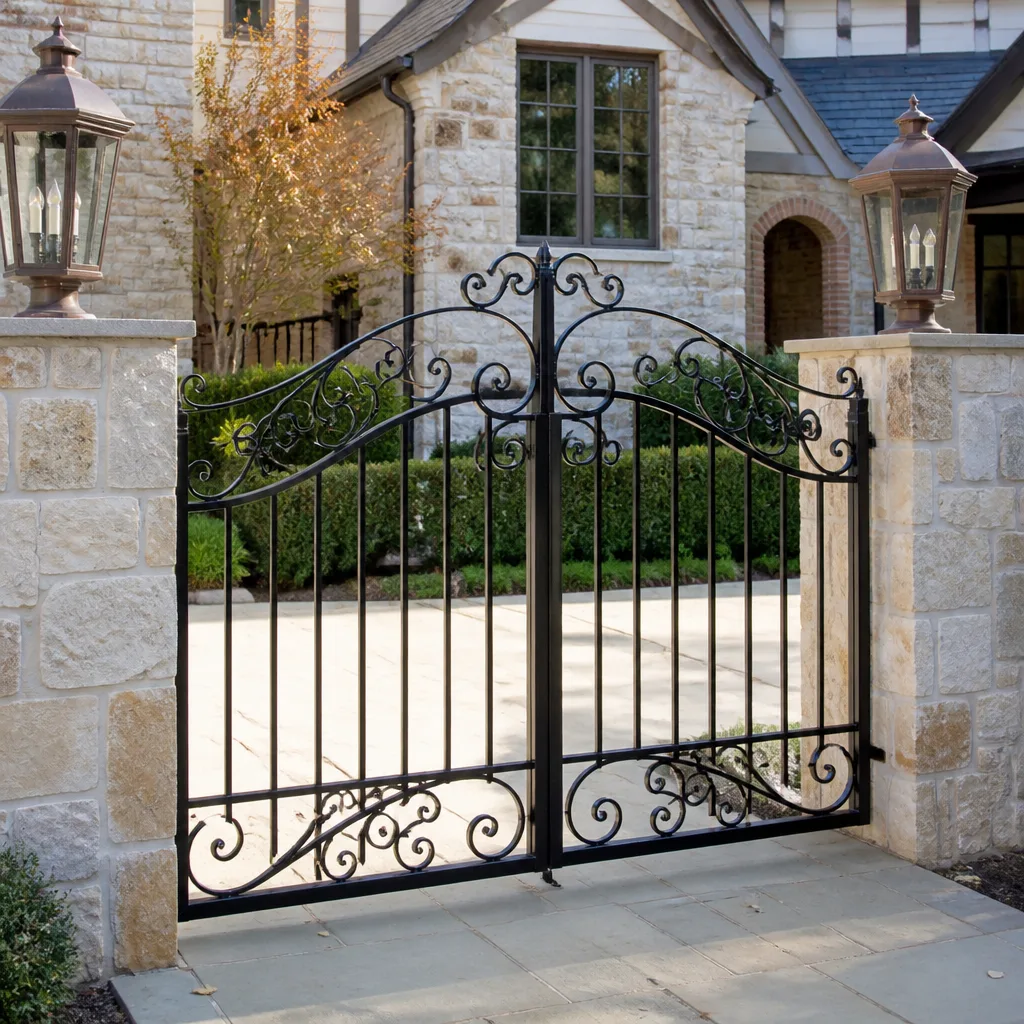 Wrought iron
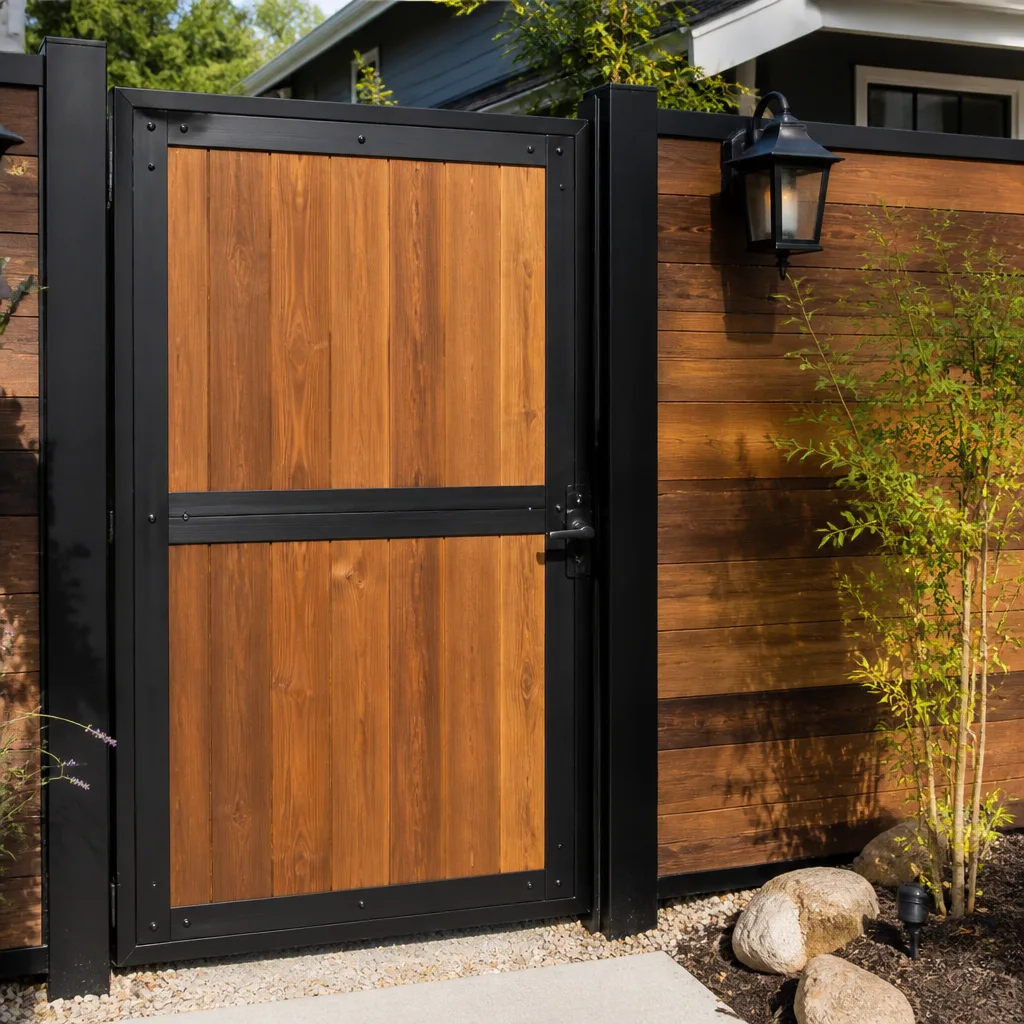 Wood & steel frame
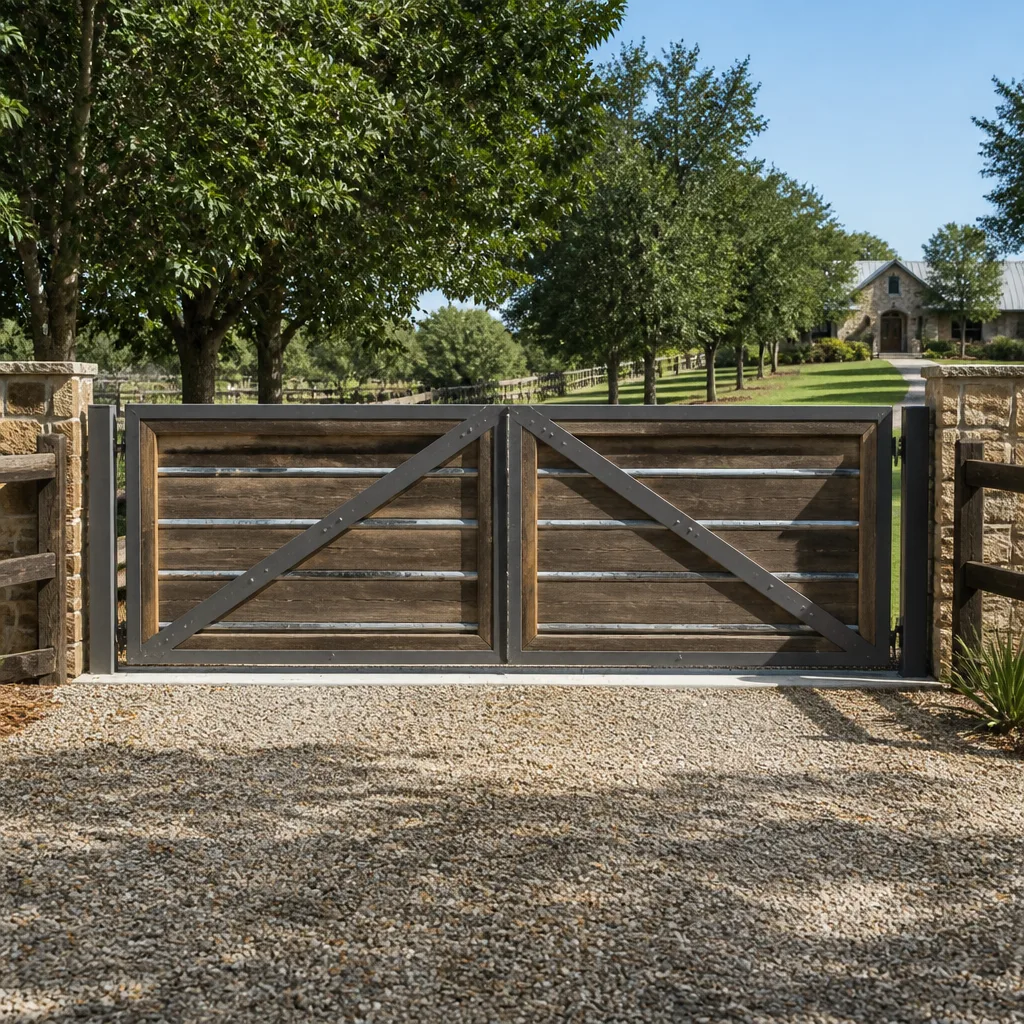 Farm & ranch
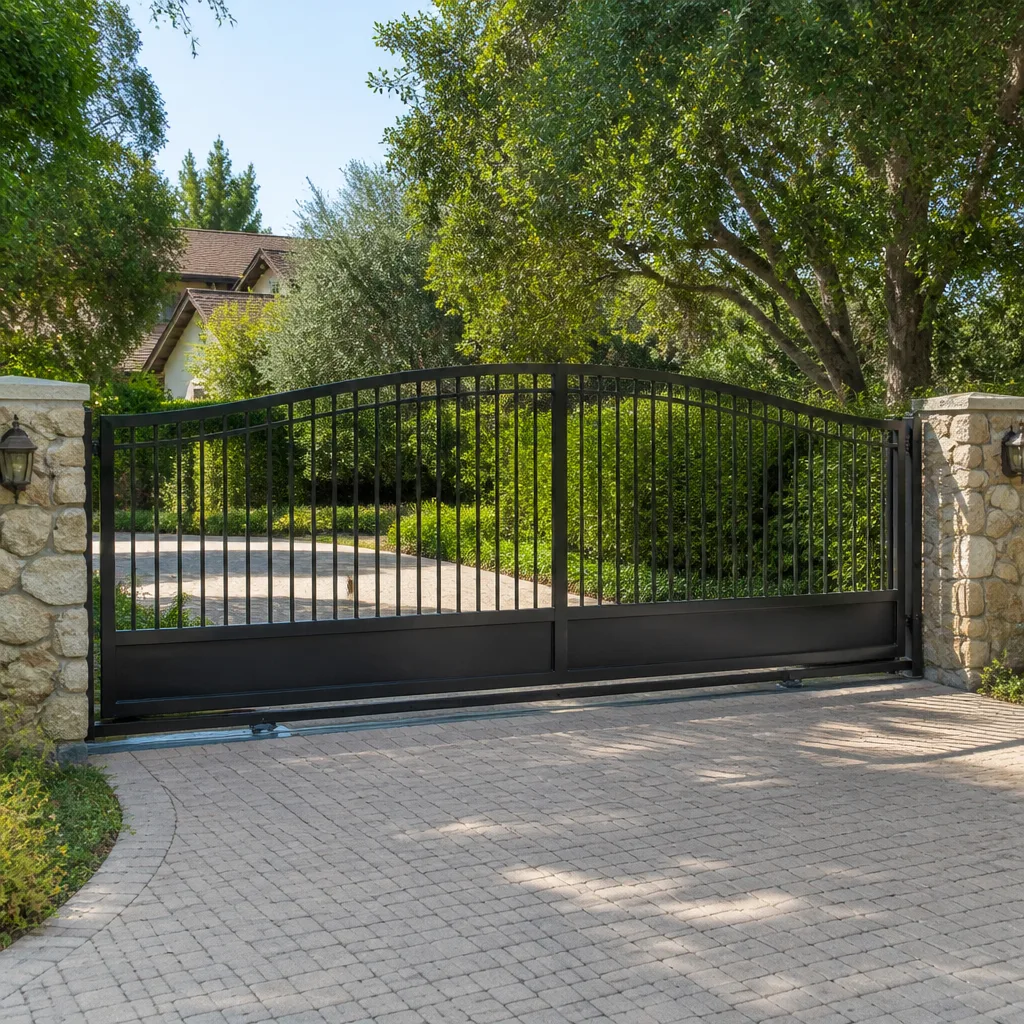 Sliding driveway gates
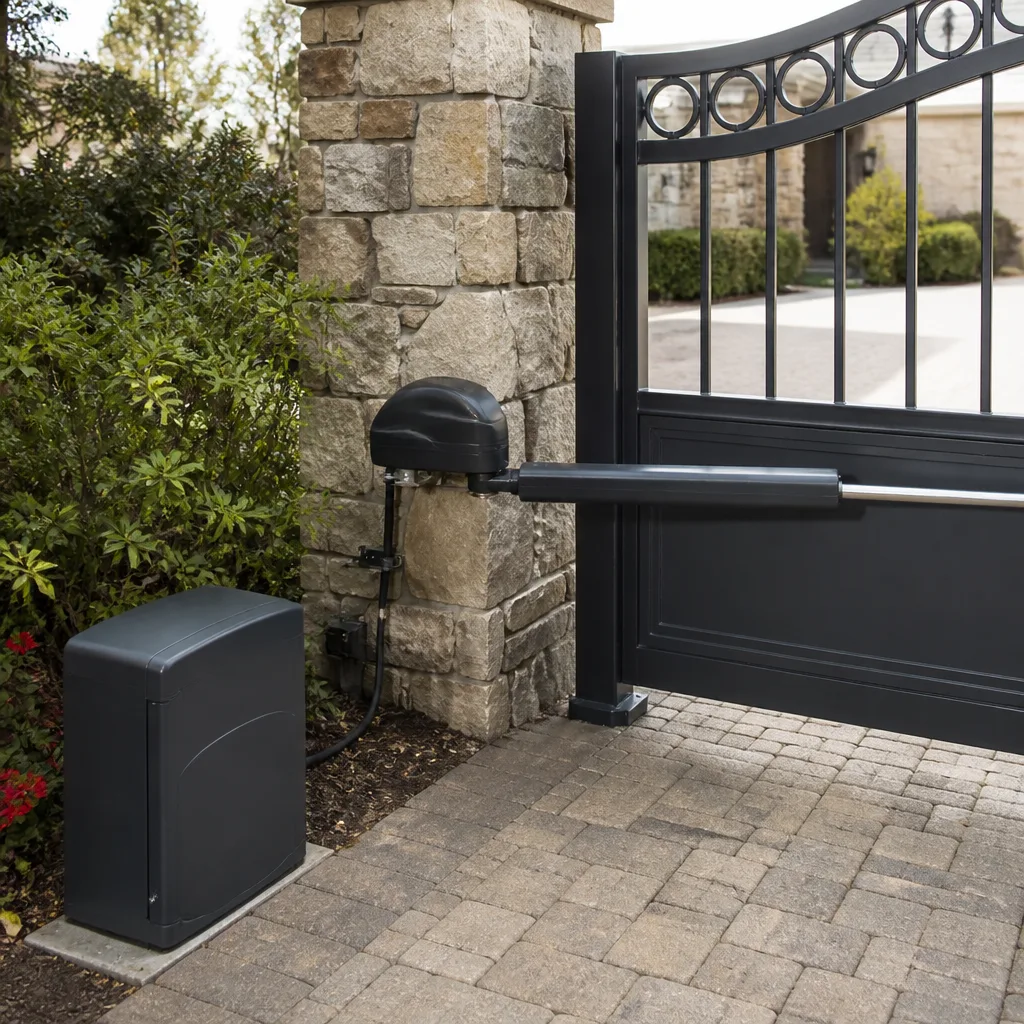 LiftMaster operators
Free on-site gate assessment - hinges, posts, and your LiftMaster or Nice gate operator checked before anything is quoted
The assessment is free and the quote is the invoice.
Get your free estimateDIY vs Professional Gate Repair: The Evanston Homeowner’s Decision Guide
Adjusting a gate’s limit switches is a legitimate DIY task that takes about ten minutes. Replacing them because you adjusted them wrong can run $300 or more. The difference isn’t confidence or mechanical skill, it’s knowing which direction to turn the screw, and when to stop. Most gate repair advice treats this as a blanket question: hire out or handle it yourself. We don’t think that’s useful. An automated gate is three systems stacked on top of each other, mechanical, electrical, and access control, and whether a task belongs in your hands depends on which of those three you’re touching. In this guide, we’ll draw that line task by task, explain which repairs void manufacturer warranties and which don’t, and give you a symptom-based way to decide before you pick up a wrench. If you own an automated gate in Evanston, this is the framework we’d want you to have before calling anyone.
Quick Answer
Simple gate maintenance is genuinely DIY-friendly: lubrication, cleaning and aligning photo-eyes, reprogramming remotes, and minor limit switch adjustments. Anything involving the control board, loop detectors, wiring, structural posts, or the safety reversing system should go to a gate specialist. A wrong repair in those areas can damage a motor, void the manufacturer’s warranty, and put the gate out of compliance with UL 325, the safety standard for automated gate operators. The line isn’t skill. It’s the component.
Styles & brands we work with
- Wrought iron
- Wood & steel frame
- Farm & ranch
- Sliding driveway gates
- LiftMaster operators
Table of Contents
- Why the Component Decides, Not Your Skill Level
- The Tasks That Are Genuinely DIY
- What Requires a Professional, Regardless of Skill
- How Gate Warranties Treat DIY Work
- The Hidden Cost of a DIY Mistake
- A Symptom-to-Task Decision Flowchart
- What Makes Evanston Gates Different
- Common Mistakes to Avoid
Why the Component Decides, Not Your Skill Level
A sliding gate operator is a mechanical drive, an electrical control system, and an access-control layer working together. A swing gate on a LiftMaster or FAAC arm is much the same, with the operator’s board handling the logic and the safety devices feeding it signals. Each of those three layers has a different risk profile when something goes wrong, and that’s why “am I handy enough for this?” is the wrong question.
Consider what happens mechanically. A gate that drags, sticks, or shudders is usually telling you about the track, the rollers, the hinges, or the foundation. Those are physical problems you can often see and feel. Lubrication and cleaning live here, and they’re low risk. Electrical problems are different. A control board that received a surge, a miswired photo-eye, a failing transformer: these are invisible, and a wrong move can send voltage where it doesn’t belong. The third layer, access control, includes keypads, intercoms, and loop detectors. Some of that is programming you can do from a manual; some of it is physical installation that has to be right the first time.
So the useful question becomes: which layer is the problem in, and what’s the cost of getting it wrong?
- Mechanical, low-risk: lubrication, cleaning, visual inspection, minor adjustments.
- Mechanical, structural: post repair, hinge replacement, track realignment, foundation issues. Not a first-timer’s job.
- Electrical: boards, motors, wiring, transformers, batteries. Risky to diagnose, risky to touch.
- Access control: mixed. Remote programming is easy; loop detector installation is not.
- Safety system: photo-eyes, safety edges, reversing logic. Never something to experiment with.
If you keep that map in your head, most of the decisions in this guide come down to placement rather than judgment. And if you’d rather hand the whole thing to a gate-only specialist, that’s a perfectly reasonable call too, which is what we do as Evanston Gate Repair.
The Tasks That Are Genuinely DIY
These are the jobs we’re comfortable telling a homeowner to handle. They’re low risk, they don’t touch the control board’s logic, and none of them compromise the safety system when done correctly. If the gate is basically working and just needs attention, start here.
1. Lubrication
Gate hardware benefits from regular lubrication: rollers, hinges, the operator arm’s pivot points on swing gates, and the track and chain on slide gates. Use a lubricant appropriate for outdoor metal hardware, wipe off excess grit first, and don’t overdo it. Excess grease traps dust and grit and turns into a grinding paste.
2. Photo-Eye Cleaning and Alignment
If the gate stops and reverses for no clear reason, the photo-eyes are a likely suspect. Clean the lenses with a soft cloth. Check that the two units still face each other squarely, and that nothing (a shrub, a delivery box, the trash bin) has drifted into the beam. Realigning a knocked photo-eye is generally straightforward. If realigning it doesn’t fix the problem, stop and call someone.
3. Remote Reprogramming
Replacing a lost remote or adding a new one for a LiftMaster or Mighty Mule operator is usually a matter of following the manual’s pairing procedure. That’s a legitimate DIY task. What isn’t DIY is reprogramming a commercial DoorKing access system for new tenants or changing the credentials of a shared entry, which is a job for someone who knows the system.
4. Minor Limit Switch Adjustment
If the gate stops just short of fully closed or fully open, a small limit adjustment may fix it. The manual tells you which screw adjusts which end. Turn it a quarter turn at a time, test, and repeat. What you must not do is keep turning when the gate isn’t moving the way you expect. Overshooting limit adjustments is exactly how people end up damaging the operator or the gate.
5. Visual Inspection
Walk the gate once a season. Look for loose bolts, worn rollers, rust at the hinges, cracks in the posts, or anything that’s moved. Catching those early is the cheapest maintenance there is.
What these have in common: they don’t require touching the control board, the wiring, or the safety logic. They’re maintenance, not repair. When something needs actual repair, the map changes.
What Requires a Professional, Regardless of Skill
We’ve met plenty of capable homeowners who could handle a lot of jobs around the house. These are the ones where a gate specialist is the right call even then. The reason isn’t that you aren’t able; it’s that the cost of a mistake in these areas goes far beyond the price of the repair.
Control Board Replacement
A control board is the operator’s brain. Replacing one is a job for someone who can read the board, verify the power supply, check the wiring harness, and confirm the new board is compatible with the operator before it’s powered up. A board installed wrong can fail immediately or damage the motor on first movement.
Loop Detector Installation
Loop detectors are the buried wire loops that tell a commercial or automatic gate a vehicle is approaching. Installing one means cutting and sealing a loop in the pavement, running wire to the operator, and setting sensitivity correctly. It’s physical, electrical, and empirical: small changes in loop size or sealing alter performance. Not a first-time project.
Structural Post Repair
Gate posts carry the entire weight and swing load of the gate. A post that’s heaved, settled, or rotted is a genuine safety issue, and the repair involves excavation and proper footing depth. A gate can’t run reliably on a compromised post, no matter how good the operator is. In our experience, this is one of the most common things missed when a gate “just stops working right.”
Any Work Affecting UL 325 Compliance
UL 325 governs automated gate operators and their safety systems. Photo-eye placement, safety edge installation, reversing logic, and the condition of the safety devices are all part of it. Touching the safety system without the right equipment and knowledge is the area where we draw the clearest line. A gate that runs but doesn’t reverse properly for an obstruction isn’t a working gate; it’s a hazard.
Electrical Wiring and Power Connections
Gate operators run on line voltage. Anything that involves the power feed, the disconnect, or the wiring to the operator should be left to someone trained for it. There’s no DIY scenario where that’s worth the risk.
Most of these are within reach for a specialist with the right diagnostic tools, and most can be handled on the same visit, which is the practical case for gate repair from someone who works on gates only. Generalist help tends to mean multiple visits, because the person diagnosing the gate may not be the person who can repair the board or the loop.
How Gate Warranties Treat DIY Work
This is where the DIY question gets a lot less abstract. Manufacturer warranties don’t generally cover everything or exclude everything. They cover defects in materials and workmanship for the stated period, and they exclude damage from misuse, improper installation, unauthorized modification, and anything outside the manufacturer’s published installation and service instructions.
What that means in practice:
- Generally permitted: routine maintenance described in the manual, including lubrication and cleaning. Most manufacturers expect this from the owner.
- Generally permitted: pairing remotes and following the manual’s setup procedures for consumer-facing features.
- Risky: adjusting limits and settings beyond the manual’s instructions. If a misadjusted limit causes motor damage, a warranty claim is unlikely to go through.
- Warranty-voiding territory: replacing a control board or motor yourself, cutting into the wiring, or installing a loop or safety device outside the manufacturer’s specifications.
- Warranty-voiding territory: installing an operator on a gate that doesn’t meet the manufacturer’s weight, length, or mounting requirements.
LiftMaster and FAAC both publish installation and service documentation that’s specific about the conditions the warranty assumes. We work on those systems regularly. When we do the work, the installation matches what the manufacturer expects, and the repair doesn’t cost you the warranty on a component that’s still covered. If you’re weighing a DIY repair on a gate that’s still under warranty, that’s the calculation that matters most, more than the price of the repair itself.
If you’re not sure whether your gate is still covered, the answer is in the operator’s manual or on the label inside the housing. Look up the model number before you do anything.
The Hidden Cost of a DIY Mistake
Gate repairs look linear from the outside: something breaks, you fix it, you’re done. From the inside, some mistakes set off a chain. That chain is where costs multiply.
The most common example we see involves wiring. A control board is connected to a power supply, a motor, safety devices, and access-control inputs. Each of those connections has a polarity, a voltage, and a purpose. Mixing them up, or installing the wrong replacement board, can send current to the motor’s winding in ways it wasn’t designed to handle. The board fails. The motor overheats or loses a winding. And what started as an inexpensive board repair becomes a board plus motor job.
A second chain starts with limits. A limit switch set wrong doesn’t fail immediately. The gate slams against its endpoint, the operator strains, the drive components wear faster, and eventually something gives. The repair is now mechanical, not electrical.
A third involves safety devices. A photo-eye that’s been “adjusted” to work by nudging the alignment without realizing the bracket has loosened will work today and stop working next week. A gate that randomly reverses is a nuisance until someone ignores it. The safety system exists to stop the gate before it reaches a person, and it doesn’t tolerate halfway fixes.
None of these are rare. In our experience, the sequence of events in a failed gate repair is more often a chain of small errors than one dramatic mistake. That’s also why a gate motor & opener repair is sometimes more involved than the original symptom suggested: the visible failure is the end of the chain, not the start of it.
What a specialist does differently: diagnose the component before touching it, verify the fix against the whole system, and warranty the work. The cost of the diagnostic is small compared to the cost of repairing consequences. It’s also why the estimate comes before the work, not after.
A Symptom-to-Task Decision Flowchart
This is the practical version of everything above. Start with what the gate is doing, then find the likely component, then the DIY verdict. It’s not a substitute for a diagnosis; it’s a way to sort the call.
Step 1: What’s the symptom?
- Gate won’t move at all. Likely involved: power, control board, motor, or a safety device holding the gate open. Verdict: check the breaker, then call a specialist.
- Gate moves and reverses immediately. Likely involved: photo-eye obstruction, misalignment, or safety edge. Verdict: clean and check the photo-eyes first. If still failing, call.
- Gate stops short of open or closed. Likely involved: limit switches. Verdict: small adjustment may help. If it’s a consistent pattern and adjusting doesn’t fix it, stop and call.
- Gate moves slowly, drags, or shudders. Likely involved: track, rollers, hinges, or post. Verdict: lubricate and inspect. If the post is compromised or the gate is dragging on the ground, call.
- Remotes or keypad don’t work, but the gate works manually. Likely involved: remote pairing or access control. Verdict: reprogram the remotes. If it’s a keypad or intercom, call.
- Gate reverses for no reason or won’t stay closed. Likely involved: safety system or limit logic. Verdict: call.
- Gate makes a strange noise from the operator. Likely involved: motor, gears, or drive. Verdict: call.
Step 2: What’s the gate history?
- Under warranty? Default to calling a specialist. Anything done wrong can void coverage.
- New installation (within a few months)? A manufacturer or installer issue. Call.
- Older gate with gradual decline? Some maintenance is DIY; anything electrical or structural is not.
- Commercial, shared, or HOA gate? Always call. More people rely on it and the access-control layer matters.
Step 3: What’s the cost of getting it wrong?
- Low, reversible, and cheap to fix? DIY.
- Involves the control board, motor, wiring, or safety system? Call.
- Involves the post, foundation, or gate frame? Call.
- Involves the access-control system (keypad, intercom, loop) in a way that affects who gets in? Call.
If you’re not sure where the symptom fits, the answer is almost always to call. The gate access control layer is the one most often underestimated: programming a keypad or a DoorKing entry system is a simple task for anyone who knows the system, and a quick route to an outage for anyone who doesn’t.
What Makes Evanston Gates Different
Homes and properties in Evanston sit on a landscape shaped by the lake to the east, older tree canopy, and a housing stock that spans more than a century of construction. Automated gates on the city’s residential streets, from the neighborhoods near the lakefront down to the older lots further west, have a few consistent patterns worth knowing about.
The most common pattern is age. Many of the city’s residential gates were installed decades ago and have been adapted since, sometimes with new operators, sometimes with new access devices. That mix means the operator’s label may not reflect the full wiring, so before DIY work, it pays to know which components are original. A gate that’s been added to over the years is more likely to have wiring that doesn’t match the manual’s diagram.
The second pattern is footing. Evanston’s freeze-thaw cycle moves ground significantly through the winter, and gate posts are not immune. A post that heaves a quarter inch can make a rolling gate bind and a swing gate sag. That’s not an operator problem, no matter what the gate seems to be doing. It’s a footing problem, and fixing the operator won’t fix it. This is where we most often see homeowners spend on the wrong repair first. A pre-winter foot check on posts and hinges is useful before the ground starts to move.
The third pattern is tree debris. The mature canopy across Evanston means track debris, leaf litter, and grit on the tracks. Track cleaning is a legitimate DIY task, and it’s more valuable here than in a place with fewer trees. Left unattended, that grit wears rollers and gets into the operator’s drive.
None of this makes Evanston gates uniquely fragile. It just means the mechanical layer deserves as much attention as the electrical one. Gate work here rewards a little regular maintenance and a sharp eye for post and footing issues.
Common Mistakes to Avoid
- Adjusting limits and then adjusting them again. If one small adjustment doesn’t fix a limit issue, the limit isn’t the problem. Continuing to turn the screw is how a simple fix turns into motor wear.
- Assuming a non-moving gate is a power problem. In our experience, a dead-feeling gate is often a safety device holding it open, or a post that’s shifted. Checking the photo-eyes and the posts first saves a diagnostic call.
- Greasing everything you can reach. Excess lubricant on outdoor gate hardware collects grit, and grit is harder on rollers and tracks than a little dry friction. Lubricate where the manual says to, and wipe off the excess.
- Assuming the warranty covers whatever you do next. A warranty protects against defects in the original work, not against later modification. Touch the wrong component and the warranty on the parts you didn’t touch can disappear too.
- Ignoring footing and post movement. A gate that binds in late winter is usually telling you about the ground, not the operator. Replacing the operator on a wobbly post is money spent on a symptom.
- Assuming a generalist will be able to handle it. General contractors, fence companies, and handymen can be excellent, but gate operators, keypads, and safety devices are their own specialty. A gate specialist can diagnose the actual component the first time out.
- Delaying a fix on a safety system. A misaligned photo-eye is a warning, not a nuisance. It fails when someone’s relying on it, and that’s the moment you don’t want it failing.
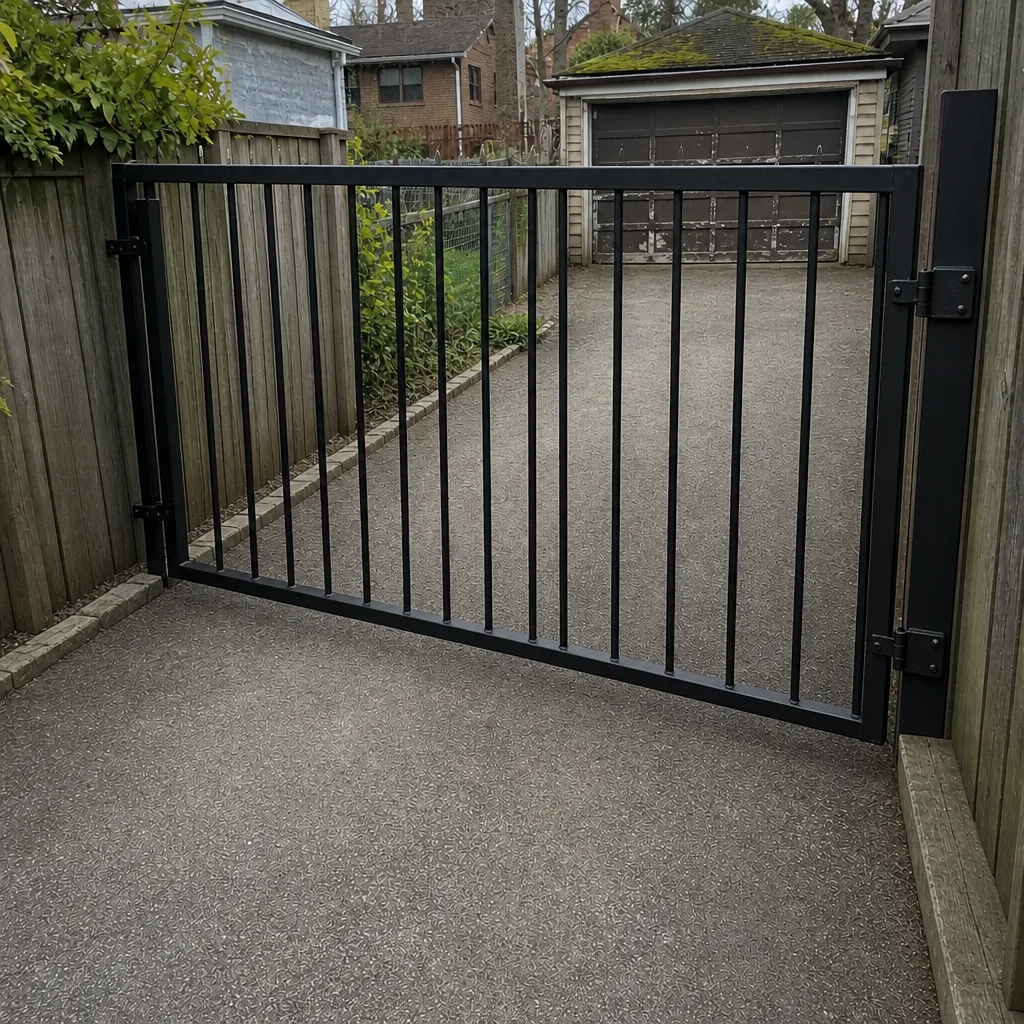
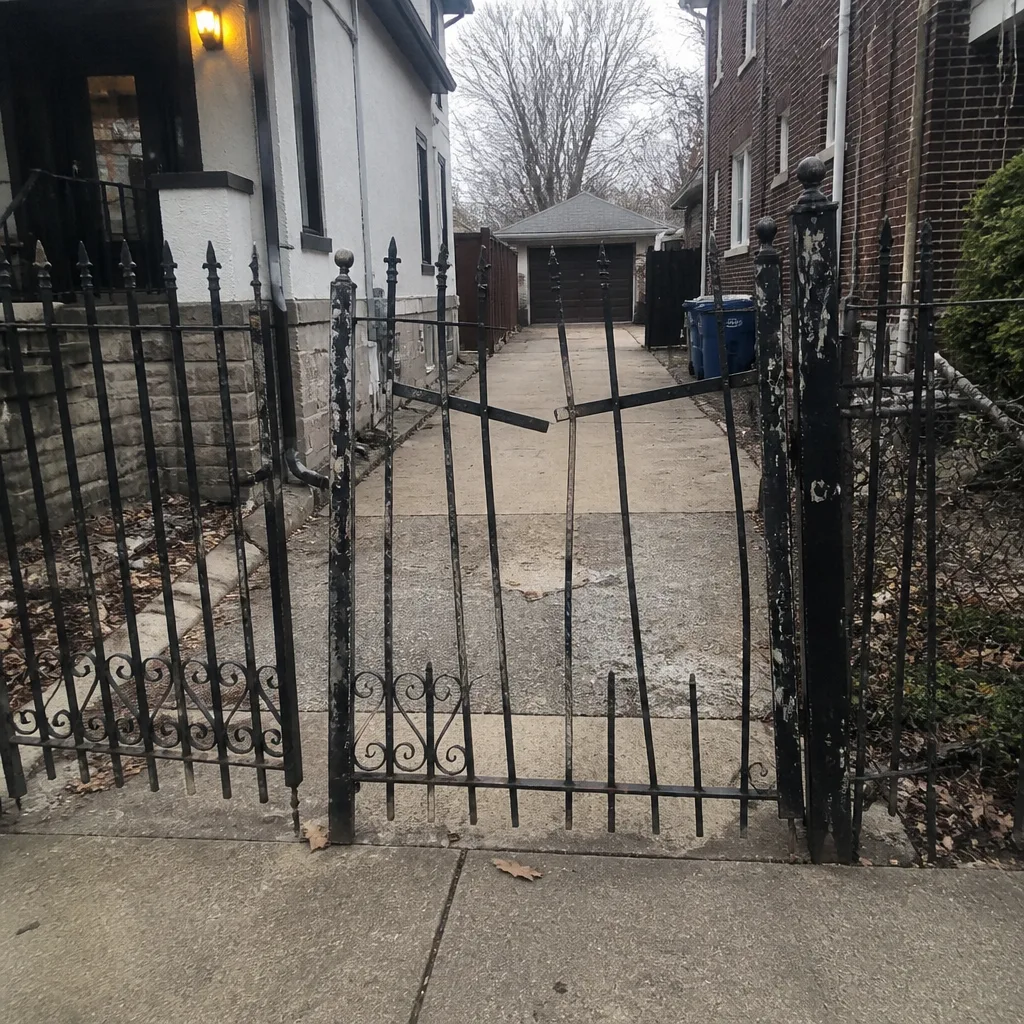
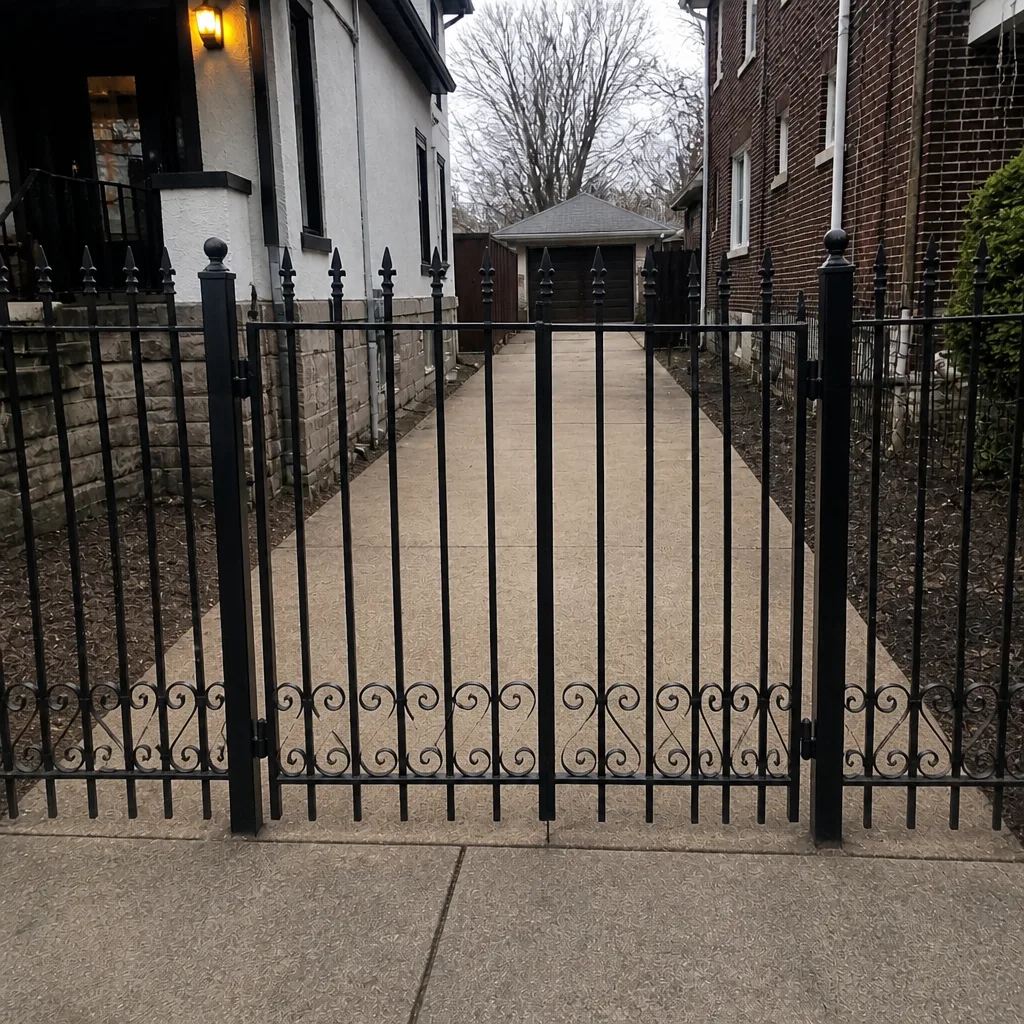
See the difference
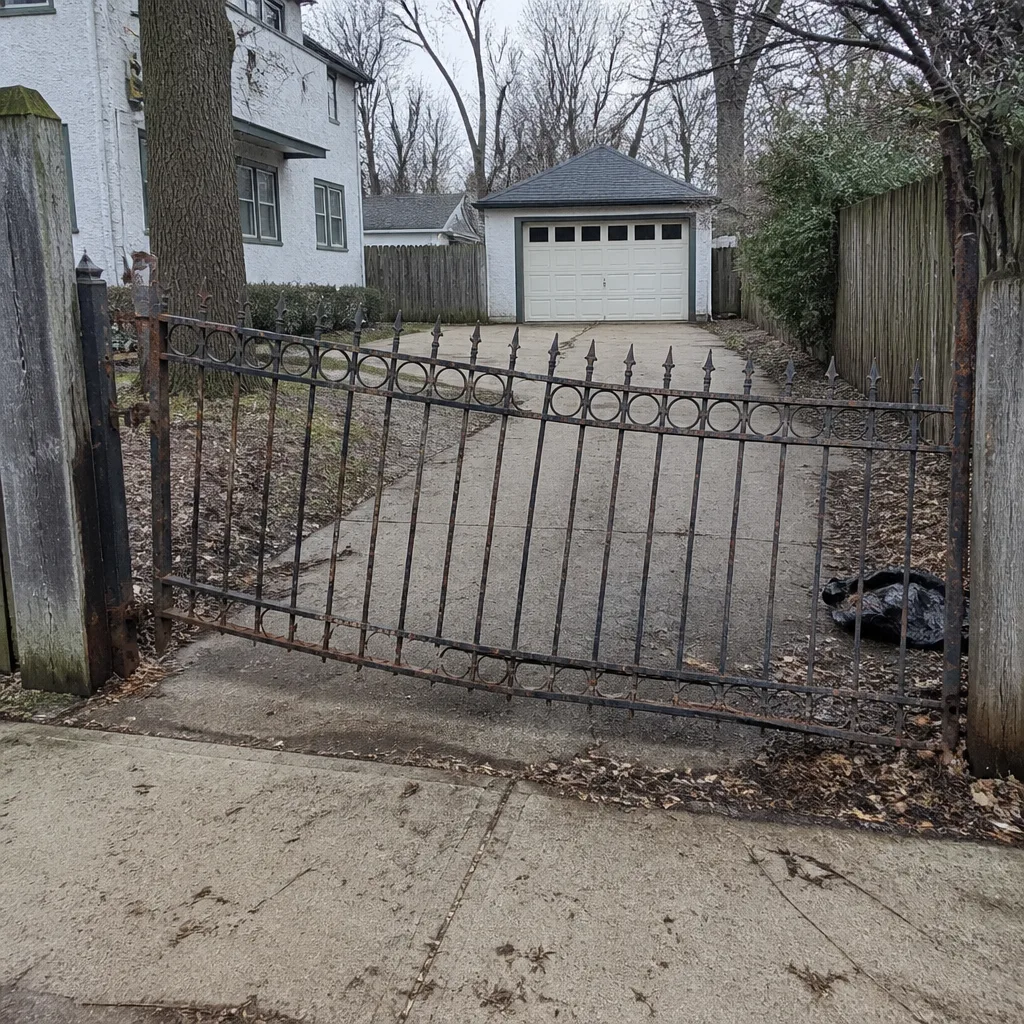 Before
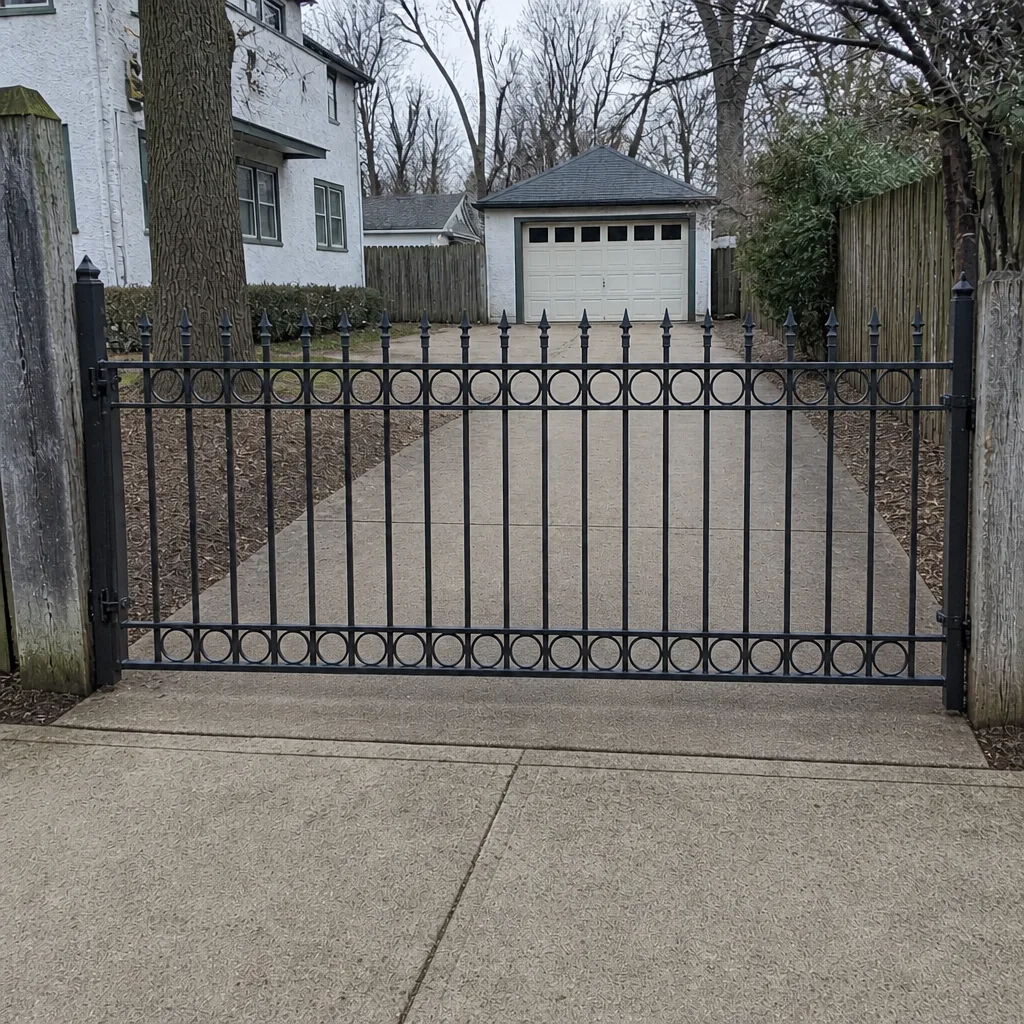 After
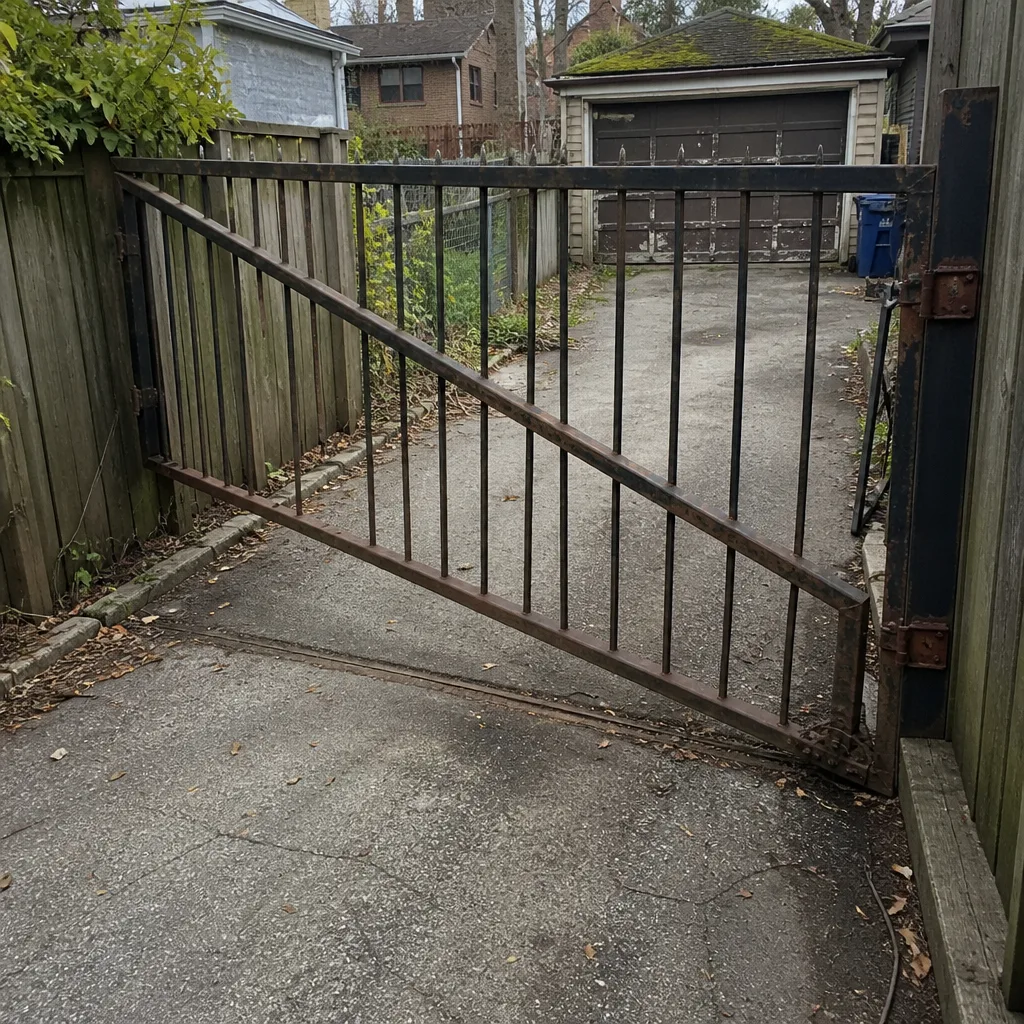 Before
 After
 Before
 After
When to Call a Professional
Call a gate specialist when the symptom involves the control board, the motor, the wiring, the safety system, the posts, or the access-control layer. Also call when the gate is under warranty, when it’s a shared or commercial gate, and when you’ve tried a simple fix once and the gate still isn’t behaving. The line isn’t about how capable you are. It’s about which part of the system you’re touching. Evanston Gate Repair offers free estimates in Evanston, call (833) 467-5627. We’ll ask what the gate is doing, tell you whether it sounds like a service visit or a quick check on your end, and if it needs a technician we’ll schedule an on-site diagnostic and give you a written price before any work starts. Our technicians have up to 12 years of experience, and we work on gates only, from the motor to the keypad, on residential and commercial systems.
Frequently Asked Questions
Yes, minor limit switch adjustment is a legitimate DIY task. If the gate stops just short of fully open or fully closed, follow the operator’s manual, turn the adjustment screw a quarter turn at a time, test, and repeat. Stop if the gate doesn’t respond as expected, and call us if one small adjustment doesn’t solve it.
Yes. Check the operator’s manual and the label inside the housing to confirm the model and whether it’s still covered. Routine maintenance like lubrication and cleaning is generally permitted under a manufacturer’s warranty. Replacing a control board or motor, modifying wiring, or installing a safety device outside the manufacturer’s specifications can void coverage on related components.
A control board replacement is typically an electrical diagnostic plus the board and labor, and the total depends on the operator, the board, and whether anything else has been affected. The written estimate sets the final price, and it’s quoted before any work starts. Call (833) 467-5627 for an exact quote, estimates are free.
Possibly, but it’s in the safety layer, so treat it carefully. Clean and align the photo-eyes first and make sure nothing is in the beam. If the gate still reverses, call a specialist. A gate that reverses unpredictably isn’t safe to leave as is, and it may need a safety-edge check, not just a photo-eye adjustment.
Yes. Access control includes keypads, intercoms, loop detectors, and remote programming, and it’s the layer most likely to be skipped by a generalist. We work on those systems as part of the gate service, so the gate and the entry system are handled together. Call (833) 467-5627 for a free estimate.
Depends on the component, not the age of the property. An older gate that binds may have shifted posts or worn rollers, and those need a specialist to evaluate. An older gate that’s simply dirty or dry is a straightforward maintenance job. When in doubt, a diagnostic visit is cheaper than the wrong repair. Mention the gate’s approximate age and you’ll get a useful first read on the phone.
The Bottom Line
The DIY vs. professional question has a practical answer: it depends on the component. Lubrication, photo-eye cleaning, remote reprogramming, and minor limit adjustment belong in the DIY column. Control boards, motors, loop detectors, structural posts, and anything affecting the safety system belong with a gate specialist. The warranty follows the same line, and the hidden cost of a DIY mistake is usually a chain of repairs, not one. Let the symptom decide. If that puts you in the specialist column, we’re glad to help. Call (833) 467-5627 for a free estimate, and we’ll give you a straight answer on what the gate needs.
Written by the team at Evanston Gate Repair.